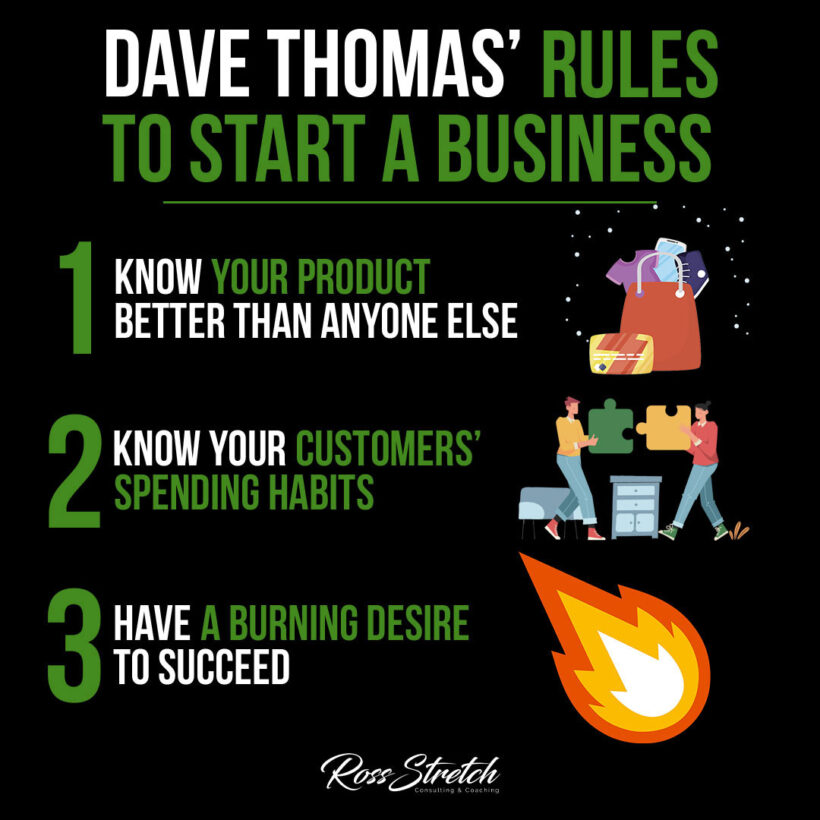

Dave Thomas, founder of Wendy’s, built one of the most recognizable fast-food chains in the world from virtually nothing. He opened the first Wendy’s in Columbus, Ohio in 1969 — with no formal education, a childhood marked by poverty, and no wealthy backers. His success was not accidental. It was the product of three clear business principles he practiced consistently throughout his career. These rules are not abstract theory; they are the same habits that helped him grow Wendy’s to more than 6,700 locations worldwide. Whether you are launching a startup or growing a side business, these lessons are as relevant today as they were in his era.
\
\
\
\
Rule 1: Know Your Product Better Than Anyone Else
\
\
Deep Product Knowledge Builds Unstoppable Credibility
\
\
Thomas believed that no one should know more about what you are selling than you do. This means understanding not just the technical specifications of your product, but what it actually does for the people who use it — how it improves their life, solves their problem, or saves them time. When you can speak about your product with genuine confidence and specificity, customers feel it. They trust you. And trust is the fastest shortcut to a sale that any founder has.
\
\
For Thomas, this knowledge came from hands-on experience. He worked every station at his restaurants — the grill, the fryer, the front counter — because he believed a leader who understood every part of their business could make better decisions and earn deeper respect from their team. That operational fluency also meant he could identify problems early and innovate from a position of real authority rather than guesswork.
\
\
- \
- Actionable Tip: Before pitching your product to a single customer, write out ten specific benefits it delivers. Then write the three most common objections customers would have — and prepare clear, honest answers for each one.
- Why It Works: Customers can tell immediately whether a founder truly understands their offer or is simply reciting talking points. Deep knowledge signals authenticity, which builds trust faster than any marketing campaign ever could.
\
\
\
\
Pro Tip: Read every review your competitors receive — both positive and negative. Competitor weak points become your opportunity to differentiate, and their strengths reveal what customers actually value most in your category.
\
\
\
\
Rule 2: Know Your Customers’ Spending Habits
\
\
Understanding What Drives Purchase Decisions Is a Competitive Advantage
\
\
Thomas understood that a product is only as strong as its fit with the people buying it. Wendy’s was not built by copying what McDonald’s or Burger King was doing — it was built by identifying an unmet need in the market. Thomas noticed that customers wanted a fresher, higher-quality option at a fast-food price point. He aligned his pricing, his menu, and his marketing around that specific insight rather than chasing a broader, blurrier audience.
\
\
Today, customer research is more accessible than ever. You do not need an expensive market research firm to understand your buyers. You need to pay close attention — read reviews, ask questions in your community, look at how customers describe their problems in their own words. The language they use, the frequency of certain complaints, and the patterns in their decision-making are all actionable data points if you are paying attention.
\
\
- \
- Actionable Tip: Interview five existing or potential customers this month. Ask them what they were doing before they found a solution like yours, what almost stopped them from buying, and what they value most. Their answers will directly improve both your product and your messaging.
- Why It Works: Customers make purchasing decisions based on emotion, then rationalize with logic. Understanding what drives their spending — whether it is status, fear, convenience, or perceived value — lets you position your product in a way that genuinely resonates rather than just informing.
\
\
\
\
Pro Tip: Look at the timing of purchases in your category. Many businesses miss significant revenue simply because they are not visible or marketing when their customers are most primed to buy. Align your promotions with the moments when your audience is most decision-ready.
\
\
\
\
Rule 3: Have a Burning Desire to Succeed
\
\
Passion and Persistence Outlast Intelligence and Talent
\
\
Thomas dropped out of high school, worked as a short-order cook, and was told more than once that his ambitions were unrealistic. What he had — and what he credited more than any skill or structural advantage — was an unrelenting desire to build something meaningful. He described this as a burning desire: not the kind of motivation that fades after a hard week, but a deep-seated commitment to seeing his vision through no matter what obstacles appeared in the way.
\
\
Every business encounters problems that look unsolvable from the inside. Cash flow crises, failed product launches, difficult team members, competitive threats — these are not signs that you chose the wrong path. They are the standard conditions of building anything worth having. What separates founders who succeed from those who quit is their relationship with adversity. Thomas treated setbacks as information, not verdicts. Each failure taught him something he applied to the next attempt.
\
\
- \
- Actionable Tip: Write down your three-year business vision and revisit it every week. When the day-to-day grind feels overwhelming, reconnecting with the bigger picture reminds you why the short-term discomfort is worth enduring.
- Why It Works: Entrepreneurial success is largely a function of persistence. Most businesses that eventually succeed went through a period where quitting felt like the rational option. The founders who prevailed stayed committed to the goal while remaining flexible about the method of getting there.
\
\
\
\
Pro Tip: Surround yourself with at least one or two people who are further along in business than you are. Proximity to people who have already navigated the hard parts normalizes the struggle and shortens your learning curve considerably.
\
\
\
\
Conclusion
\
\
Dave Thomas built a billion-dollar company without a college degree, without a wealthy background, and without any shortcuts. He did it by mastering his product, obsessing over his customers, and refusing to let adversity become an excuse. These three rules are not complicated — but they are demanding. That is exactly why so few people follow them all the way through. If you apply them consistently, you will be further ahead than most founders who are chasing tactics while ignoring the fundamentals that actually produce lasting results.
\
\
\
\
Resources
\
\

 Ross Stretch