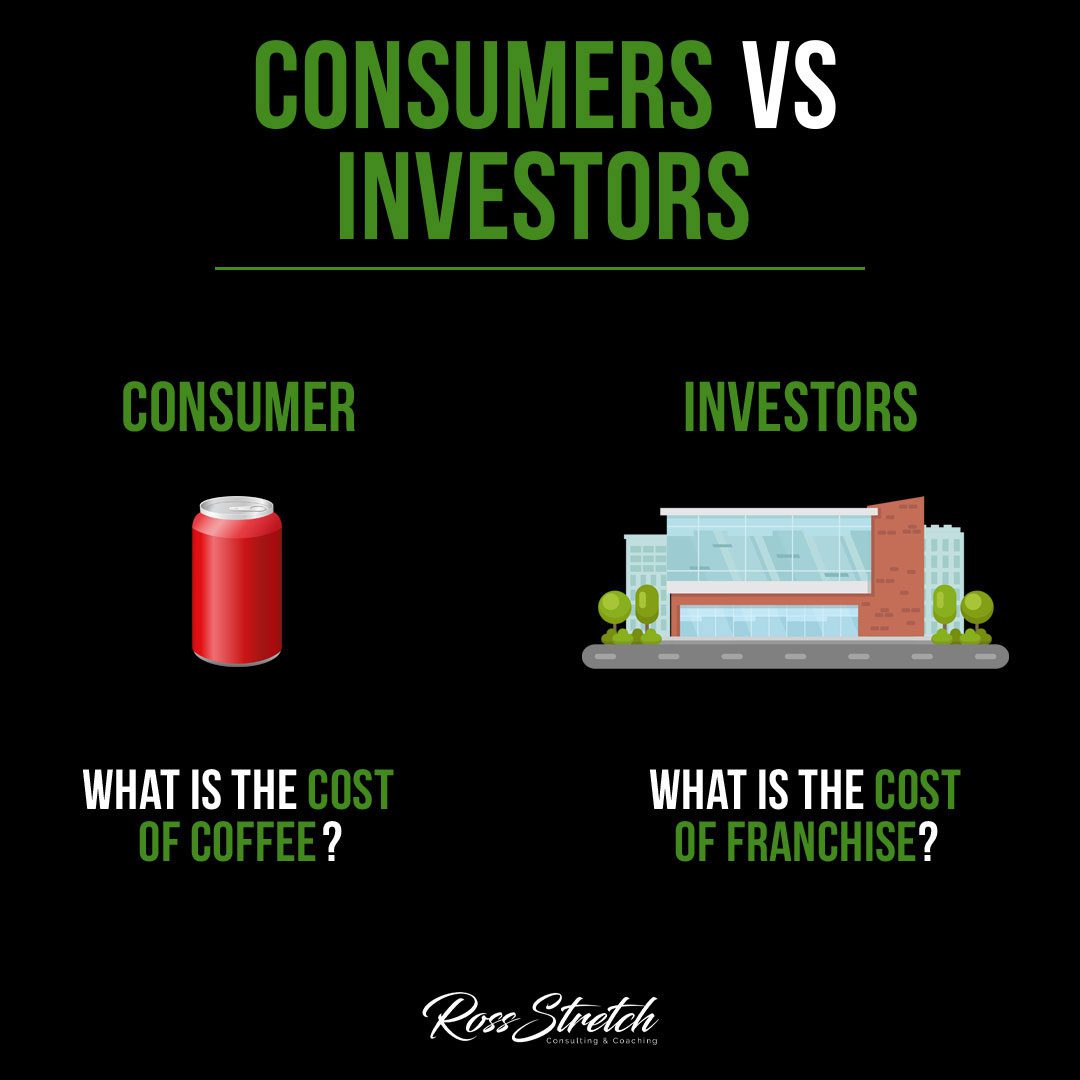
Most people spend their working years trading time for money — then spending that money as fast as it arrives. The cycle is familiar: earn, spend, repeat. But a small percentage of people operate differently. They earn, they keep, and they deploy capital to make more. The gap between the average consumer and the strategic investor isn’t just a bank account difference. It’s a fundamentally different relationship with money, time, and opportunity. Understanding that gap — and deliberately closing it — is one of the most consequential decisions you’ll make for your financial future.
The Consumer Trap: How Spending Habits Limit Wealth
The consumer mindset isn’t a character flaw — it’s the result of decades of conditioning. Every advertisement, social media feed, and retail environment is engineered to trigger one behavior: spending. Retailers invest billions per year studying how to create urgency, trigger emotions, and reduce the friction between desire and purchase. When you’re living inside that system without awareness, you’re playing a game designed for you to lose financially.
The hallmark of consumer thinking is prioritizing the present over the future. A consumer sees income as a signal to upgrade their lifestyle. A raise becomes a new car payment. A bonus becomes a vacation. This isn’t inherently wrong — quality of life matters — but when spending consistently outpaces saving and investing, the result is a life perpetually dependent on the next paycheck, no matter how large it gets.
The “spend now, save later” logic is the most dangerous consumer trap of all. The Employee Benefit Research Institute consistently finds that a significant portion of working adults near retirement age have accumulated far less than they’ll need. The math doesn’t add up because “later” never arrives — it keeps being deferred until retirement forces the reckoning.
The Investor’s Framework: Thinking in Assets and Cash Flow
Strategic investors think in terms of assets and cash flow, not consumption and prestige. Where a consumer sees a luxury car as a reward for hard work, an investor sees a depreciating liability. Where a consumer sees a savings account balance, an investor sees a dormant pool of capital that should be working harder.
The shift in mental language matters enormously. An investor filters every major financial decision through one question: does this acquire an asset, reduce a liability, or generate future income? A designer watch does none of those things. A rental property or a well-diversified index fund portfolio does all three. That doesn’t mean investors never spend on enjoyment — they do — but every significant allocation is evaluated deliberately rather than impulsively.
Long-term vision is the investor’s most durable advantage. The power of compound interest means that time, more than any other variable, determines financial outcomes. A 25-year-old who invests $500 per month at a 7% average annual return will accumulate approximately $1.2 million by age 65. A 35-year-old doing the same accumulates roughly $567,000. Ten years of waiting cuts the outcome nearly in half. The investor who grasps this truth early becomes obsessed with starting — not with optimizing later.
Practical Steps to Begin the Shift
The transition from consumer to investor isn’t a single decision — it’s a series of habits and systems that compound over time, just like interest. The good news is that you don’t need to become a finance expert to start. You need to change a few keystone behaviors and sustain them long enough for them to become automatic.
The first step is paying yourself first. This means automating a percentage of your income into savings or investments before you have the chance to spend it. Even 10% — redirected on payday into an index fund, RRSP, or 401(k) — creates the separation between income and consumption that defines investor behavior. Most people save what’s left after spending. Investors spend what’s left after saving. The order matters more than the amount, especially at the start.
The second step is building a three-category mental model: needs, wants, and wealth-building expenditures. Basic needs are non-negotiable. Wants can be budgeted and enjoyed. But wealth-building expenditures — investment accounts, courses that expand your earning capacity, business assets — should be treated as non-negotiable as rent. This framework makes every spending decision more deliberate and exposes how much discretionary income most people have that gets silently absorbed by lifestyle creep.
Risk, Reward, and Calculated Decision-Making
One reason many people remain stuck in consumer mode is fear. Investing feels risky. Markets go down. Businesses fail. That fear isn’t irrational — investing does carry risk. But what the consumer mindset fails to account for is that not investing is also a risk: the risk of having no passive income in retirement, no buffer against job loss, and no capacity to build generational wealth.
Strategic investors don’t eliminate risk — they understand and manage it. They diversify across asset classes. They invest in broad index funds to capture market returns without betting on individual stocks. They maintain emergency funds before deploying capital into higher-risk opportunities. Risk is not avoided; it is priced, understood, and accepted in proportion to the potential return.
Starting small removes the psychological barrier that stops most people from ever beginning. A low-cost ETF portfolio, a TFSA or Roth IRA maxed annually, a side project that gradually becomes a scalable business — none of these require large upfront capital. They require consistent action. The investor who starts with $100 per month and scales up over time will consistently outperform the person waiting for the perfect moment to begin with a large lump sum.
The Broader Payoff: Financial Freedom and Legacy
The end goal of shifting from consumer to investor isn’t to become obsessed with money — it’s to reach a point where money is no longer a source of anxiety. Financial independence, at its core, is the state where your assets generate enough income to cover your expenses without requiring you to trade time for it. That state is not reserved for the ultra-wealthy. It is achievable for most middle-income earners who start early and remain consistent.
Beyond personal financial security, the investor mindset creates the conditions for legacy. Wealth that compounds across decades doesn’t just fund retirement — it funds opportunity for the next generation, charitable giving, and community investment. The most meaningful financial decisions are rarely about the car you drive or the vacation you take. They’re about what you build that outlasts you.
Conclusion
The divide between consumers and investors isn’t about income — it’s about mindset, habits, and the choices made with whatever income exists. Some of the highest earners in the world retire with nothing. Some modest-income earners retire wealthy. The difference is not how much they made, but how much they kept, invested, and allowed to compound. Once you see money as a tool for building freedom rather than funding a lifestyle, every financial decision becomes clearer — and every dollar you redirect toward investment becomes a future version of yourself that works without you.
Resources
- The Psychology of Money by Morgan Housel — timeless lessons on wealth, greed, and happiness
- JL Collins: The Simple Path to Wealth — practical investing philosophy for non-finance people
- Investopedia: Compound Interest Explained — foundational concept every investor must understand
- MoneySense: Investing Basics for Canadians — accessible guide to getting started with Canadian investment accounts

 Ross Stretch