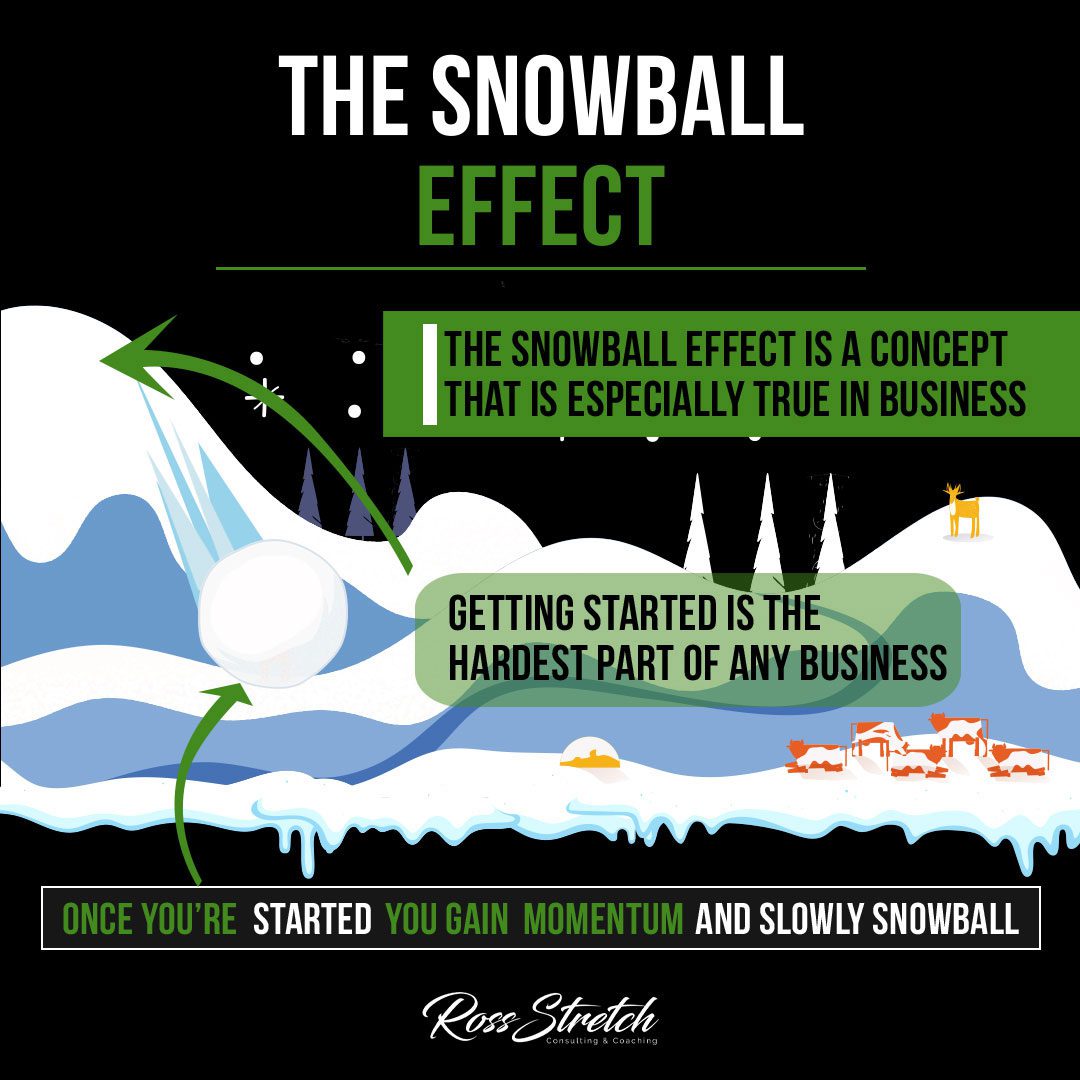
In business and personal finance, few concepts are as practically powerful as the Snowball Effect. The idea is deceptively simple: small, consistent actions gain momentum over time, growing in size and speed until what once seemed insignificant becomes unstoppable. Applied to entrepreneurship, investing, or skill development, the Snowball Effect explains why early movers compound their advantages — and why starting, even imperfectly, matters far more than waiting for perfect conditions that never quite arrive.
Why Starting Small Is the Strategy
One of the most persistent myths in entrepreneurship is that you need significant resources to begin. In reality, most great businesses started with very little — a single product, a handful of customers, a minimal website. The early-stage snowball is small and slow. That is not a problem; that is the process working exactly as intended.
The psychological challenge is tolerating the slow early phase without abandoning the effort. Most people quit when the snowball is still small because they compare their beginning to someone else’s middle. The compounding phase — the part where things accelerate — only arrives after the initial accumulation. Amazon operated at a loss for years before its logistics network and third-party marketplace created the flywheel that now dominates e-commerce. That early period of modest growth was not failure; it was foundation-building.
Starting small also forces discipline. When resources are limited, you prioritize ruthlessly — identifying what actually moves the needle versus what merely feels productive. That constraint often produces better businesses than abundant capital does, because every decision must justify itself against a tight budget and a clear goal.
Building Momentum in the Early Stages
Momentum in a business context is about creating conditions where each win makes the next win easier. The first sale validates the offer. The first testimonial makes closing the second client simpler. The first media mention attracts more. Early momentum is deliberately manufactured — it does not happen by accident or by waiting.
The most effective early-stage momentum builders are direct outreach, referrals, and rapid iteration based on customer feedback. Rather than waiting for inbound traffic to materialize, early-stage founders go directly to potential customers, ask questions, make offers, and adjust based on what they learn. This tight feedback loop compresses the learning curve significantly compared to building in isolation and launching to silence.
Strategic partnerships also accelerate early momentum. Identifying complementary businesses or creators who already have access to your target audience — and offering genuine value in exchange for introductions — can produce customer acquisition results that would otherwise take months of organic growth to achieve on your own.
The Compounding Phase: When the Snowball Rolls Itself
There is a point in most successful businesses where growth becomes partly self-sustaining. Referrals begin to replace cold outreach. Content starts ranking in search and driving inbound leads. Brand recognition means prospects already know who you are before the first conversation. This is the compounding phase — the direct result of consistent early effort that most people never stick around long enough to experience.
In investing, the same principle is well-documented. A $10,000 investment growing at 8 percent annually becomes roughly $100,000 in 30 years without any additional contributions. The math that makes this work is identical to the math that makes audience building, skill development, and customer relationships compound over time. Each layer of trust, capability, or reputation makes the next layer easier to add.
The trap at this stage is complacency. When things are going well, it is tempting to reduce the inputs that created the momentum in the first place. The businesses that sustain their snowball treat the compounding phase not as an opportunity to coast, but as the ideal moment to reinvest — in product quality, customer experience, and team capacity — so the snowball keeps growing rather than gradually slowing.
Navigating Setbacks Without Losing Momentum
No growth trajectory is linear. Market shifts, failed product launches, key employee departures, and economic downturns are part of the entrepreneurial experience. The Snowball Effect does not make a business immune to obstacles — it gives you the accumulated mass to survive them.
Businesses with strong momentum absorb setbacks better than those still in early accumulation. A loyal customer base, a recognizable brand, and a team with deep institutional knowledge are all assets that carry forward through difficult periods. When setbacks occur, the response that best protects momentum is to act quickly, communicate transparently with customers and stakeholders, and return to the fundamentals that built the momentum in the first place. The businesses that recover fastest are not necessarily the most innovative — they are the ones that know exactly what worked before and have the discipline to do it again.
Applying the Snowball Effect to Personal Finance
The same mechanics that apply to business apply directly to personal wealth. Every dollar invested early compounds into a larger sum later. Every high-income skill developed broadens future opportunity. Every debt paid down reduces the drag on future savings. The personal finance snowball starts rolling the moment you make the first consistent, deliberate choice — and the moment you stop, it begins to slow.
The practical implication is simple: start immediately with whatever you have. Do not wait to invest until you have a substantial amount. Do not wait to build a business until the idea is perfect. Do not wait to develop skills until you have more time. The snowball does not care how small it starts — it only cares whether you keep rolling it. Time in motion is the variable that matters most.
Conclusion: The Hardest Part Is the Beginning
The Snowball Effect is one of the most reliable frameworks in business and finance precisely because it does not require genius, luck, or exceptional talent. It requires consistency and patience — two qualities available to everyone but practiced by few. The gap between people who build lasting wealth and those who do not is rarely about intelligence or opportunity. It is about who kept rolling when the snowball was still small. Start where you are, build deliberately, and trust the process.
Resources


 Ross Stretch