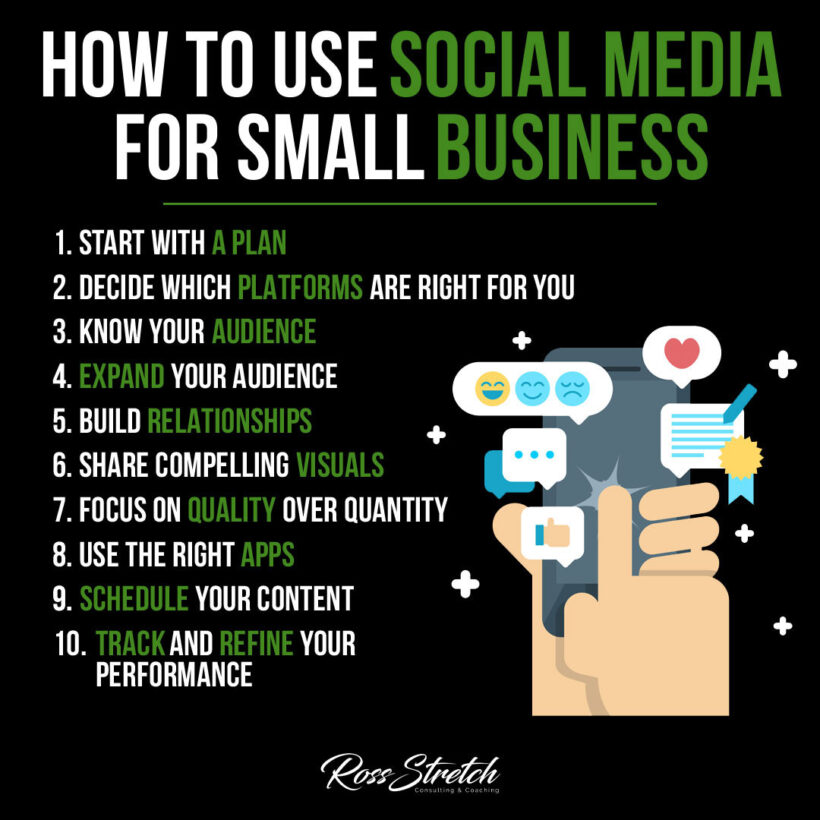

Social media has fundamentally leveled the competitive playing field — a small business with a disciplined social media strategy can out-engage and out-convert competitors ten times its size. But most small businesses post reactively, measure nothing, and wonder why results don’t come. These 10 steps give you a structured, professional approach to small business social media marketing that builds genuine audience relationships and drives measurable business growth — without an agency or a massive budget.
1. Define Specific, Measurable Goals Before You Post Anything
Strategy Without Goals Is Just Activity
The most common social media mistake small businesses make is starting before they know what success looks like. Without defined goals, you have no way to measure performance, allocate effort, or justify the time you’re investing.
- Actionable Tip: Choose one or two primary goals before creating any content — brand awareness, lead generation, customer retention, or direct sales — and attach a specific monthly target number to each.
- Why It Works: Goals create accountability and direct every content decision. When each post serves a defined objective, your output becomes sharper, easier to measure, and far simpler to improve over time.
Pro Tip:
Apply the SMART framework: Specific, Measurable, Achievable, Relevant, Time-bound. “Grow Instagram” is not a goal. “Gain 300 followers and generate 15 website clicks per week by Q2” is.
2. Choose Platforms Based on Where Your Customers Actually Are
Being Everywhere Means Being Effective Nowhere
Small businesses consistently overextend by maintaining a presence on every platform simultaneously — producing mediocre results across the board. Platform selection should be driven by one question: where does my target customer actually spend their time?
- Actionable Tip: Match customer demographics to platform audiences. Instagram and TikTok skew 18–34 and suit visual consumer brands. LinkedIn is essential for B2B. Facebook dominates the 35–54 demographic. Choose one or two and master them before expanding.
- Why It Works: Concentrated effort produces compound results. Consistent, high-quality presence on two platforms consistently outperforms inconsistent, low-quality presence across six.
Pro Tip:
Ask your existing customers directly where they spend time online. A 60-second survey delivers more actionable intelligence than any demographic study — and signals to customers that you’re paying attention to them.
3. Build Detailed Audience Personas Before Creating Content
Know Exactly Who You’re Talking To
Effective social media content is crafted for a specific person with specific problems and goals — not “everyone.” Without a clear audience picture, your content feels generic and fails to generate the engagement that drives real growth.
- Actionable Tip: Build one or two audience personas covering demographics, job role or lifestyle, top pain points, and the questions they ask most frequently. Use Facebook Audience Insights or Instagram Analytics to validate your assumptions with behavioral data.
- Why It Works: When content speaks directly to a specific person’s situation, that person feels seen and understood — which drives comments, shares, and follows. Specificity is the most underrated tool in social media, and it costs nothing.
Pro Tip:
Mine customer reviews, support emails, and DMs for the exact language your audience uses. Mirroring their words back in your content creates a recognition effect that generic marketing copy never achieves.
4. Optimize Your Profiles for Discovery and First Impressions
Your Profile Is Your Digital Storefront — Treat It Like One
Before publishing a single post, make sure your social media profiles are doing their job: converting visitors into followers and followers into customers. An incomplete or confusing profile undermines every post you publish.
- Actionable Tip: Complete every profile field — professional logo or headshot, a bio that clearly states who you help and how, a working website link, and full contact details. Use specific keywords your customers would search for in your bio copy.
- Why It Works: Keyword-rich profiles are discoverable through platform search and rank in Google. A compelling bio converts curious visitors into followers at a dramatically higher rate than a vague or incomplete one.
Pro Tip:
Pin your best-performing post or a welcome message to the top of your profile (X, Facebook, LinkedIn). It gives new visitors immediate context about who you are and why following you is worth their time.
5. Build and Follow a Content Calendar
Consistency Is the Most Underrated Growth Driver on Social Media
Inconsistent posting is one of the top reasons small business accounts stagnate. Algorithms reward consistency — accounts that post regularly are shown to more people. A content calendar eliminates daily paralysis and keeps you showing up even during your busiest weeks.
- Actionable Tip: Plan content one month in advance using a simple spreadsheet, Notion, or Google Calendar. Block one to three posts per week per platform and map content themes to your goals: promotional, educational, community-building, and behind-the-scenes.
- Why It Works: Planned content is better content. Without daily pressure, you produce higher-quality posts — and consistent performance signals to algorithms that your account deserves broader organic distribution.
Pro Tip:
Batch your content creation: block two to three hours once per week to produce everything in a single session. Batching eliminates daily decision fatigue and produces better output than reactive daily scrambling.
6. Invest in Visual Quality
The First Thing Followers Notice Is What They See
Low-quality images and inconsistent graphics signal to potential customers that your business operates at a similar level of care. Visual quality isn’t about expensive equipment — it’s about intentionality and consistency applied to whatever tools you already have.
- Actionable Tip: Create a simple visual brand kit — two or three brand colors, one or two fonts, a consistent photo style — and use Canva’s free tier to build reusable templates for every social media format.
- Why It Works: Visual consistency makes your content instantly recognizable in a crowded feed. Recognition builds familiarity, familiarity builds trust, and trust drives purchase decisions — the full chain starts with what people see first.
Pro Tip:
Natural light near a large window, your phone’s portrait mode, and one consistent editing preset close most of the gap between amateur and professional-looking content. The barrier is lower than most business owners realize.
7. Engage Actively — Don’t Just Broadcast
Social Media Is a Two-Way Conversation, Not a Megaphone
Many small businesses treat social media like a billboard — posting and going silent. Platforms reward accounts that generate genuine conversations, and audiences follow those that feel human, responsive, and genuinely invested in their community.
- Actionable Tip: Spend 15–20 minutes each day actively engaging: respond to every comment within 24 hours, reply to mentions and DMs promptly, and leave thoughtful comments on posts from your target audience and industry peers.
- Why It Works: Engagement generates more engagement. Meaningful comments on others’ posts expose your brand to their audiences. Responding to your own comments signals content quality to algorithms, pushing your post to a wider audience.
Pro Tip:
Use Instagram Stories polls, question stickers, and “this or that” formats to generate micro-engagement from followers who won’t leave a feed comment. Story interactions count toward your engagement rate and keep your account active between feed posts.
8. Use Scheduling Tools to Stay Consistent Automatically
Automate What You Can So You Can Focus on What Matters
Manually posting to multiple platforms every day is not sustainable. Scheduling tools allow you to plan and automate publishing so your presence stays active and consistent — even during your most demanding weeks.
- Actionable Tip: Choose a scheduling tool — Buffer, Later, or Hootsuite’s free tier all support multi-platform scheduling. Load your weekly content in one Monday session, set publish times, and let the tool handle distribution while you run your business.
- Why It Works: Scheduled content removes real-time pressure, producing more deliberate choices. It also enables publishing at peak audience activity windows without requiring you to be at your desk at that moment.
Pro Tip:
After 60 days of consistent posting, use your tool’s analytics to identify which days and times generate the highest engagement. Shift to those windows for a measurable reach increase without producing any additional content.
9. Expand Your Reach with Strategic Growth Tactics
Grow Your Audience with Intention, Not Just Volume
Once your foundation is consistent, actively expanding reach beyond your existing audience accelerates results. Organic growth alone is slow — strategic amplification levers dramatically increase your pace without a large ad budget.
- Actionable Tip: Deploy three growth levers simultaneously: use five to eight highly specific, mid-range hashtags per post; partner with one complementary non-competing business for a collaborative post or live session each month; and run a low-budget targeted ad ($5–10 per day) promoting your best-performing organic content.
- Why It Works: Specific hashtags connect your content to niche audiences actively seeking what you offer. Collaborations expose your brand to warm, pre-qualified audiences. Boosting proven content eliminates guesswork and maximizes advertising return.
Pro Tip:
Micro-influencers with 2,000–20,000 engaged followers in your local market or niche are dramatically more cost-effective than macro-influencers. Their audiences are tightly aligned, trust levels are high, and many collaborate in exchange for your product or a modest fee.
10. Track Key Metrics Weekly and Refine Your Strategy
Data Is the Competitive Advantage Most Small Businesses Ignore
Small businesses that measure social media performance consistently outperform those that post and hope. Your analytics reveal what your audience values, which formats resonate, and where your time generates the best return — ignoring them is leaving a real competitive advantage on the table.
- Actionable Tip: Track four core metrics weekly using native platform analytics (no paid tools required): reach (unique accounts that saw your content), engagement rate (interactions divided by reach), follower growth rate, and click-through rate to your website.
- Why It Works: Weekly tracking creates a continuous improvement loop. Within 90 days you will see clear patterns — which content types perform best, which posting times drive the most engagement — so you can double down on what works and cut what doesn’t.
Pro Tip:
Run a monthly content audit: review your top three and bottom three performing posts and ask what made the winners work. Businesses that do this consistently see measurable engagement improvements within 60–90 days — simply from eliminating what wasn’t working.
Your Social Media Strategy Starts Now
Effective social media for small businesses is not about going viral — it is about showing up consistently, understanding your audience, and improving based on data. Follow these 10 steps and you will build a presence that generates tangible results: more followers, more leads, and more customers. Start with Step 1 this week, not next month.
Resources
- Sprout Social: Social Media for Small Business — A comprehensive, regularly updated guide to building a small business presence across all major platforms.
- Hootsuite: How to Create a Social Media Marketing Strategy — Step-by-step framework for building and executing a strategy from scratch.
- Buffer: The Complete Guide to Social Media Strategy — Practical, data-backed advice on content planning, platform selection, and audience growth.
- Meta for Business: Small Business Hub — Free tools, guides, and advertising resources specifically designed for small business owners on Facebook and Instagram.

 Ross Stretch