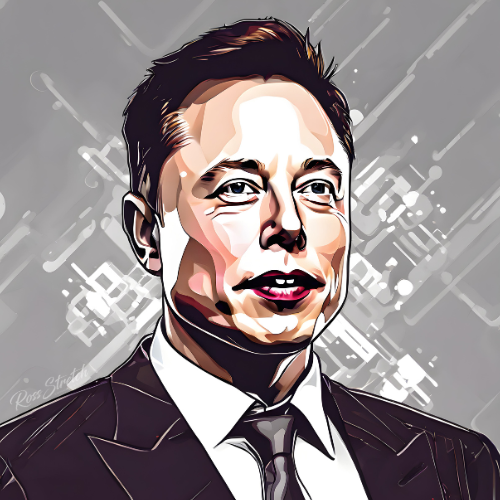

Elon Musk is the most financially dynamic figure of the 21st century — a serial entrepreneur who has upended the automotive, aerospace, energy, social media, and artificial intelligence industries simultaneously. As the CEO of Tesla and SpaceX, and the owner of social media platform X (formerly Twitter), Musk commands a business empire without modern parallel. As of 2025, his net worth is estimated at approximately $300 billion, placing him firmly among the top two wealthiest people in the world. His story — from a self-taught programmer in South Africa to the architect of humanity’s potential multiplanetary future — is one of the most audacious entrepreneurial narratives in history.
Early Life & Background
Elon Reeve Musk was born on June 28, 1971, in Pretoria, South Africa, to Maye Musk, a model and dietitian, and Errol Musk, an electromechanical engineer. By his own account, his childhood was difficult — he was bullied severely at school and retreated into books and computers. He taught himself to code from a manual and at just 12 years old, sold his first software: a space-themed game called Blastar, which he sold to a computing magazine for approximately $500. He attended the University of Pretoria briefly before leaving South Africa at age 17, moving first to Canada (where his mother held citizenship) and then to the United States. He enrolled at Queen’s University in Ontario before transferring to the University of Pennsylvania, where he earned dual bachelor’s degrees in economics and physics. He was accepted into Stanford University’s PhD program in energy physics in 1995 — but left after just two days to pursue the internet gold rush, a gamble that would define his trajectory.
Career & Rise to Success
Musk’s first venture, Zip2, was a software company that provided online city guides for newspapers. In 1999, Compaq acquired Zip2 for $307 million, netting Musk approximately $22 million. He immediately plowed that money into X.com, an online banking startup. After merging with Confinity, X.com became PayPal. When eBay acquired PayPal in 2002 for $1.5 billion in stock, Musk received roughly $180 million — the seed capital for his next three ventures. He founded SpaceX in 2002 with the stated mission of making humanity multiplanetary, invested in and became chairman of Tesla in 2004, and co-founded SolarCity (later absorbed into Tesla) in 2006. All three nearly failed in the 2008 financial crisis — SpaceX’s first three rocket launches failed, Tesla was days from bankruptcy, and Musk was personally broke. A last-minute NASA contract saved SpaceX, Tesla secured a federal loan, and Musk scraped together personal funds to keep both companies alive. That turning point became the crucible from which his empire was forged.
Major Achievements
Musk’s achievements span multiple industries in ways no other entrepreneur has matched. At Tesla, he led the creation of the Model S, Model 3, Model X, and Model Y — vehicles that redefined consumer expectations of electric cars and drove global EV adoption. Tesla became the most valuable automaker in the world by market cap, briefly exceeding $1 trillion. At SpaceX, he achieved what NASA and the Soviet space program took decades to do: he developed fully reusable orbital rockets. The Falcon 9’s reusable first stage has dramatically reduced launch costs, and the Starship program — the most powerful rocket ever built — promises to make Mars colonization logistically feasible. SpaceX’s Starlink satellite internet constellation has over 5 million subscribers across 100+ countries. In 2022, Musk acquired Twitter for $44 billion and rebranded it as X, triggering enormous controversy but also positioning the platform as his vision of a global digital town square. His AI company xAI, founded in 2023, launched the Grok chatbot and is competing directly with OpenAI.
Income Sources & Business Ventures
Musk’s wealth is overwhelmingly tied to equity stakes rather than traditional salary. He owns approximately 13% of Tesla and roughly 42–45% of SpaceX, which was last valued at over $210 billion in a 2024 tender offer. At Tesla, he famously rejected a conventional salary package, instead negotiating a performance-based compensation plan in 2018 tied entirely to stock options contingent on reaching ambitious market cap and operational milestones — a plan that generated extraordinary paper wealth but was later challenged in Delaware courts. SpaceX’s growing government contracts with NASA (including the Human Landing System for the Artemis moon program) and the U.S. Department of Defense provide stable institutional revenue. X (formerly Twitter) remains a work in progress financially, while Neuralink — his brain-computer interface company — completed its first human trial implant in 2024. The Boring Company continues to develop tunneling infrastructure, with active projects in Las Vegas and other cities.
Assets & Lifestyle
Unlike most ultra-wealthy individuals, Musk has made a public point of owning very little personal real estate. Between 2020 and 2022, he sold off essentially all of his properties, including multiple Bel Air mansions, tweeting that he was living in a modular, prefabricated Boxabl home near SpaceX’s facilities in Boca Chica, Texas. He has relocated his primary residence and many of his company headquarters to Texas. Despite his public minimalism, he does operate private jets and has access to world-class facilities through his companies. His primary assets are his equity stakes in Tesla and SpaceX — enormous, illiquid positions that make his net worth highly sensitive to market fluctuations. Musk has a large family, including at least 12 children with multiple partners, and has spoken openly about his belief that declining birth rates pose an existential risk to civilization.
Philanthropy & Giving Back
Musk’s philanthropic record is the subject of significant debate. Through the Musk Foundation, he has made grants in the areas of renewable energy research, science education, pediatric health, and disaster relief. He donated $100 million toward a prize for carbon capture technology. During the COVID-19 pandemic, he donated ventilators to hospitals across California. He has pledged to donate the majority of his wealth but has not signed the Giving Pledge. Critics note that his philanthropic giving represents a small fraction of his overall wealth, while supporters argue that his companies — particularly Tesla’s role in accelerating EV adoption and SpaceX’s advancement of satellite internet access in underserved regions — constitute a form of applied philanthropy at massive scale.
Elon Musk’s Net Worth in 2025
As of 2025, Elon Musk’s net worth is estimated at approximately $300 billion, according to Forbes and the Bloomberg Billionaires Index. His ranking at the very apex of global wealth is largely a function of Tesla’s stock price movements and SpaceX’s private valuations — both of which can shift tens of billions of dollars in days. He was the first person in history to accumulate a net worth exceeding $300 billion, briefly reaching that threshold in late 2021 and again in 2024–2025. His ongoing roles across Tesla, SpaceX, xAI, Neuralink, and X ensure that his financial profile will remain one of the most closely watched in the world for years to come.
Conclusion
Elon Musk’s wealth story is inseparable from his willingness to bet everything — repeatedly — on ideas that most people considered impossible. From reusable rockets to mass-market electric vehicles to brain-computer interfaces, he has turned moonshots into multi-billion-dollar realities. Whatever one thinks of his public persona, his management style, or his political views, Musk’s impact on technology, transportation, and the long-term future of the human species is undeniable. With a net worth hovering around $300 billion and ventures spanning some of the most consequential frontiers of our time, his financial and cultural influence shows no sign of diminishing.
References


 Ross Stretch