A second income stream used to be a safety net for people in financial difficulty. Today, it has become a deliberate wealth-building strategy for ambitious professionals who recognize that a single paycheck — no matter how generous — limits both your financial ceiling and your resilience against economic uncertainty. The question is no longer whether you should pursue additional income, but how to approach it with enough structure to make it meaningful rather than exhausting.
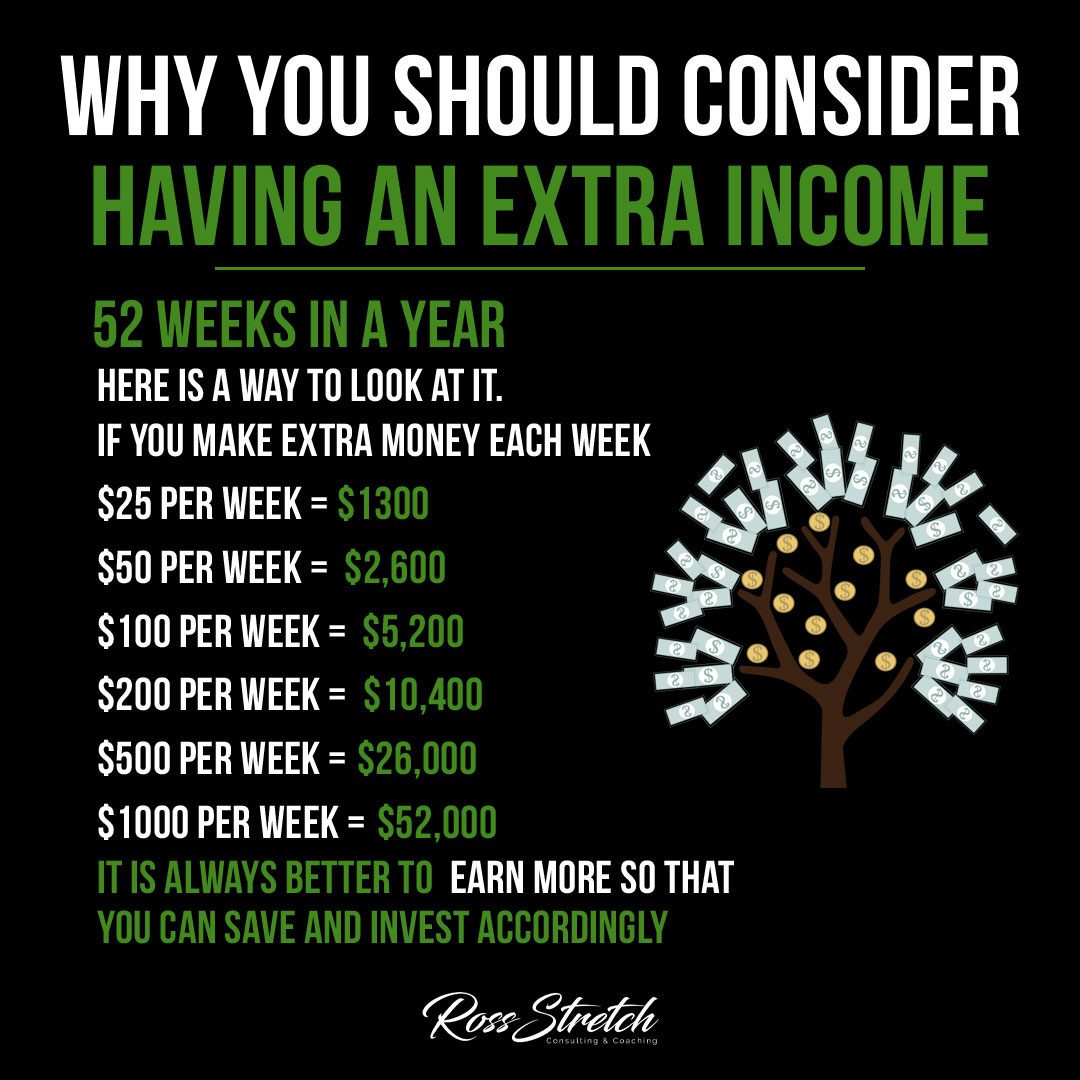
The math is straightforward. There are 52 weeks in a year, and every week presents an opportunity to generate income outside your primary job. Even modest weekly amounts, sustained consistently, produce results that change financial trajectories. Understanding this framework — and the psychology and strategy behind it — is the first step toward unlocking financial potential that a single income stream cannot provide.
The 52-Week Math: Why Consistency Compounds
The power of extra income becomes clear when you view it through an annual lens rather than a weekly one. Earning an extra $25 per week produces $1,300 by year’s end — enough to cover an emergency, pay down a credit card, or seed an investment account. At $50 per week, the annual total reaches $2,600. At $100 per week, $5,200. At $500 per week, $26,000. At $1,000 per week, an additional $52,000 per year — a sum that, invested consistently over time, begins to generate its own compounding returns.
What makes this framework useful is not the specific numbers — those will vary based on your skills, time, and market. What matters is the mental shift it creates. Viewing extra income through a weekly lens makes the goal feel achievable. It removes the intimidation of building a six-figure business and replaces it with a more immediate question: what can I do this week to earn an extra $100? That is a question most people can answer, and answering it consistently is how significant supplemental income is built over time.
Why Extra Income Changes Your Financial Psychology
Beyond the dollars, a secondary income stream does something more important to your financial life: it changes your relationship with risk. When all of your income comes from one source, losing that source — through a layoff, a business closure, or a health issue — is financially catastrophic. A second income stream creates a buffer that allows you to make better long-term decisions because you are not operating from financial fear.
Financial resilience is not just about having savings; it is about having diversified income flows that continue even when one source is disrupted. Professionals with multiple income streams negotiate salaries differently, take career risks more confidently, and invest more aggressively — because they know a single point of failure no longer defines their financial stability. That psychological shift often produces better financial outcomes than the extra income itself.
Finding the Right Side Income for Your Situation
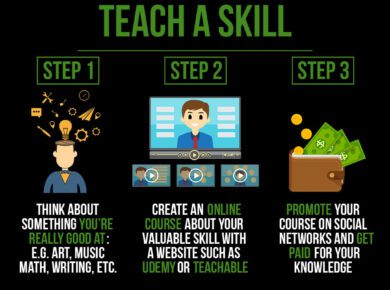
Not all extra income opportunities are created equal, and the right one depends entirely on your skills, schedule, and long-term goals. The most sustainable side incomes leverage what you already know rather than requiring you to learn an entirely new field from scratch. A marketing professional might consult for small businesses. A software developer might freelance on project work. A teacher might tutor students or create educational content. Starting with existing expertise reduces the ramp-up time and increases the likelihood that the work is genuinely valuable to clients from the outset.
Beyond service-based income, consider asset-based income streams that can generate revenue without direct hourly effort over time. Digital products, rental income, dividend-paying investments, and content that generates advertising or affiliate revenue all fall into this category. These take longer to build but eventually decouple income from time — the most powerful form of financial leverage available to individuals who are not running institutional-scale operations.
Starting Small and Scaling Deliberately
The most common mistake ambitious professionals make when pursuing extra income is overcommitting early and burning out before results materialize. Starting with a realistic time commitment — even five hours per week — and building systems before scaling is far more effective than launching at full intensity and collapsing after a month. Treat the extra income as a business from the start: track revenue, time invested, and what is working, and reinvest early profits into tools or education that improve your earning rate.
Set a specific six-month target for your first income stream before you consider adding a second. The goal in the early phase is not maximum income — it is proof of concept and system-building. Once you have a repeatable process for earning additional income each month, scaling it or replicating the model in a new area becomes significantly more straightforward. Discipline over premature diversification in the early stage is the principle that separates those who build lasting extra income from those who endlessly start and abandon new attempts.
Common Mistakes to Avoid
Pursuing extra income without clarity on how it fits your primary career and life goals is a recipe for exhaustion without meaningful reward. Before committing to a side income path, define what success looks like at three months, six months, and one year. Without these benchmarks, it is easy to work hard without knowing whether the effort is producing the outcomes you actually want.
- Do not neglect your primary income while building a side income. Your main job remains the foundation until extra income can genuinely supplement or replace it at scale.
- Do not ignore taxes on extra income. Self-employment income in most jurisdictions is subject to additional taxes. Set aside 25 to 30 percent of side income from the start to avoid a painful year-end surprise.
- Do not equate being busy with being profitable. Track your effective hourly rate for every side income activity and reduce time spent on anything that falls below your minimum threshold.
- Do not wait for the perfect idea. The best side income is one you actually start. Iteration improves results faster than extended planning without action.
Conclusion
Extra income is not a luxury strategy for people with unlimited time. It is a practical financial tool available to anyone willing to apply their existing skills to problems worth solving outside their primary job. The 52-week framework makes the math clear: even modest, consistent weekly income accumulates into amounts that materially change your financial position. Start with what you know, commit to a realistic time investment, track your results honestly, and scale what works. The financial potential you want to unlock is already present — it simply requires the decision to pursue it deliberately.
Resources


 Ross Stretch