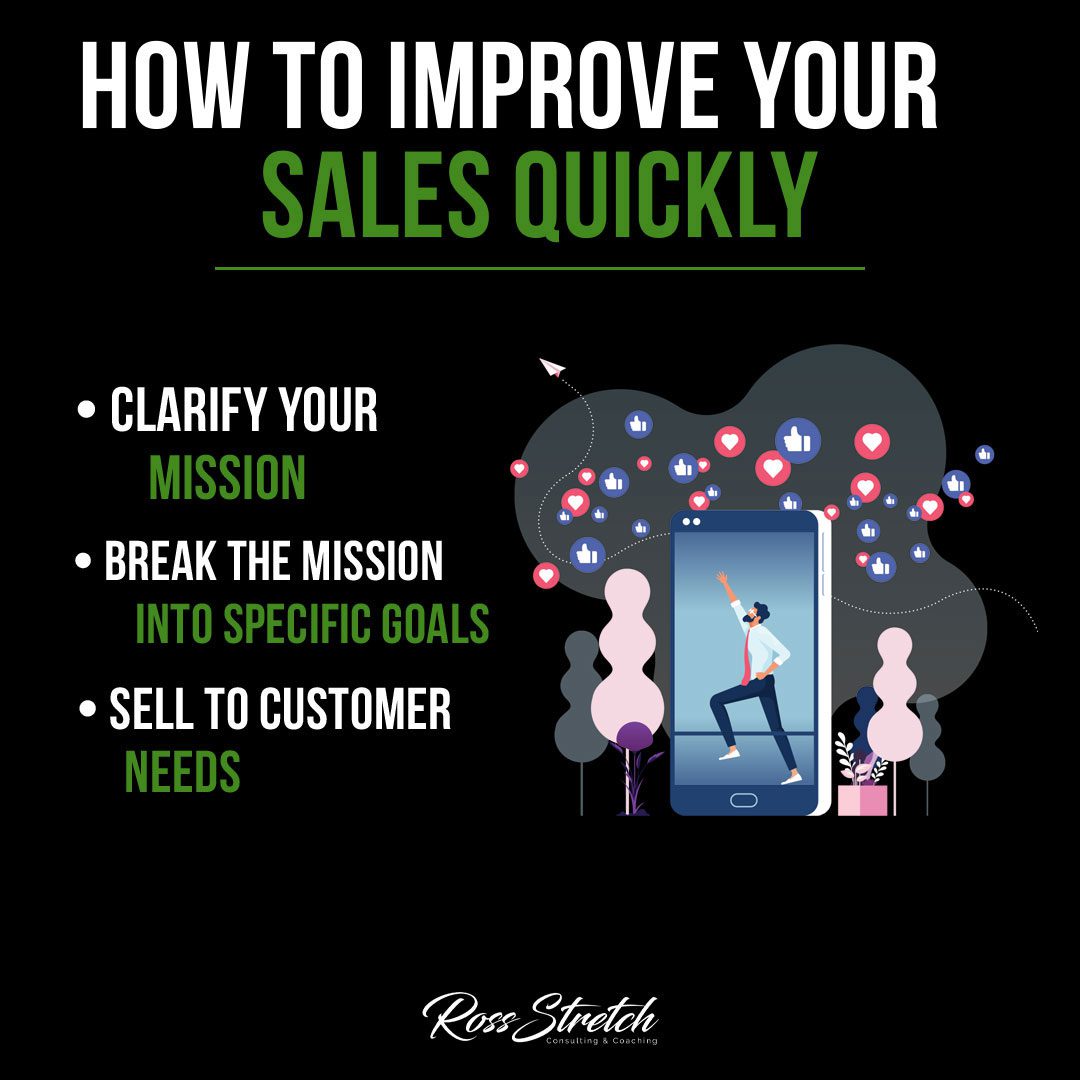
Struggling to move the needle on revenue? Many businesses hit a plateau not because the market isn’t there, but because their sales strategy lacks structure and focus. Whether you’re a solopreneur or managing a team, knowing how to improve sales quickly comes down to a few repeatable, proven techniques. This guide breaks down exactly what to do — from defining your value proposition to streamlining your sales funnel — so you can start seeing results without wasting time on tactics that don’t work.
Why This Matters
Sales drive everything in a business. Without consistent revenue, even the best product or service can’t survive long-term. The difference between businesses that grow and those that stagnate often isn’t budget or product quality — it’s how deliberately and systematically they approach selling. When you improve your sales process, you’re not just adding revenue; you’re building infrastructure that compounds over time and makes growth more predictable.
Quick wins in sales aren’t random — they come from identifying exactly where deals get stuck and fixing those friction points. Whether leads are going cold, conversion rates are low, or average deal size is shrinking, there’s a root cause and a process fix for each problem. Taking a structured approach lets you diagnose the real issue and apply the right solution rather than cycling through tactics that don’t address the underlying breakdown.
How to Improve Sales with These Effective Strategies
Step 1: Define Your Value Proposition
Your value proposition is the single clearest statement of why a customer should choose you over a competitor. If your sales team can’t articulate it in two sentences, neither can your prospects. A weak or generic value proposition kills deals before they start. Take the time to pinpoint exactly what problem you solve, who experiences that problem most acutely, and what makes your solution distinctly better or different. Test it with real customers and refine it based on what actually resonates — their exact words are often more persuasive than your own.
- Write a one-sentence value proposition using the frame: “We help [target customer] achieve [outcome] without [pain point]”
- Validate it by asking three existing customers why they chose you — use their language, not yours
- Remove vague phrases like “high quality” or “great service” and replace them with specific, measurable outcomes
- Avoid making your value proposition about features — customers buy results, not specifications
Step 2: Set Specific, Measurable Sales Goals
Vague ambitions don’t produce results — specific targets do. Rather than aiming to “increase sales,” define exactly what you want to achieve: a 20% increase in monthly revenue within 90 days, 15 new clients by end of quarter, or a conversion rate improvement from 8% to 12%. Measurable goals create accountability and give you real data to work with. Break each major goal into weekly milestones so you can catch problems early rather than realizing at month-end that you’re off track and out of time.
- Set goals using the SMART framework: Specific, Measurable, Achievable, Relevant, and Time-bound
- Identify two or three key performance indicators that directly predict revenue — leads generated, demos booked, proposals sent
- Review KPIs weekly, not just monthly — weekly visibility lets you course-correct before a bad week becomes a bad quarter
- Avoid tracking too many metrics at once — focus on the handful that most directly drive revenue
Step 3: Adopt a Customer-Centric Sales Approach
The fastest way to close more sales is to stop leading with your product and start leading with your customer’s problem. Most sales conversations fail because the seller is focused on pitching rather than listening. Invest in discovery: ask open-ended questions, resist the urge to interrupt, and map what you learn to outcomes the customer genuinely cares about. When a prospect feels heard and believes you understand their situation, the sale becomes a natural next step rather than something they need to be pressured into.
- Prepare five open-ended discovery questions before every sales conversation — and actually listen to the answers
- Use the SPIN framework: ask about Situation, Problem, Implication, and Need-Payoff before presenting any solution
- Summarize what you’ve heard back to the prospect before recommending anything — it builds trust and catches misunderstandings
- Avoid jumping into your pitch before you fully understand what the customer actually needs to solve
Step 4: Streamline Your Sales Funnel
A leaky funnel is one of the most common reasons sales numbers stay flat even when lead volume is healthy. Map every stage from first contact to closed deal and calculate your conversion rate at each step. That data will show you precisely where prospects are dropping off. Sometimes the fix is a better follow-up sequence. Sometimes it’s a clearer proposal format or a missing piece of social proof at a critical decision point. Don’t optimize what doesn’t need optimizing — fix the stage with the worst conversion rate first, then move to the next.
- Map your entire sales funnel on paper and assign real conversion numbers to each stage
- Identify your biggest drop-off point and concentrate your first improvements there
- Create templated follow-up sequences for leads at each stage to eliminate inconsistency and missed touchpoints
- Avoid adding more leads to a broken funnel — fix the conversion problems before scaling lead volume
Step 5: Use CRM Tools and Data to Drive Decisions
Gut instinct can only take you so far. Businesses that improve sales consistently do so because they make decisions based on data — what’s in their pipeline, how long deals take to close, which outreach methods produce the highest conversion rates, and where their best customers come from. A CRM system doesn’t have to be expensive. Even a basic setup in HubSpot or Pipedrive gives you pipeline visibility you simply can’t get from spreadsheets or memory alone. Use it every day, not just when you need to generate a report.
- Choose a CRM that fits your team size — HubSpot has a robust free tier, Pipedrive is affordable and straightforward
- Log every interaction: calls, emails, demos, proposals, and objections
- Run a weekly pipeline review to identify stalled deals and take action before they go cold
- Avoid entering data inconsistently — a CRM is only as useful as the quality and completeness of what’s inside it
Common Mistakes to Avoid
- Pitching your product before understanding the customer’s actual problem — this destroys trust and signals that you’re not listening
- Setting vague goals like “sell more” without specific targets, timelines, or metrics attached to them
- Ignoring your CRM data and relying on memory or intuition to manage your pipeline
- Treating every lead the same regardless of how ready they are to buy or where they are in the decision process
- Giving up on follow-up after one or two attempts — research consistently shows that most deals require five or more touchpoints before closing
Conclusion
Improving sales quickly isn’t about working harder — it’s about working on the right things in the right order. When you define a clear value proposition, set measurable goals, genuinely listen to your customers, fix your funnel, and use data to guide decisions, you create the conditions for consistent, compounding revenue growth. These aren’t one-time fixes; they’re ongoing disciplines that separate high-performing sales operations from those that plateau. Start with the strategy that addresses your most pressing gap right now, execute it fully, then move to the next.
Ready to take action? Pick one of the five strategies above, implement it this week, and measure the result. Small, deliberate improvements made consistently will outperform any single tactic every time.
Resources
- HubSpot Sales Blog — Practical guides, templates, and research on modern sales strategy and CRM best practices
- Salesforce Sales Resources — In-depth articles on pipeline management, CRM, and sales performance optimization
- Harvard Business Review — Sales — Research-backed articles on sales leadership, buyer behavior, and revenue growth
- RAIN Group Sales Blog — Data-driven insights on what top-performing salespeople do differently from average performers

 Ross Stretch