Introduction:
Change is an inevitable part of life, and being able to adapt to it is crucial for personal growth and success. Whether it’s a major life transition, a career shift, or unexpected circumstances, the ability to embrace change can lead to new opportunities and personal development. In this article, we will explore six effective strategies to help you adapt to change and thrive in the face of uncertainty.
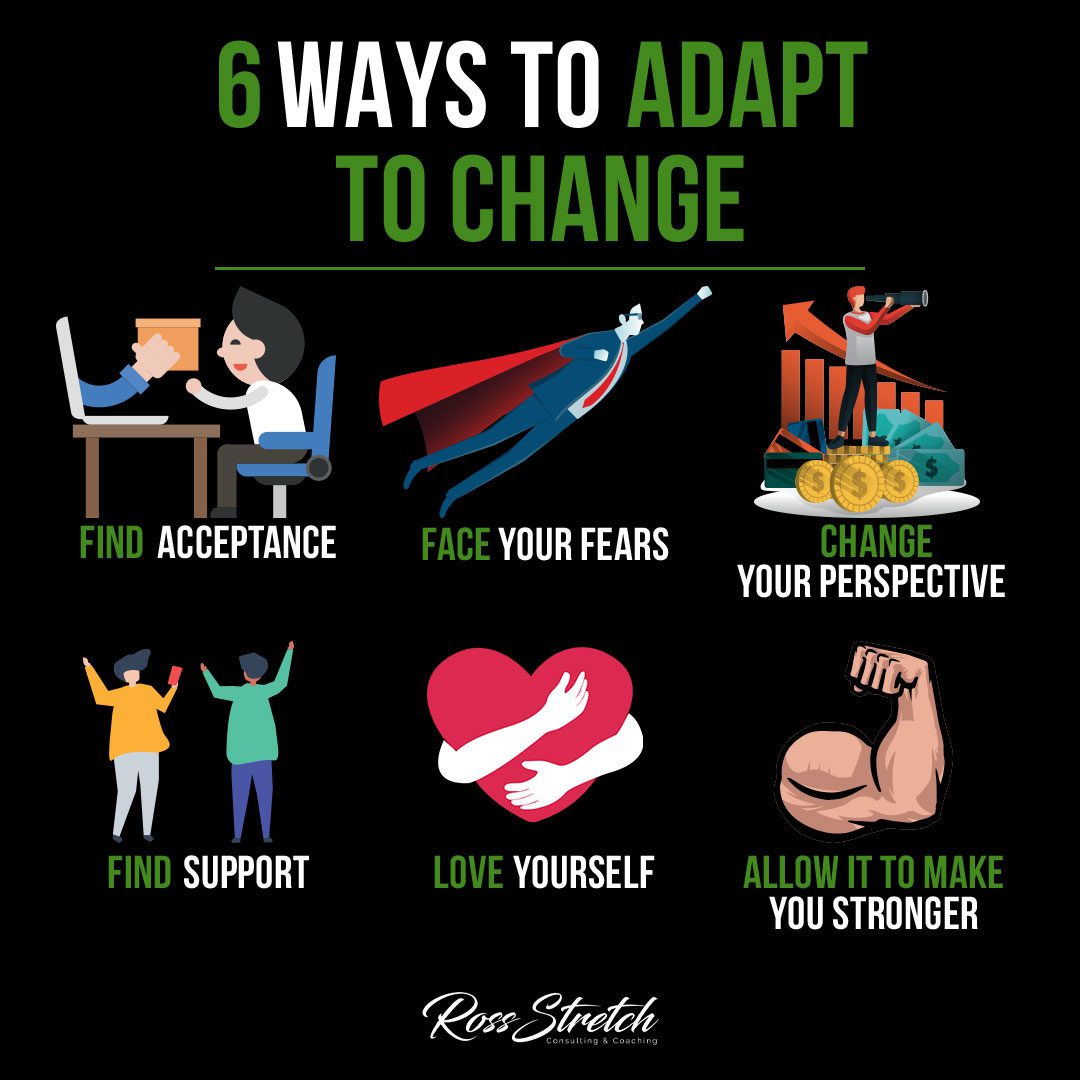
By finding acceptance, facing fears, changing perspective, seeking support, loving yourself, and allowing change to make you stronger, you can develop resilience and thrive in the face of change.
Ross Stretch
Find Acceptance:
Acceptance is the first step towards embracing change and allowing yourself to move forward. Consider the following points:
- Acknowledge your emotions: It’s natural to feel a range of emotions when faced with change. Allow yourself to experience and process these emotions without judgment.
- Let go of resistance: Resisting change only prolongs the process and creates additional stress. Embrace the idea that change is a constant part of life and focus on finding ways to adapt.
Face Your Fears:
Fear can be a major barrier to embracing change. Confronting your fears empowers you to move forward and grow. Consider the following strategies:
- Identify your fears: Understand the specific fears or concerns you have about the change.
- Break it down: Break down your fears into smaller, manageable steps. Gradually expose yourself to the change, taking one step at a time.
Change Your Perspective:
Changing your perspective can help you see change as an opportunity for growth and learning. Consider the following approaches:
- Reframe your mindset: Instead of viewing change as a threat, see it as a chance to explore new possibilities and expand your horizons.
- Focus on the positives: Identify the potential benefits or opportunities that may arise from the change.
Find Support:
Having a support system can provide encouragement, guidance, and reassurance during times of change. Consider the following ways to find support:
- Seek guidance from mentors or coaches: Connect with individuals who have experienced similar changes and can provide valuable insights and advice.
- Surround yourself with positive influences: Surround yourself with supportive friends, family members, or colleagues who uplift and inspire you.
Love Yourself:
Self-compassion is crucial during times of change. Show yourself kindness and understanding as you navigate through the process. Consider the following practices:
- Practice self-care: Take care of your physical, emotional, and mental well-being by engaging in activities that bring you joy and reduce stress.
- Celebrate small victories: Recognize and celebrate your progress and accomplishments along the way.
Allow It to Make You Stronger:
View change as an opportunity for personal growth and resilience. Consider the following perspectives:
- Learn from the experience: Identify lessons or skills you can gain from the change and use them to build your personal and professional repertoire.
- Embrace challenges: See challenges as opportunities to test your abilities and develop new strengths.
Conclusion:
Adapting to change is a vital skill for navigating life’s uncertainties and embracing personal growth. By finding acceptance, facing fears, changing perspective, seeking support, loving yourself, and allowing change to make you stronger, you can develop resilience and thrive in the face of change. Embrace these strategies, and discover the transformative power of adapting to change.
References:
- Gilbert, E. (2017). Big Magic: Creative Living Beyond Fear. Riverhead Books.
- Neff, K. D. (2011). Self-Compassion: Stop Beating Yourself Up and Leave Insecurity Behind. William Morrow Paperbacks.
- Bridges, W. (2004). Transitions: Making Sense of Life’s Changes. Da Capo Lifelong Books.

 Ross Stretch