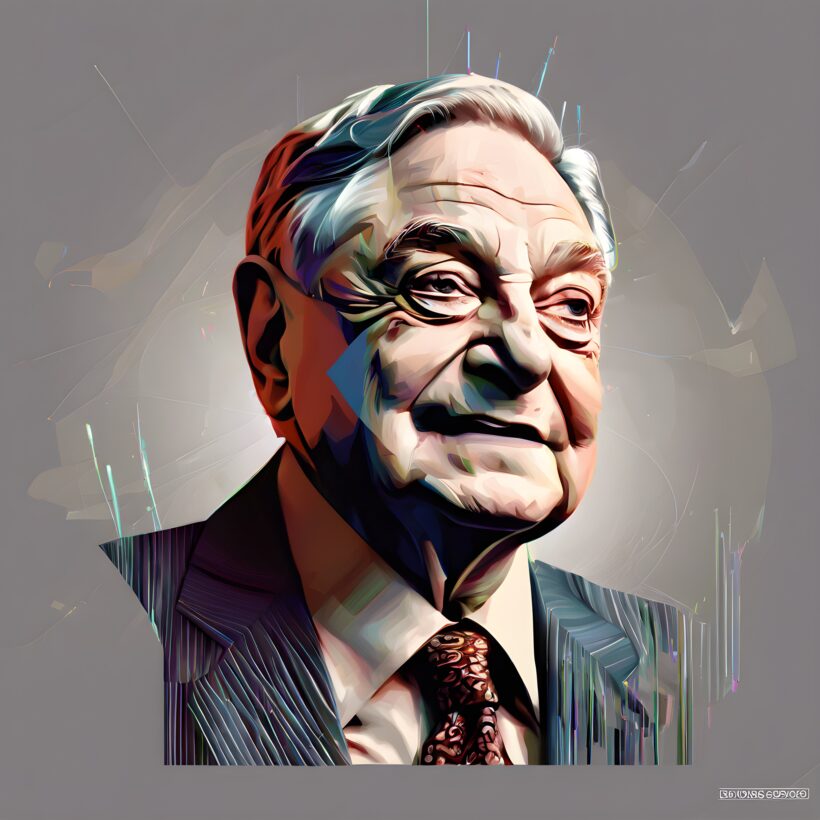

George Soros is one of the most consequential figures in the history of global finance and philanthropy. Known worldwide as “The Man Who Broke the Bank of England” after a legendary 1992 currency trade that netted him over $1 billion in a single day, Soros has also given away more than $32 billion over his lifetime to promote democracy, human rights, and open societies. As of 2025, Forbes estimates George Soros’s net worth at approximately $8.5 billion — a figure that, given the staggering scale of his charitable giving, is perhaps the most remarkable aspect of his already remarkable story.
Early Life & Background
George Soros was born Schwartz György on August 12, 1930, in Budapest, Hungary, to a middle-class Jewish family. His father, Tivadar Soros, was a lawyer who had survived prisoner-of-war captivity in Siberia during World War I. When Nazi Germany occupied Hungary in 1944, the fourteen-year-old Soros survived by assuming a false identity, posing as the godson of a non-Jewish Hungarian official. He witnessed the persecution and deportation of Jewish neighbors while successfully concealing his own identity — a formative experience that instilled in him a lifelong conviction about the fragility of open societies and the urgent necessity of defending them.
After the war, Soros made his way to England, arriving in London in 1947. He worked as a waiter and railway porter to support himself while studying at the London School of Economics under the philosopher Karl Popper. Popper’s seminal work on the “open society” — the idea that societies must remain open to criticism, dissent, and reform to remain free — profoundly and permanently shaped Soros’s worldview. He earned his degree in 1952 and began pursuing a career in finance, initially struggling to find his footing in London before emigrating to the United States in 1956.
Career & Rise to Success
Soros began his American financial career working at F.M. Mayer, then Wertheim & Co., and later at Arnhold and S. Bleichroeder, where he eventually became a partner. During this period he developed his influential concept of “reflexivity” — the theory that market participants’ beliefs and actions actually influence the economic fundamentals they are attempting to predict, creating self-reinforcing feedback loops that conventional economic models fail to capture. This insight became the theoretical cornerstone of his distinctive investment approach.
In 1969, Soros established his first independent fund, and in 1973 he co-founded Soros Fund Management with partner Jim Rogers, launching the Quantum Fund. The fund became one of the most successful investment vehicles in history, compounding at approximately 30% annually over several decades — a record that few investors in any era have matched. By the 1980s, Soros had established himself as the preeminent macro investor in the world, taking large, conviction-driven bets on currencies, commodities, and equity markets based on his macroeconomic analysis.
Major Achievements
Soros’s most celebrated trade came on September 16, 1992 — a date that became known in the United Kingdom as “Black Wednesday.” Having analyzed the structural weaknesses of the British pound’s position within the European Exchange Rate Mechanism, Soros’s fund accumulated a short position of approximately £10 billion in sterling. When the British government was forced to withdraw from the ERM and allow the pound to devalue sharply, Soros pocketed over $1 billion in profit within a single day, permanently cementing his legendary status in global finance. The trade remains one of the most audacious and profitable in investment history.
Over more than three decades, the Quantum Fund delivered extraordinary returns — growing $1,000 invested at its founding into over $4 million at its peak, one of the greatest compounding records in investment history. Soros is also an influential author; his 1987 book The Alchemy of Finance articulated his theory of reflexivity and became required reading in financial circles. He followed it with The Crisis of Global Capitalism (1998) and The Crash of 2008 and What It Means (2009), demonstrating his ability to predict and analyze major market dislocations.
Income Sources & Business Ventures
Soros Fund Management, headquartered in New York, manages assets primarily for Soros and his family after converting from an external hedge fund to a private family office in 2011, following new SEC disclosure requirements that Soros chose not to comply with. The fund continues to generate returns through global macro investing across equities, currencies, commodities, and derivatives. Under the management of a professional investment team, it has continued compounding capital even as Soros himself has stepped back from day-to-day decisions.
Over the decades, Soros has also made profitable investments in emerging market debt, technology equities, and various commodity plays. His portfolio has at various times included significant stakes in gold, foreign currencies, and large-cap technology companies. The cumulative returns from these investments, spanning more than six decades of active market participation, form the primary base of his current wealth.
Assets & Lifestyle
Soros owns a large estate in Bedford Hills, New York, where he has lived for many years, as well as an apartment in New York City and residences in Europe. Now in his mid-nineties, he leads a private life focused on intellectual and philanthropic pursuits rather than material accumulation. He has been married three times — to Annaliese Witschak (1960–1983), Susan Weber (1983–2005), and Tamiko Bolton (2013–present), who is decades his junior and has been actively involved in his philanthropic work.
In 2023, Soros handed the chairmanship of the Open Society Foundations to his son Alexander Soros, signaling a generational transition in his philanthropic empire. George Soros himself has reduced his public appearances significantly in recent years while remaining the visionary force behind the foundations’ strategic direction.
Philanthropy & Giving Back
No account of George Soros is complete without centering his extraordinary philanthropy. Since founding the Open Society Foundations in 1984, he has donated more than $32 billion — one of the largest sums ever given away by a living individual. The Open Society Foundations operate in more than 120 countries, supporting independent media, judicial reform, human rights organizations, anti-corruption initiatives, drug policy reform, and public health programs. They have been particularly active in post-communist Eastern Europe, where Soros’s personal history gave him special motivation to support civil society development.
In 1991, Soros founded the Central European University in Budapest, which became one of the premier graduate institutions in Europe before being forced to relocate to Vienna in 2019 following pressure from the Hungarian government of Viktor Orban. Soros has funded thousands of scholarships for students from developing countries, supported independent journalism in authoritarian contexts, and backed criminal justice reform in the United States. His philanthropic activities have made him one of the most admired and, in some political circles, most controversial figures in the world.
George Soros’s Net Worth in 2025
As of 2025, Forbes estimates George Soros’s net worth at approximately $8.5 billion. This figure understates his true financial legacy when one considers that he has given away more than $32 billion over his lifetime — a sum that, had he retained it, would place him comfortably among the top ten wealthiest people in the world. His ongoing investment returns through Soros Fund Management ensure that his wealth, though substantially reduced by giving, remains significant. Bloomberg and other financial publications have at various points estimated his net worth slightly higher or lower depending on market conditions, but the $8–9 billion range reflects consistent consensus estimates as of 2024–2025.
Conclusion
George Soros’s story defies easy categorization. He is simultaneously one of history’s greatest investors, one of its most generous philanthropists, and one of its most polarizing public figures. His experience surviving Nazi occupation as a teenager gave him a sense of moral urgency that never left him, and his entire career — in markets and in philanthropy — has been driven by the conviction that open societies are fragile, worth fighting for, and never to be taken for granted. His theory of reflexivity changed how sophisticated investors think about markets. His Open Society Foundations changed the institutional landscape of civil society across dozens of countries. Whatever one’s views on his political activities, the breadth of his intellectual contribution, financial achievement, and philanthropic legacy is genuinely extraordinary — a life lived at the absolute intersection of ideas, markets, and moral purpose.
References


 Ross Stretch