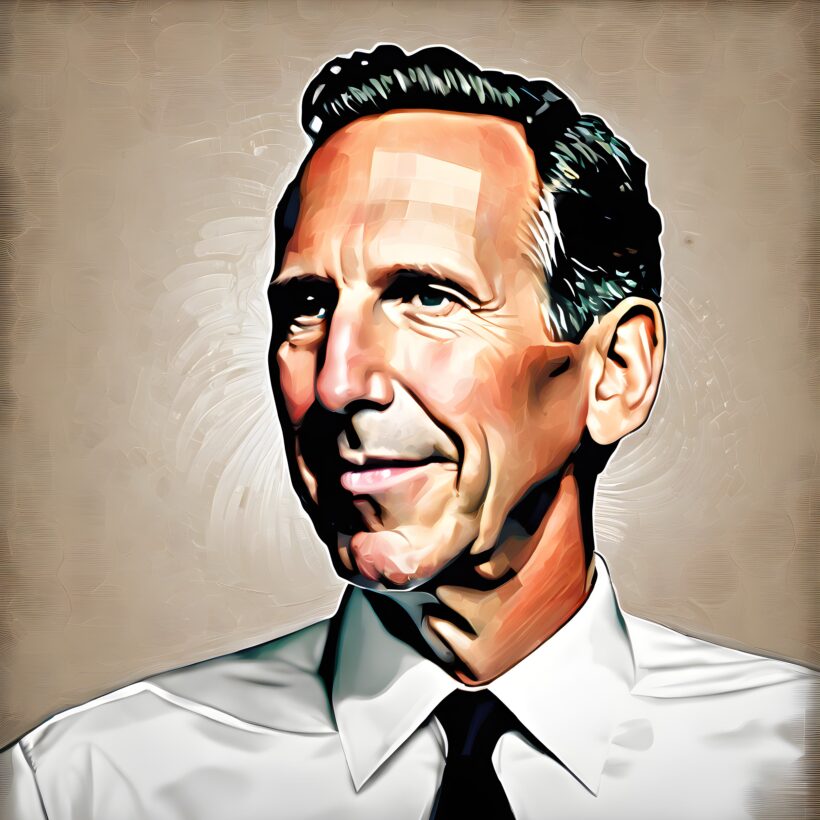

Howard Schultz turned a small Seattle coffee company into a global cultural institution. As the visionary behind Starbucks‘s explosive growth, he transformed not just how Americans drink coffee, but how they think about communal gathering spaces — what he called the “third place” between home and work. As of 2025, Schultz’s net worth is estimated at approximately $4 billion, a fortune built on one of the most enduring and recognizable consumer brands in modern history.
Early Life & Background
Howard Schultz was born on July 19, 1953, in Brooklyn, New York, and grew up in the Canarsie neighborhood — specifically in the Bayview Houses, a public housing project. His father worked a series of blue-collar jobs and struggled financially, often without health insurance or workers’ compensation when injured. That early exposure to economic insecurity profoundly shaped Schultz’s later commitment to employee welfare and benefits. He was the first in his family to attend college, earning a football scholarship to Northern Michigan University in Marquette, where he graduated with a communications degree in 1975. After college, he worked in sales at Xerox and then as a general manager at Hammarplast, a Swedish housewares company — where he first noticed that a small coffee bean retailer in Seattle was ordering an unusually large number of drip coffee makers.
Career & Rise to Success
That coffee bean retailer was Starbucks. Schultz visited the original store in 1981 and was immediately captivated by the founders’ passion for high-quality coffee. He joined the company in 1982 as Director of Retail Operations and Marketing. A business trip to Milan in 1983 proved transformative: Schultz was struck by Italy’s espresso bar culture — the sense of community, the quality of the drinks, the theater of the barista. He returned to Seattle with a new vision for what Starbucks could become. When the original founders resisted his concept, Schultz left to launch his own espresso bar, Il Giornale, in 1985. Two years later, when Starbucks’s founders decided to sell, Schultz raised $3.8 million to acquire both the Starbucks brand and his own Il Giornale stores, rebranding the combined business as Starbucks. Under his leadership, the company went public in 1992, expanded aggressively across the United States and internationally, and ultimately grew to more than 35,000 locations in 80 countries. Schultz served as CEO from 1987 to 2000, returned for a transformative second tenure from 2008 to 2017 during the company’s post-financial-crisis recovery, and stepped back in briefly as interim CEO from April 2022 to March 2023 during a period of labor and operational turbulence.
Major Achievements
Schultz’s most enduring achievement is the Starbucks brand itself — consistently ranked among the world’s most recognized and valuable consumer brands, with a market capitalization that has reached into the tens of billions. Under his tenure, Starbucks became one of the first large American companies to offer health insurance and stock options to all employees, including part-time workers — a radical departure from industry norms at the time that earned him lasting admiration well beyond the coffee business. He also pioneered the Starbucks College Achievement Plan in partnership with Arizona State University, offering free online college degrees to U.S. employees. Schultz authored three books — Pour Your Heart Into It (1997), Onward (2011), and From the Ground Up (2019) — each of which became business bestsellers. In 2019, he briefly and publicly explored an independent presidential candidacy, ultimately choosing not to run.
Income Sources & Business Ventures
The bulk of Schultz’s wealth derives from his Starbucks stock holdings and the equity he accumulated over decades of leading the company. He has monetized portions of his stake through stock sales over the years and received substantial compensation packages during each of his CEO tenures. Starbucks generates revenue through its global network of company-operated and licensed stores, selling coffee, tea, food, and consumer packaged goods in grocery channels worldwide. Schultz also earns from speaking engagements, where he commands substantial fees for sharing insights on brand building, corporate culture, and leadership, and from book royalties on his three published memoirs.
Assets & Lifestyle
Schultz is known for living more modestly than his wealth might suggest — a disposition rooted in his working-class upbringing in Brooklyn. He owns property in Seattle, where Starbucks is headquartered, as well as in other cities. He is a sports fan who previously held an ownership stake in the Seattle SuperSonics NBA franchise before the team was sold and relocated to Oklahoma City in 2008 — a decision he later described publicly with genuine regret, saying he had underestimated the depth of the city’s attachment to the team. His primary asset remains his Starbucks equity and a broader investment portfolio accumulated over four decades of business leadership.
Philanthropy & Giving Back
Social impact has always been central to Schultz’s identity as a leader and a citizen. Through the Schultz Family Foundation, he and his wife Sheri have focused on creating economic opportunity for veterans and young people facing systemic barriers to employment. The foundation launched initiatives including Onward Youth and the Vets to Vets program, which have placed thousands of veterans in civilian careers through mentorship and job training. Starbucks under Schultz’s direction pledged to hire 25,000 veterans and military spouses by 2025. He has also donated to public schools, community colleges, and mental health organizations, with particular attention to underserved urban communities that resemble the Canarsie neighborhood where he grew up.
Howard Schultz’s Net Worth in 2025
As of 2025, Howard Schultz’s net worth is estimated at approximately $4 billion, according to Forbes. The figure represents decades of equity accumulation in Starbucks, tempered by significant philanthropic giving and the natural fluctuations that come with holding a large position in a publicly traded consumer stock. While not in the ultra-billionaire tier, his wealth is a direct reflection of one of the most successful consumer brand-building stories in modern business history — and a reminder that values-driven leadership and long-term financial success are not mutually exclusive.
Conclusion
Howard Schultz’s path from the Canarsie public housing projects to the Forbes Billionaires List is one of American business’s most compelling origin stories. His net worth is the measurable outcome of an unmistakable vision — that a cup of coffee could be about community, consistency, and human connection. His pioneering approach to employee benefits, his commitment to veterans and underserved youth, and his willingness to step back into difficult leadership situations when his company needed him most speak to a character that extends well beyond the balance sheet. Schultz’s wealth story teaches that authenticity, when applied consistently at scale, is itself a competitive advantage.
References


 Ross Stretch