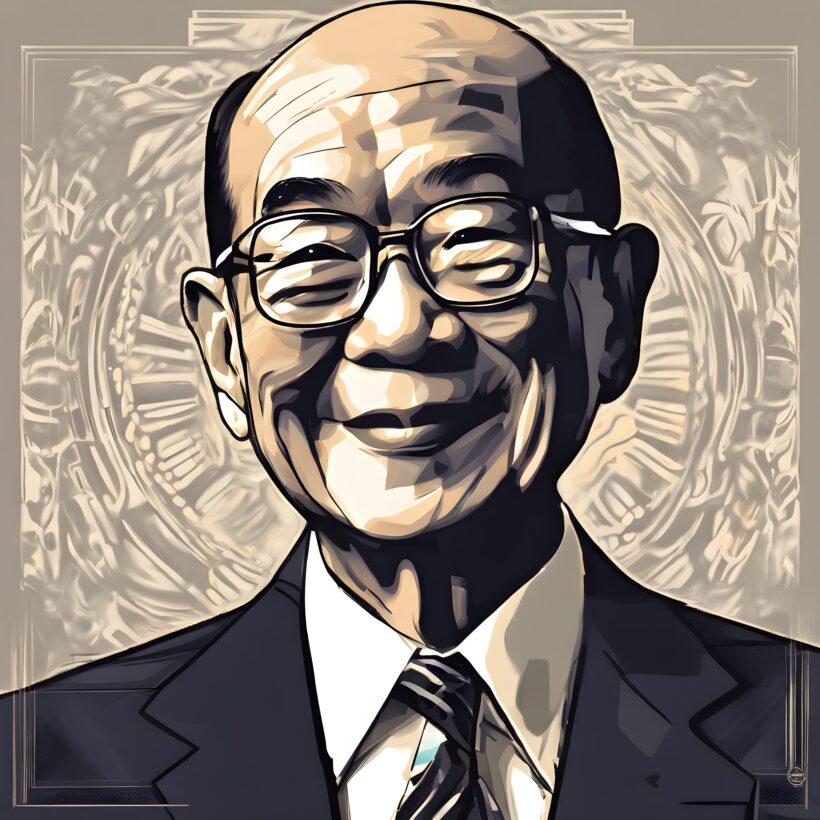

Li Ka-Shing is one of Asia’s most celebrated and admired business leaders — a self-made billionaire who rose from working in a plastics factory as a teenager to commanding a global empire spanning real estate, seaports, telecommunications, retail, energy, and technology. The founder of CK Hutchison Holdings and CK Asset Holdings, he spent more than six decades building companies that operate in over 50 countries on every inhabited continent. Nicknamed “Superman” by the Hong Kong press for his seemingly superhuman business instincts, Li Ka-Shing is as much a symbol of post-war Hong Kong’s economic miracle as he is an individual billionaire. As of 2025, his net worth is estimated at approximately $33 billion by Forbes, making him one of the wealthiest individuals in Asia and a towering figure in the history of global capitalism.
Early Life & Background
Li Ka-Shing was born on June 13, 1928, in Chaozhou, Guangdong Province, China, into a family of modest but educated means. His father was a schoolteacher, and Li grew up with a strong emphasis on learning and moral character. When the Japanese army invaded China during World War II, the family fled to Hong Kong in 1940, joining the wave of mainland Chinese refugees who would fundamentally reshape the colony’s demographics and entrepreneurial culture. Tragedy struck when Li’s father died of tuberculosis in 1943, leaving fifteen-year-old Li as the de facto head of household. He was forced to leave school immediately and took a job at a plastics trading company, working sixteen-hour days and sleeping on the factory floor to save money. It was grinding, exhausting labor — but Li treated every day as a classroom, studying products, customers, suppliers, and business dynamics with intense curiosity. By age 22, his employer trusted him enough to make him factory manager, and Li began quietly planning to start his own enterprise.
Career & Rise to Success
In 1950, Li founded Cheung Kong Industries — named after the Yangtze River, China’s longest waterway — initially manufacturing plastic flowers and toys for export to Europe and North America. He proved so adept at reading market shifts that Cheung Kong flourished while many competitors faltered. Recognizing in the 1960s that Hong Kong’s rapidly growing population would create insatiable demand for real estate, Li pivoted the company into property development. The timing was masterful. He listed Cheung Kong on the Hong Kong Stock Exchange in 1971, using public capital to accelerate land acquisition and development. His most consequential deal came in 1979, when he acquired a controlling stake in Hutchison Whampoa from the Hongkong and Shanghai Banking Corporation (HSBC) — making Li the first Chinese person to seize control of a major British hong, or trading house, in Hong Kong’s history. Under Li’s direction, Hutchison Whampoa became a sprawling conglomerate with dominant positions in container ports, telecommunications, retail pharmacy chains, and infrastructure. In 2015, he restructured his holdings into two streamlined publicly traded entities: CK Hutchison Holdings (business operations) and CK Asset Holdings (real estate).
Major Achievements
The nickname “Superman” — bestowed by Hong Kong tabloids and eventually adopted with affection across Asia — reflects Li Ka-Shing’s reputation for making decisions that seemed improbable in real time but obvious in hindsight. Hutchison Port Holdings, built under his leadership, became the world’s largest private port operator, handling tens of millions of containers annually across terminals in Hong Kong, China, Europe, the Americas, and beyond. His A.S. Watson Group grew into the world’s largest health and beauty retail chain, operating more than 16,000 stores under brands including Watson’s, Superdrug, Kruidvat, and Rossmann across 27 markets. He was also a remarkably prescient technology investor through his family’s Horizons Ventures fund, backing companies including Siri (acquired by Apple), Zoom Video Communications, DeepMind (acquired by Google), Facebook in its early stages, and Spotify — investments that generated returns measured in multiples of hundreds. Li retired as chairman of both CK Hutchison and CK Asset Holdings in May 2018, passing leadership to his elder son Victor Li, but retaining a senior advisory role.
Income Sources & Business Ventures
Li Ka-Shing’s wealth is distributed across two main publicly traded holding companies and a web of associated investments. CK Hutchison Holdings generates revenue from global port operations, the 3 Group telecom networks operating across Europe and Asia, A.S. Watson’s retail empire, and infrastructure projects including water treatment, electricity distribution, and transportation systems in the United Kingdom, Australia, and continental Europe. CK Asset Holdings produces income from property development and investment across Hong Kong, mainland China, and international markets. Beyond these flagship businesses, his family’s Horizons Ventures fund has quietly accumulated stakes in dozens of early-stage technology companies across Silicon Valley, Europe, and Asia. Li also holds significant personal real estate assets and private investment portfolios built over seven decades of disciplined capital allocation.
Assets & Lifestyle
Despite commanding one of the largest personal fortunes in Asia, Li Ka-Shing is famous for his studied modesty. He has lived for decades in the same house in Deepwater Bay on Hong Kong Island — luxurious by ordinary standards but not the palatial compound one might expect. He is frequently photographed wearing a plain watch that costs a fraction of what peers with one percent of his wealth might wear. He maintains a famously disciplined daily routine that reportedly begins before 6 a.m. with exercise, newspapers, and business reviews. His office at the CK Hutchison Tower in Cheung Kong Center, Hong Kong, is where he has spent the majority of his professional life. He has said on multiple occasions that the habit of modesty is not performance — it is simply who he is, shaped by the years of poverty he experienced as a teenager working on factory floors to support his family.
Philanthropy & Giving Back
Li Ka-Shing has described philanthropy as his “third son,” ranking it alongside his two biological sons as a core responsibility of his life. Through the Li Ka Shing Foundation, established in 1980, he has donated more than HK$30 billion (approximately $4 billion USD) to causes spanning education, medicine, and culture across Greater China and internationally. His most enduring philanthropic commitment is Shantou University in his ancestral home province of Guangdong — an institution he has funded since its founding in 1981, transforming it into a nationally recognized research university. He has also endowed major medical centers and research institutes, including the Li Ka Shing Faculty of Medicine at the University of Hong Kong, the Li Ka Shing Knowledge Institute at St. Michael’s Hospital in Toronto, and the Li Ka Shing Department of Health Sciences at the University of Oxford. His foundation has stated that he intends to donate one-third of his assets to philanthropic causes during his lifetime and after his death.
Li Ka-Shing’s Net Worth in 2025
As of 2025, Li Ka-Shing’s net worth is estimated at approximately $33 billion by Forbes, positioning him consistently as one of the ten wealthiest individuals in Asia and among the fifty wealthiest people in the world. His fortune is principally derived from his family’s controlling stakes in CK Hutchison Holdings and CK Asset Holdings, both listed on the Hong Kong Stock Exchange, where daily trading provides a clear and transparent valuation of his core holdings. The technology investments made through Horizons Ventures — including early stakes in companies that were later acquired by Apple, Google, and other technology giants — have contributed additional billions to the family’s overall wealth. Though Li stepped back from day-to-day management in 2018, he retains ultimate influence over the strategic direction of his business empire, which continues to generate substantial earnings across its global portfolio of ports, retail stores, telecom networks, and infrastructure assets.
Conclusion
Li Ka-Shing’s journey from a fifteen-year-old orphan working factory floors to one of the most powerful business figures in the world is extraordinary by any measure. His career teaches several enduring lessons: that patient capital allocation compounds over time in ways that short-term thinking never can; that operational efficiency and customer value are durable competitive advantages; that bold acquisitions — like the 1979 purchase of Hutchison Whampoa — can define a business legacy when executed with conviction; and that wealth, however vast, is ultimately most meaningful when directed toward the education and health of future generations. At 96 years old as of 2025, Li Ka-Shing remains a living symbol of what disciplined ambition, intellectual curiosity, and moral seriousness can accomplish across a long and purposeful life.
References


 Ross Stretch