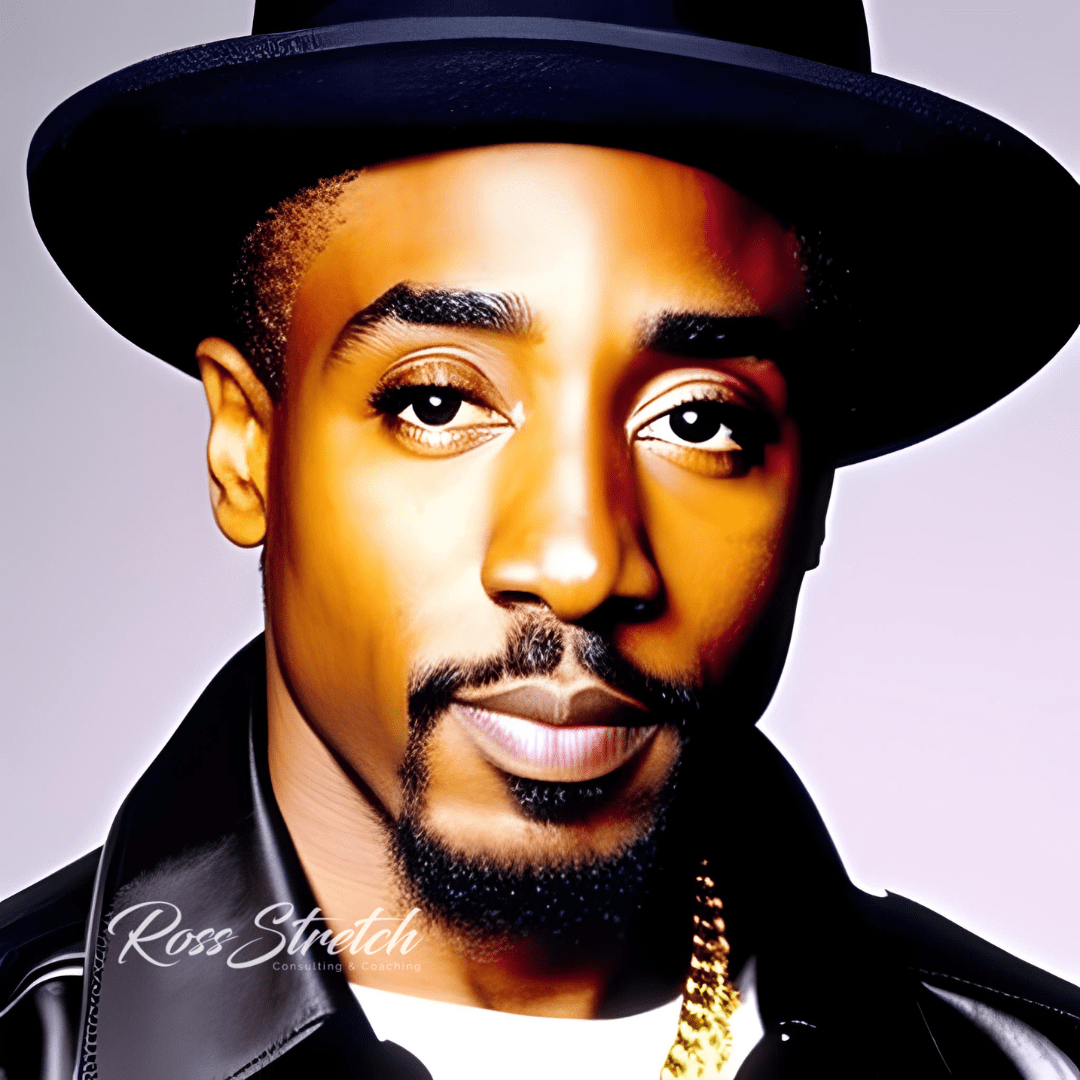
Tupac Shakur, known to the world as 2Pac, remains one of the most celebrated, studied, and beloved artists in the history of hip-hop — a poet, actor, and cultural revolutionary whose influence has never diminished in the nearly three decades since his death. At the time of his murder in September 1996, at just 25 years old, Shakur’s estate was valued at approximately $40 million. Posthumous record sales, streaming revenues, licensing deals, and ongoing estate activity have kept that legacy — and its financial footprint — very much alive. His story is one of extraordinary talent, profound social consciousness, and a life cut heartbreakingly short at its creative peak.
Early Life & Background
Tupac Amaru Shakur was born on June 16, 1971, in East Harlem, New York City, to Afeni Shakur, a prominent member of the Black Panther Party who was incarcerated during her pregnancy on conspiracy charges and acquitted just one month before Tupac was born. His father, Billy Garland, was largely absent from his upbringing. The political consciousness and social justice orientation that would define Tupac’s art were instilled in him by his mother from his earliest years. When Tupac was 12, the family relocated to Baltimore, Maryland, a period he later described as both painful and transformative. There he enrolled at the Baltimore School for the Arts — where he studied acting, poetry, jazz, and ballet alongside a future star named Jada Pinkett — and discovered his formidable gifts as a performer. The family later moved to Marin City, California, where Tupac began rapping seriously for the first time, channeling the experiences of poverty and marginalization he witnessed daily into the blunt, poetic voice that would make him famous.
Career & Rise to Success
Shakur launched his professional career as a backup dancer and roadie for the Oakland-based hip-hop collective Digital Underground, making his recorded debut on their 1991 single “Same Song.” His debut solo album, 2Pacalypse Now (1991), was immediately controversial — Vice President Dan Quayle publicly called for its removal from stores — and immediately significant. His second album, Strictly 4 My N.I.G.G.A.Z. (1993), produced two top-40 hits: “I Get Around” and “Keep Ya Head Up.” The 1995 masterwork Me Against the World debuted at number one on the Billboard 200 while Shakur was serving time in prison — the first album in history to debut at number one with its artist incarcerated. After signing with Suge Knight’s Death Row Records, Shakur released the sprawling double-album All Eyez on Me in February 1996, one of the best-selling rap albums ever made. On September 7, 1996, he was shot multiple times in Las Vegas following the Mike Tyson vs. Bruce Seldon boxing match. He died six days later on September 13, 1996, at age 25.
Major Achievements
Tupac Shakur was inducted into the Rock and Roll Hall of Fame in 2017, cementing his place in the pantheon of American musical legends. He has sold over 75 million records worldwide — a total that continues to grow through streaming — making him one of the best-selling music artists of all time. He received multiple Grammy nominations, and his 2012 hologram appearance at the Coachella Valley Music and Arts Festival — widely regarded as a watershed moment in concert technology — demonstrated the remarkable commercial and cultural vitality his image still commands. Rolling Stone has ranked him among the greatest rappers and recording artists of all time. His album All Eyez on Me is certified diamond by the RIAA, and Me Against the World is widely considered one of the greatest hip-hop albums ever recorded.
Income Sources & Business Ventures
During his lifetime, Shakur’s income came primarily from album sales, touring, and his acting career. His film roles in Juice (1992), Poetic Justice (1993), Above the Rim (1994), Gridlock’d (1997), and Gang Related (1997) demonstrated genuine acting ability and added significantly to his earnings. He founded his own record imprint, Outlaw Recordz. Posthumously, the Shakur estate — managed by Afeni Shakur until her death in 2016, and subsequently by family trustees and the Tupac Amaru Shakur Foundation — generates revenue through massive streaming royalty income (Tupac remains one of the most-streamed deceased artists on Spotify), catalog licensing for film and television, merchandise, brand partnerships, and the release of numerous posthumous albums culled from his prolific unreleased recordings. The estate has also licensed his likeness for the celebrated Coachella hologram and related projects.
Assets & Lifestyle
During his lifetime, Shakur maintained residences in Atlanta and Los Angeles, and was known for a lifestyle that reflected his newfound commercial success — luxury vehicles, fine jewelry, and a close-knit entourage of friends and collaborators. His personal effects have become extraordinarily collectible in the decades since his death: handwritten song lyrics, letters, and personal notebooks have sold at auction for tens of thousands of dollars apiece. His estate controls the rights to his image, voice, and musical catalog, and those intellectual property assets are managed as high-value long-term holdings. Items such as a handwritten letter to Madonna have sold for over $150,000 at major auction houses.
Philanthropy & Giving Back
Despite a public persona that could be confrontational and deliberately provocative, Shakur was deeply committed to uplifting marginalized communities throughout his life. He donated to programs supporting inner-city youth arts education and spoke frequently about the need for systemic change in America’s approach to poverty and racial inequality. Following his death, his mother Afeni Shakur established the Tupac Amaru Shakur Foundation (TASF) in Stonecrest, Georgia, which provides arts education programs and performing arts training opportunities to young people from underserved communities. The Foundation carries forward the mission that animated Tupac’s own life: using art as a tool for empowerment and social transformation.
Tupac Shakur’s Net Worth in 2025
At the time of Tupac Shakur’s death in September 1996, his estate was valued at approximately $40 million. In 2025, the Shakur estate continues to generate significant annual income — estimated by Forbes at $3 to $5 million per year through streaming royalties, licensing, merchandise, and ongoing posthumous releases. He consistently appears on Forbes’ annual list of highest-earning deceased celebrities. The total intellectual property value of his estate, when factoring in catalog rights and future licensing potential, is estimated to have grown substantially beyond the $40 million figure at the time of his death, making Shakur one of the most financially productive posthumous artistic estates in entertainment history.
Conclusion
Tupac Shakur’s legacy transcends the conventional metrics of musical or financial success. His wealth story is ultimately secondary to his cultural and human impact: a young man from one of America’s most marginalized communities who channeled his experiences — his grief, his anger, his love, and his hope — into art of enduring power and beauty. He did so in just five years of professional output, before his life was taken at 25. His story teaches us that authenticity of voice, combined with relentless creative output and fearless social conviction, can create a legacy that outlives its creator indefinitely. Nearly three decades after his death, 2Pac’s music still speaks — loudly, urgently, and with unmistakable truth.
References


 Ross Stretch