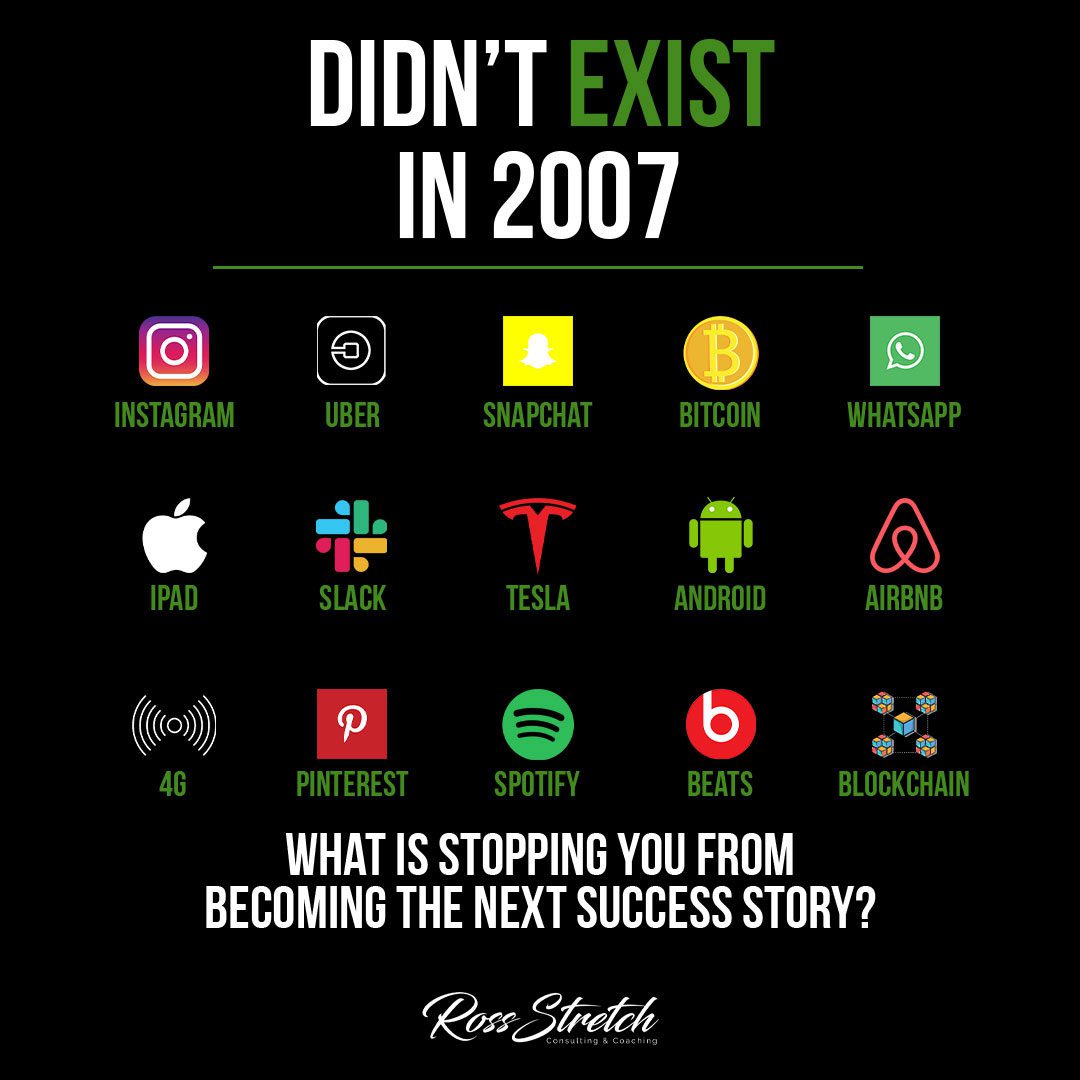
The year 2007 marked the beginning of one of the most consequential eras of technological transformation in human history. The iPhone had just launched. Facebook was still a college network. Bitcoin didn’t exist. What followed over the next decade and a half was a cascade of innovations so profound that the world of 2007 would be almost unrecognizable to someone living today. From social platforms that reshaped global communication to digital currencies that challenged the entire financial system, these 14 innovations didn’t just change industries — they rewrote the rules of how we live, work, and connect.
1. Instagram: Redefining Visual Storytelling
The Platform That Invented the Influencer Economy
Launched in 2010 and acquired by Facebook for $1 billion in 2012, Instagram created an entirely new form of social communication built around visual content. Within a decade, it had grown to over 2 billion monthly active users and spawned an influencer marketing industry now worth over $21 billion annually. It fundamentally changed how brands reach consumers — and how individuals build personal brands.
- Visual storytelling: Instagram introduced a new era of image-driven communication, enabling anyone with a smartphone to become a content creator with genuine reach.
- Influencer culture: The rise of Instagram influencers transformed marketing permanently — consumer trust in peer recommendations now outweighs trust in traditional advertising at every demographic level.
2. Uber: Disrupting the Transportation Industry
Ride-Hailing and the Birth of the Gig Economy
Uber launched in 2009 and by 2024 operates in over 70 countries, completing more than 9.4 billion trips annually. It didn’t just offer a better taxi — it created an entirely new model of on-demand labor that spawned DoorDash, Instacart, TaskRabbit, and dozens of other gig platforms. The economics of asset-light platforms built on independent contractors became one of the defining business models of the decade.
- Ride-hailing revolution: Uber gave consumers transparent pricing, GPS tracking, and digital payment in a single app — raising the baseline expectation for every service industry.
- Gig economy: Uber created income opportunities for millions of independent workers while simultaneously raising difficult questions about labor rights and classification that regulators are still resolving.
3. Snapchat: Pioneering Ephemeral Content
The App That Changed How a Generation Communicates
Snapchat launched in 2011 with a concept that seemed counterintuitive — photos that disappear after viewing. It turned out to be exactly what a generation raised on the permanence of Facebook wanted. The disappearing message format was later adopted by Instagram Stories, WhatsApp Status, and Facebook Stories, making Snapchat’s core innovation one of the most widely replicated in social media history.
- Ephemeral content: Snapchat normalized the idea that not everything shared needs to be permanent — an insight that reshaped how the entire industry thinks about content and privacy.
- Augmented reality: Snapchat’s AR filters introduced millions of everyday users to augmented reality, laying the cultural groundwork for the broader AR and spatial computing wave still developing today.
4. Bitcoin: The Birth of Cryptocurrency
Decentralized Money and the Blockchain Era
Bitcoin’s whitepaper was published by the pseudonymous Satoshi Nakamoto in October 2008, and the network launched in January 2009. It introduced blockchain technology — a distributed, tamper-resistant ledger — that has since spawned thousands of cryptocurrencies, decentralized finance protocols, NFT markets, and enterprise blockchain applications. Bitcoin itself reached a market capitalization of over $1 trillion, establishing digital assets as a legitimate asset class that institutional investors now hold.
- Decentralized currency: Bitcoin challenged the fundamental assumption that money requires a central authority — a philosophical and technical breakthrough whose implications are still unfolding.
- Financial inclusion: Cryptocurrency opened financial access to the estimated 1.4 billion adults globally who remain unbanked, enabling value transfer without traditional banking infrastructure.
5. WhatsApp: Connecting the World for Free
The App That Made International Communication Free
WhatsApp launched in 2009 and was acquired by Facebook for $19 billion in 2014 — at the time, the largest acquisition of a venture-backed company in history. By 2024 it serves over 2.7 billion monthly active users across 180 countries, making it the world’s most widely used messaging application. For billions of people in developing markets, WhatsApp is effectively the internet — the primary tool for business communication, customer service, and personal connection.
- Instant messaging: WhatsApp made cross-border communication essentially free, eliminating the SMS fees and international calling costs that had previously made global communication prohibitively expensive for billions of people.
- End-to-end encryption: WhatsApp’s encryption implementation brought serious privacy protection to mainstream messaging at a scale no previous platform had achieved.
6. iPad: Reinventing Personal Computing
The Device That Defined the Tablet Category
When Steve Jobs unveiled the iPad in January 2010, many observers were skeptical — a device that seemed to sit awkwardly between a phone and a laptop. Within a year, Apple had sold 15 million units and created an entirely new product category. The iPad didn’t replace the laptop; it created a new use case for computing that was fundamentally more accessible, intuitive, and portable. It made computing viable for people who had never found traditional computers approachable.
- Tablet computing: The iPad redefined the relationship between humans and computers — a touch-first, always-on device that put a full computing platform into the hands of children, seniors, and professionals alike.
- App ecosystem: The iPad’s App Store accelerated the mobile software economy, creating entirely new categories of apps and business models that didn’t exist on desktop platforms.
7. Slack: Transforming Workplace Communication
The Tool That Killed the Internal Email Chain
Slack launched in 2013 and within seven years had grown to 12 million daily active users and was acquired by Salesforce for $27.7 billion. It replaced the fragmented, thread-burying nature of email for internal communication with organized, searchable, real-time channels. More significantly, it established the model for integrated workplace software — the Slack App Directory now hosts over 2,400 integrations, making it a platform layer for the modern digital workplace.
- Team collaboration: Slack moved workplace communication from isolated inboxes to shared channels, making organizational knowledge searchable and reducing the information silos that slow decision-making.
- Integration capabilities: Slack’s ability to connect with hundreds of other tools transformed it from a messaging app into a command center for distributed work.
8. Tesla: Pioneering the Electric Vehicle Era
The Company That Made EVs Desirable
Tesla’s Roadster launched in 2008, but it was the Model S in 2012 that proved electric vehicles could be both practical and aspirational. By reframing EVs as performance vehicles rather than compromises, Tesla shifted the entire automotive industry’s trajectory. Every major automaker has since committed to electrification timelines, and EV adoption has accelerated globally in ways that seemed impossible in 2007 when EVs represented less than 0.1% of new vehicle sales.
- Electric mobility: Tesla demonstrated that sustainable transportation didn’t require sacrifice — it could deliver a superior driving experience while eliminating tailpipe emissions.
- Autopilot technology: Tesla’s driver assistance systems accelerated the entire autonomous vehicle industry’s development timeline and made partial autonomy a mainstream consumer experience.
9. Android: Democratizing the Smartphone
The Open Platform That Put Smartphones in Everyone’s Hands
Android launched as an open-source mobile operating system in 2008 and now powers approximately 72% of all smartphones globally. By making the platform available to any hardware manufacturer without licensing fees, Google enabled the explosion of affordable smartphones across emerging markets. The billions of people who came online through an Android phone represent one of the most significant expansions of internet access in history.
- Mobile platform diversity: Android created a viable alternative to iOS, preventing any single company from controlling the gateway to mobile computing and driving down smartphone costs through competition.
- Global access: The availability of Android on low-cost hardware brought internet access and smartphone capabilities to markets that Apple’s premium pricing model couldn’t reach.
10. Airbnb: Revolutionizing Accommodation
The Sharing Economy’s Most Enduring Success
Airbnb launched in 2008 and by 2024 lists over 7 million properties across 220+ countries — more rooms than the world’s five largest hotel chains combined. It didn’t just disrupt the hotel industry; it created an entirely new category of accommodation that had never existed at scale. For hosts, it monetized underutilized real estate. For travelers, it unlocked authentic local experiences that a hotel corridor simply cannot provide.
- Sharing economy: Airbnb proved that trust infrastructure — verified profiles, two-way reviews, secure payments — could enable strangers to transact in ways previously requiring institutional intermediaries.
- Travel transformation: Airbnb fundamentally changed where people stay when they travel, expanding the addressable accommodation market rather than simply taking share from existing hotels.
11. 4G Networks: The Infrastructure That Made Everything Else Possible
The Invisible Foundation of the Mobile Economy
4G LTE networks began rolling out in 2009 and reached widespread adoption by 2012-2013. Their impact is easy to underestimate because the technology is invisible — but without 4G speeds, most of the mobile innovations on this list would have been impossible or deeply frustrating. Uber requires real-time GPS and data. Instagram requires fast image uploads. Video calling, mobile payments, and streaming audio all depend on the bandwidth that 4G delivered.
- Faster data speeds: 4G improved mobile internet speeds by a factor of 10-20x over 3G, making rich media experiences and real-time applications viable on mobile devices for the first time.
- App economy enablement: 4G networks were the substrate on which the entire mobile app economy was built — they made the decade’s defining innovations possible at scale.
12. Pinterest: Visual Discovery as a Business
The Search Engine That Thinks in Images
Pinterest launched in 2010 and pioneered visual discovery — the idea that finding inspiration, products, and ideas works better through images than through text search. Today it serves over 500 million monthly active users, and its value to e-commerce is substantial: Pinterest reports that its users have significantly higher purchase intent than users on other social platforms, making it one of the most effective product discovery tools available to brands.
- Visual bookmarking: Pinterest invented a new category — the digital mood board — that changed how people plan purchases, home renovations, travel, events, and major life decisions.
- E-commerce influence: Pinterest’s integration of shoppable pins created a direct path from inspiration to purchase, establishing the visual search-to-commerce funnel that brands now optimize heavily.
13. Spotify: On-Demand Music Streaming
The Platform That Saved the Music Industry (Again)
Spotify launched in Europe in 2008 and reached the US in 2011, offering something the music industry had resisted providing: legal, instant access to virtually all recorded music for a flat monthly fee. The freemium model — ad-supported free tier converting to paid subscriptions — became a template replicated across software, news media, and entertainment. By 2024, Spotify has over 600 million users across 180 markets with annual revenue exceeding $13 billion.
- Streaming revolution: Spotify converted music from a product people owned to a service people subscribed to — a business model shift that has since spread across software, film, television, and gaming.
- Discovery algorithms: Spotify’s Discover Weekly and algorithmic playlists pioneered personalized content recommendations at scale, influencing how every streaming platform approaches content surfacing.
14. Beats: Premium Audio as a Lifestyle Brand
The Headphones That Proved Audio Is Fashion
Beats by Dre launched in 2008 and sold to Apple for $3 billion in 2014 — Apple’s largest acquisition ever. Beats didn’t invent premium headphones; it reinvented them as fashion and status objects. By partnering with athletes and musicians for authentic endorsements rather than traditional advertising, Beats created a cultural cachet that justified premium pricing and demonstrated that consumer electronics could operate as luxury goods.
- Premium audio experience: Beats elevated headphone quality expectations across the entire consumer market, accelerating the broader premium audio category that now includes AirPods, Sony WH-1000XM series, and others.
- Fashion and technology fusion: Beats proved that how a tech product looks and the culture it signals matters as much as its specifications — a lesson that has since influenced product design across the entire consumer electronics industry.
Conclusion
The technological innovations that emerged after 2007 didn’t arrive in isolation — they built on each other. 4G made mobile apps viable. Smartphones made app stores possible. App stores made Uber, Instagram, and Spotify scalable. Bitcoin introduced blockchain at the exact moment that digital trust infrastructure was becoming critical. Each innovation created the conditions for the next, producing a compounding wave of change that has fundamentally restructured how human beings communicate, travel, work, consume entertainment, and exchange value.
What’s remarkable about this list is how recently all of it appeared. A person born in 2007 is now a young adult who has never known a world without iPhones, Instagram, Spotify, or ride-hailing — and who will build the next wave of innovations on the foundation these tools created. The pace is not slowing. Understanding how today’s landscape was built is the clearest lens available for anticipating what comes next.
Resources


 Ross Stretch