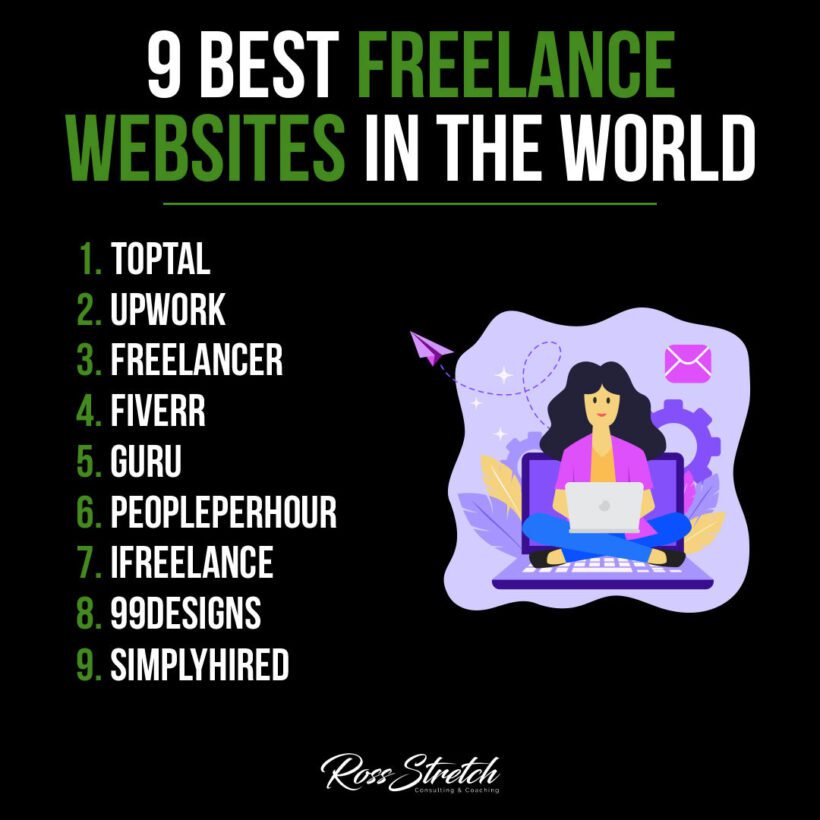

Freelancing has become a mainstream career path, with over 73 million Americans freelancing in 2023 and global platforms facilitating billions in annual transactions. Whether you’re a seasoned developer, a graphic designer, a writer, or someone just starting out, the platform you choose shapes your rates, your client quality, and your long-term trajectory. The right platform is not necessarily the most popular one — it’s the one that best matches your experience level, your specialty, and how you want to work. Here are the nine best freelance websites in the world, matched to different skill sets and career stages.
1. Toptal — The Elite Network Where Only the Top 3% Are Accepted
Premium Rates, Premium Clients, and a Rigorous Entry Process
Toptal’s vetting process involves multiple rounds of testing, technical interviews, and live project simulations — resulting in a marketplace where clients pay premium rates for guaranteed quality. Only 3% of applicants are accepted, which means far less competition for those who make it through, and significantly higher earning potential. Clients include Airbnb, JP Morgan, and Microsoft, many of whom regularly pay $150 to $250 per hour for vetted freelance talent.
- Actionable Tip: Prepare months in advance for the Toptal application — complete mock technical interviews, refine your portfolio, and develop deep expertise in one niche before attempting the screening process.
- Why It Works: Exclusivity creates trust. When clients know that a platform’s acceptance rate is 3%, they trust the talent pool implicitly — and price accordingly.
Pro Tip:
Toptal is best for experienced freelancers in software engineering, design, and finance with at least 5 years of professional experience. Build your reputation on Upwork first and return to Toptal when your skills are industry-competitive.
2. Upwork — The World’s Largest and Most Versatile Freelance Marketplace
Volume, Variety, and Built-In Payment Protection
Upwork hosts over 18 million registered freelancers and 5 million clients across virtually every category of remote work — development, writing, accounting, customer service, legal, design, and more. Its hourly contract system includes a work diary and payment protection, ensuring freelancers get paid for every verified hour. For both beginners building a reputation and seasoned professionals seeking long-term contracts, Upwork offers unmatched opportunity volume.
- Actionable Tip: Optimize your Upwork profile around a niche specialty rather than broad generalism. “Content writer” competes with millions; “SaaS blog writer for B2B cybersecurity companies” attracts high-paying clients who need exactly that expertise.
- Why It Works: Upwork’s Job Success Score and review system create a reputation economy — early positive reviews compound into higher visibility, better clients, and higher rates over time.
Pro Tip:
Use Upwork’s Project Catalog feature to offer fixed-price packages. Clients who prefer predictable costs tend to be higher quality and less price-sensitive than those posting open bids — and packaged offerings require no negotiation.
3. Freelancer — Best for Competitive Bidding and Portfolio-Building Contests
A Global Marketplace With Over 50 Million Registered Users
Freelancer.com’s bidding-based model suits freelancers who are skilled at writing compelling proposals quickly. The platform’s contest feature — where designers, writers, or developers compete for project prizes — is particularly useful for building portfolio pieces from real client briefs without needing an established reputation. With users across more than 180 countries, it offers substantial international reach for virtually every skill category.
- Actionable Tip: Start by entering contests rather than bidding on projects. A contest win gives you a verified portfolio piece and positive client feedback without requiring a pre-existing track record on the platform.
- Why It Works: Contest briefs are real commercial problems — solving them gives you portfolio work that demonstrates market-ready skills, not just personal projects, which carries significantly more weight with clients evaluating your profile.
Pro Tip:
Freelancer’s Preferred Freelancer program — available to high-rated users — unlocks access to premium projects with larger budgets and reduced competition. Focus on building your rating early to access this tier as quickly as possible.
4. Fiverr — Perfect for Productized Services and Passive Inbound Income
Set Up Your Service Once, Sell It Repeatedly
Fiverr’s seller-driven model lets you create Gigs — packaged services at fixed prices — that clients can purchase without negotiation. Starting at $5 but regularly priced at $100 to $1,000 or more for professional services, Fiverr is ideal for freelancers who want to build a semi-passive income stream from productized offerings in writing, design, voiceover, video editing, and more. A well-optimized Gig listing generates inbound inquiries 24 hours a day without active prospecting.
- Actionable Tip: Create three-tier packages (Basic, Standard, Premium) for every Gig. Research shows that offering a mid-tier option increases the likelihood clients choose it, pushing your average transaction value up without any additional negotiation effort.
- Why It Works: Fiverr’s SEO-driven marketplace rewards specificity — the more precisely your Gig title and description matches what a buyer is searching for, the higher you appear and the more conversions you generate without spending on ads.
Pro Tip:
Fiverr Pro — the platform’s vetted top tier — significantly raises your earning ceiling. Pro sellers charge 5 to 10 times standard rates and attract clients who self-select for quality over price, making each engagement both more lucrative and more professionally satisfying.
5. Guru — Flexible Payments and Structured Workspaces for Long-Term Projects
Build Lasting Client Relationships With Full Payment Flexibility
Guru’s WorkRoom feature creates a shared digital workspace for freelancer-client collaboration, making it particularly effective for longer-term, multi-phase projects in programming, design, and marketing. Its flexible payment options — hourly, per-task, per-milestone, or recurring — cater to freelancers who prefer structured payment agreements over unpredictable bidding dynamics, and it charges lower fees (maximum 9%) than most competing platforms.
- Actionable Tip: Use Guru’s milestone payment structure for large projects. Breaking deliverables into paid milestones protects you from scope creep and ensures consistent cash flow throughout the engagement.
- Why It Works: Milestone-based payment aligns client and freelancer incentives perfectly — each party has clear expectations for what gets delivered and when money changes hands, eliminating most end-of-project disputes.
Pro Tip:
Guru is most cost-effective for managing ongoing client relationships you’ve already established — the lower commission structure means more of each invoice stays in your pocket compared to platforms that charge 20% on new relationships.
6. PeoplePerHour — AI-Matched Projects for Digital and Creative Specialists
Europe’s Leading Platform, Built for B2B Digital Professionals
PeoplePerHour uses an AI matching system called STREAM to connect freelancers with relevant projects based on skills, track record, and pricing — reducing time spent prospecting. Particularly strong in digital marketing, SEO, web development, translation, and social media management, it’s the go-to platform for UK and European-based freelancers and for those seeking international clients in those markets. Clients tend to be SME business owners with genuine budgets and clear project briefs.
- Actionable Tip: Post Hourlies — pre-packaged service offers at set prices — to get discovered without bidding. These function like Fiverr Gigs but target a more business-oriented client base that typically pays higher rates.
- Why It Works: The AI matching system rewards profile specificity — freelancers with tightly defined skill sets and keyword-rich profiles appear in more relevant matches, dramatically reducing the time-to-hired compared to open bidding platforms.
Pro Tip:
PeoplePerHour’s business-owner client base is typically less price-sensitive than consumer clients on other platforms — prioritize demonstrating expertise and professionalism over competing on price, and your win rate will reflect the difference.
7. iFreelance — Zero Commission, Maximum Take-Home Earnings
Keep Every Dollar You Earn
iFreelance charges a flat annual membership fee rather than taking a commission on every project, meaning freelancers keep 100% of their earnings from every client engagement. This model becomes mathematically superior to commission-based platforms for any freelancer earning more than a few hundred dollars per month — a crossover point that arrives quickly once you have even a modest client base. It’s well-suited for creative professionals in writing, design, and photography who work with repeat clients.
- Actionable Tip: Calculate your annual commission costs on your current platform before switching. If you’re paying Upwork or Fiverr more annually than iFreelance’s membership fee, the math already favors moving your established client relationships here.
- Why It Works: Zero commission changes your relationship to pricing — you can offer competitive rates and still take home more than on commission-based platforms, or maintain your current rates and genuinely increase your net income without changing a single deliverable.
Pro Tip:
Use iFreelance as a secondary platform for managing long-term clients you’ve already built trust with elsewhere. Use Upwork or Fiverr for new client acquisition, then migrate stable ongoing work here to eliminate the commission drag on your most profitable relationships.
8. 99designs — The Premier Platform for Graphic Designers and Brand Specialists
Where Serious Design Budgets Meet Professional Design Talent
99designs is purpose-built for graphic designers, covering logo design, brand identity, web design, packaging, book covers, and more. Its two modes — design contests and direct client projects — allow designers to build portfolio visibility while developing stable client relationships. Clients on 99designs have self-selected into a higher-budget environment — they know design costs money and have committed to paying for it, which makes conversations about scope and pricing dramatically more productive than on general freelance platforms.
- Actionable Tip: Enter design contests strategically — choose briefs where your style is a natural fit rather than trying to adapt to every competition. A focused win rate in your aesthetic niche beats a high entry volume with poor conversion.
- Why It Works: 99designs clients bring clear briefs and real budgets, which accelerates the project cycle and reduces the back-and-forth that consumes unpaid time on lower-tier platforms.
Pro Tip:
Achieving Top Designer status on 99designs — through consistent contest wins and high client ratings — unlocks direct project invitations, effectively creating an inbound client pipeline that removes the need for cold outreach entirely.
9. SimplyHired — The Aggregator That Maximizes Your Opportunity Reach
One Search Across Hundreds of Job Sources
SimplyHired aggregates freelance and remote job listings from across the web — including job boards, company career pages, and other freelance platforms — into a single searchable interface. This makes it particularly valuable for freelancers in the early stages of building a client base, when discovering the full landscape of available opportunities is more important than optimizing on any single platform. It covers administrative, marketing, tech, writing, and virtually every other category of freelance work.
- Actionable Tip: Set up SimplyHired’s email alerts to receive daily notifications for new listings matching your skills and target rate range. Responding within hours of a listing going live dramatically increases your callback rate compared to applications submitted days later.
- Why It Works: Aggregation also provides market intelligence — scanning listings across hundreds of sources gives you real-time data on which skills are in demand, what clients are paying, and where your expertise is most valued right now.
Pro Tip:
Use SimplyHired for research as much as for applications — studying what employers and clients consistently request gives you a data-driven roadmap for which skills to develop next and which niches to position yourself in for maximum earning potential.
Conclusion
The best freelance platform for you depends on your experience level, your specialty, and how you prefer to work. Beginners benefit from Upwork’s volume and Fiverr’s passive-income model. Experienced specialists should target Toptal’s premium rates. Designers have a dedicated home in 99designs. No matter where you start, the fundamentals of freelance success are universal: niche deeply, price confidently, deliver consistently, and treat every client relationship as the beginning of a referral network.
Freelancing rewards those who treat it as a business, not just a job. Build your profile with intention, specialize over time, and remember that the platform is just the channel — the real product is always your expertise, your reliability, and the quality of the results you deliver.
Resources
- Forbes — Best Freelance Websites for Finding Work
- Entrepreneur — The Best Freelance Websites to Find Work
- Harvard Business Review — How to Make Freelancing Work for You
- Investopedia — Best Freelance Websites Reviewed


 Ross Stretch