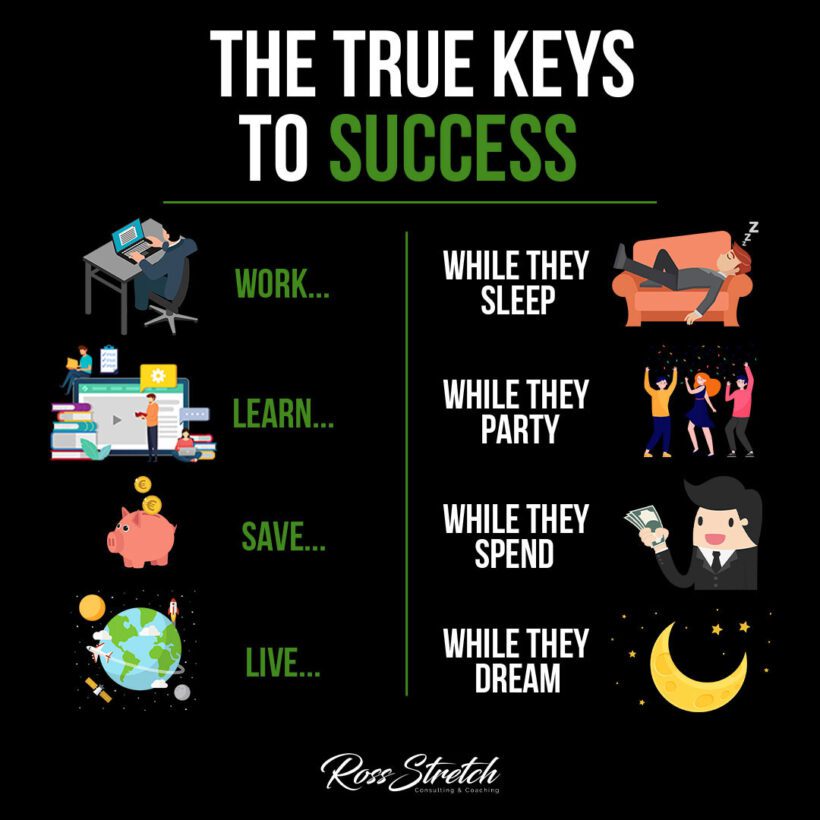

Success is a word that gets redefined constantly — by culture, by circumstance, and by the people who achieve it. But behind the highlight reels and polished professional profiles, most lasting success stories share the same unglamorous foundation: consistent effort applied in areas others neglect, compounded over time. It is not about working harder than everyone else in some vague, inspirational sense. It is about making specific, disciplined choices in four key areas of your life that accumulate dramatically over months and years. These are the four pillars that separate people who talk about their goals from those who actually build lives around them.
1. Work: The Stepping Stone to Greatness
Build the Habit of Showing Up Before the World Does
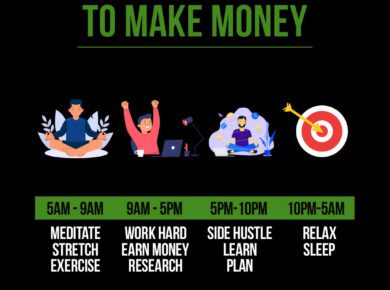
There is a reason so many high-performers are early risers — not because waking before dawn is inherently virtuous, but because the early hours offer something genuinely rare: uninterrupted time. Before your inbox demands a response, before your phone fills with notifications, before meetings and obligations structure your day, there is a window of deep, focused work available to anyone willing to claim it. The people who consistently move toward ambitious goals are those who protect this time deliberately, treating it as sacred rather than optional. Over months and years, the output produced in these quiet hours creates a compounding gap between you and those operating entirely in reactive mode.
- Actionable Tip: Identify your single most important project or goal and work on it for 60 to 90 minutes before engaging with email, social media, or any incoming communication. Do this five days a week without exception.
- Why It Works: Cognitive bandwidth is a finite resource that depletes throughout the day. Deep work performed when your mental energy is highest produces significantly better results than the same task attempted after hours of reactive communication and decision-making.
Pro Tip:
Cal Newport’s concept of “deep work” — scheduled blocks of distraction-free, cognitively demanding effort — offers a practical framework for structuring your most important sessions. Even two to three hours of genuine focused work daily, applied consistently over years, produces results that feel disproportionate to the effort invested in any given day.
2. Knowledge: The Root of Empowerment
Invest in Learning When Others Choose Entertainment
The average American watches more than four hours of television per day. Many successful executives report reading four to five books per month. This is not coincidence — it is a compounding investment that plays out over decades. The decision to prioritize continuous learning over passive entertainment is not about denying yourself enjoyment. It is about recognizing that the knowledge you accumulate today directly expands the options available to you tomorrow. Whether through books, courses, podcasts, mentors, or direct experience, people who make learning a daily habit systematically expand their capabilities in ways that create new income streams, professional opportunities, and problem-solving capacity that others cannot access.
- Actionable Tip: Commit to reading 20 pages per day in books directly related to your professional goals or financial growth. At that rate, you will complete approximately 18 to 24 books per year — more than most adults read in an entire decade.
- Why It Works: Knowledge compounds similarly to financial interest. Each new concept connects to and amplifies previous understanding, making you increasingly capable of seeing patterns, solving problems, and generating ideas that others miss entirely.
Pro Tip:
Transform commute time and workout sessions into learning opportunities using audiobooks and podcasts. Platforms like Audible, Spotify, and Blinkist make it easy to absorb high-quality content in the margins of a full day. The cumulative hours reclaimed from passive consumption can amount to the equivalent of a university course each month.
3. Financial Prudence: The Key to Abundance
Build Wealth While Others Build Debt
Consumer culture is engineered to extract money from your account the moment it arrives. Lifestyle inflation — the tendency to upgrade spending every time income increases — is the single most common reason professionals in their 30s and 40s feel financially stuck despite earning significant salaries. Financial freedom is not built by earning more alone. It is built by consistently maintaining a gap between what you earn and what you spend, and directing that gap toward assets that grow. The math is straightforward: someone earning $70,000 who saves and invests 20% consistently will often retire in more financial security than someone earning $150,000 who spends nearly all of it.
- Actionable Tip: Automate a fixed percentage of every paycheck — aim for at least 15 to 20% — into investment accounts before you have the opportunity to spend it. Treat this transfer as a non-negotiable expense, not an optional surplus.
- Why It Works: Automation removes the willpower equation from saving. When the money moves before you see it in your spending account, you adapt your lifestyle to what remains rather than struggling to save whatever happens to be left over after spending.
Pro Tip:
Every time you receive a raise, direct at least half of the increase toward savings or investments before updating your lifestyle. This strategy lets you enjoy a modest improvement in your standard of living while simultaneously accelerating wealth accumulation — the two goals are not mutually exclusive when approached with intention.
4. Living a Life of Purpose: From Dreaming to Doing
The Distance Between Dreams and Reality is Called Action
Vision without execution is fantasy. The world is full of people with brilliant ideas, ambitious dreams, and compelling plans that never leave their journals. What distinguishes achievers is not the quality of their vision — it is the discipline to take consistent, imperfect action in pursuit of it. Living with purpose means connecting your daily choices to something larger than immediate comfort. It means making decisions that your future self will thank you for, even when your present self would prefer the easier path. It means measuring your days not by how comfortable they were, but by how much they moved you toward the life you are deliberately building.
- Actionable Tip: Each Sunday evening, identify the three most important actions you can take in the coming week to advance your primary goal. Schedule them as calendar appointments with specific times. Everything else fits around them.
- Why It Works: Purpose-driven planning converts abstract goals into concrete weekly actions. When your priorities are explicitly scheduled, they compete fairly with incoming demands on your time rather than being perpetually deferred to some vague future date.
Pro Tip:
Conduct a quarterly review of your goals, habits, and actual progress. Ask yourself honestly: are my daily behaviors aligned with the outcomes I claim to want? The gap between intention and execution is where most people live permanently. Closing it, even partially, through honest self-assessment and deliberate adjustment is where real growth happens.
Conclusion
The four pillars — deliberate work, continuous learning, financial discipline, and purposeful living — are not secrets. They have been the foundation of meaningful achievement across generations, industries, and cultures. What makes them rare in practice is not difficulty but consistency. The gap between knowing and doing is where most people live indefinitely. Close that gap, one decision at a time, and the cumulative effect of your choices will take you places that talent and luck alone never could.
Resources

 Ross Stretch