Every content creator has watched a post explode across platforms and asked the same question: why that one? The video had no special production budget. The tweet was dashed off in seconds. The article was not even about a trending topic. Yet it spread. Meanwhile, carefully crafted posts with real effort behind them sink without a trace. Viral content is not random — but it is more nuanced than any simple formula suggests.
\
\
Understanding what makes content spread is essential for entrepreneurs, marketers, and creators who want their ideas to travel. It is not about gaming algorithms, though understanding platform mechanics helps. It is about triggering specific psychological responses that make people feel compelled to share. When you understand those triggers, you can design content that earns its audience consistently — not just once.
\
\
\
\
The Psychology Behind Sharing
\
\
People share content for reasons that are almost entirely emotional. Jonah Berger, a Wharton professor and author of Contagious, identified six core drivers of virality: social currency, triggers, emotion, public visibility, practical value, and stories. Of these, emotion is the most powerful lever. Content that produces a high-arousal emotional response — whether that is awe, amusement, anger, or inspiration — spreads far more reliably than content that produces none.
\
\
The critical insight is that sharing is a social act. When someone shares your content, they are not just distributing information — they are making a statement about themselves. They are saying: this is the kind of thing I value, find funny, or believe in. Content that makes the sharer look smart, kind, funny, or informed is content that travels. Understanding this reframes the question from “what should I say?” to “how will sharing this make my audience look and feel?”
\
\
This is why authenticity often outperforms polish in the current media environment. Highly produced content signals a brand asking people to perform marketing on their behalf. Raw, genuine content signals a person — and people share things other people say because it feels like a recommendation, not an advertisement.
\
\
\
\
Humor: The Fastest Path to Sharing
\
\
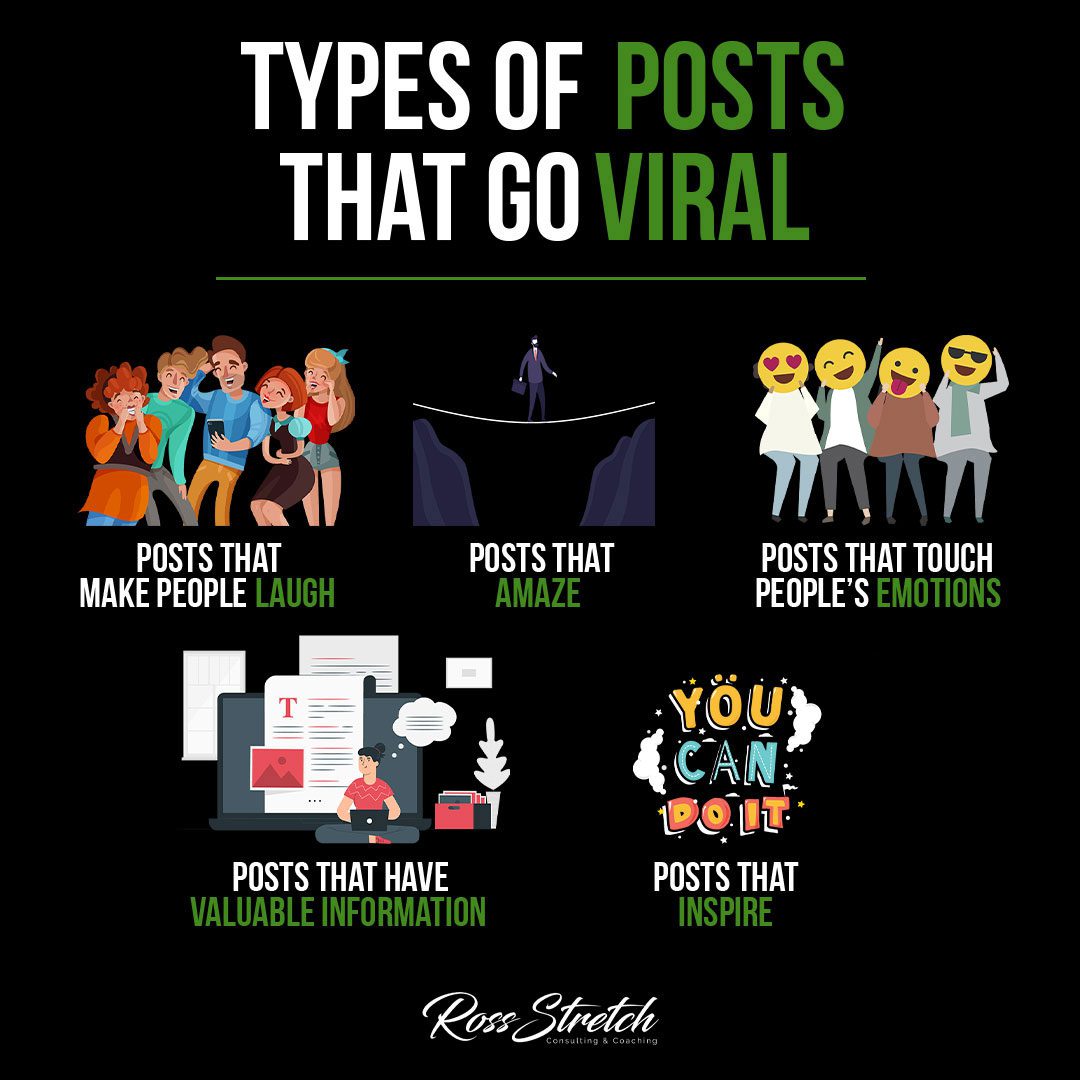
Laughter is the highest-octane fuel for virality. Content that makes someone genuinely laugh creates an immediate impulse to share — because laughter is inherently social. We want others to have the experience we just had. This is why memes travel so efficiently: they are compressed, culturally loaded, and instantly legible to anyone within a particular community or context.
\
\
The challenge with humor is that it is highly specific to audience. What is funny to a 28-year-old software engineer is not funny to a 45-year-old small business owner. The safest entry point for brands and creators is observational humor rooted in shared experience — the universal frustrations, contradictions, and absurdities of the niche you operate in.
\
\
Parody and creative satire add another layer. When familiar formats are subverted in clever ways — a corporate memo written as a dating profile, a how-to video that playfully exposes the absurdity of overcomplicated advice — they create delight through the gap between expectation and reality. This surprise is what makes people tag a friend: “this is exactly us.”
\
\
\
\
Emotion and the Awe Factor
\
\
Awe is one of the most underused emotional triggers in content strategy. Research by Berger and collaborators found that awe-inspiring content — content that expands the viewer’s sense of what is possible or reveals something extraordinary — is among the most reliably shared categories. This includes displays of exceptional talent, mind-expanding facts, and experiences that produce genuine wonder.
\
\
Emotional storytelling occupies a different but equally powerful space. Stories of triumph over adversity, unexpected kindness, or radical honesty about failure create emotional resonance that audiences carry long after the scroll moves on. The most effective emotional content does not manipulate — it reveals something true about the human experience in a way that makes the viewer feel less alone.
\
\
The mechanics of emotional content are straightforward: conflict, resolution, and a moment of genuine feeling. A story with no conflict is a press release. A story with conflict and no resolution is frustrating. A story with both, told in an authentic voice, can reach anyone regardless of platform or production budget.
\
\
\
\
Practical Value: Content That Earns Its Place
\
\
Not all viral content is emotional. A significant portion of high-sharing content earns its distribution by being genuinely useful. How-to guides, tutorials, checklists, and expert breakdowns spread because people save them to use later — and sharing is often how they save. “Send this to someone who needs it” is a call-to-action that practically writes itself when the content delivers real value.
\
\
The key differentiator for shareable practical content is specificity. Generic advice produces no sharing response because it is not new information. Specific, actionable insight — the exact three-step process someone used to close their first enterprise client, for example — creates the sense that the reader is getting access to something exclusive. Specificity signals credibility, and credibility earns shares.
\
\
Informational content also benefits from strong formatting. Numbered lists, bold takeaways, and clear structure make content easier to skim and remember. Carousels and threads work well on social platforms precisely because they break information into digestible steps. The format itself signals: “this is worth your time, and I have organized it to respect that.”
\
\
\
\
Consistency, Timing, and the Authenticity Edge
\
\
One viral post does not build an audience. Consistent production of high-quality content aligned with the emotional and practical needs of a specific audience is what generates compounding reach over time. Creators who go viral once and stop producing consistently rarely maintain momentum. Those who treat every post as practice build the judgment that eventually produces breakthrough content on demand.
\
\
Timing intersects with virality in ways that matter on social platforms. Content aligned with cultural moments, trending conversations, or platform-specific formats tends to distribute faster. This is not about chasing every trend — it is about identifying where your existing expertise or perspective intersects meaningfully with something the audience is already paying attention to.
\
\
Authenticity remains the fundamental edge that cannot be bought or manufactured. Audiences in 2025 have developed sophisticated radar for content that feels performed versus content that feels real. The most viral content almost always has a quality of genuine human presence — someone actually thinking, feeling, or doing something rather than performing a version of it for an audience. Build that quality and the algorithms tend to follow.
\
\
\
\
Conclusion
\
\
Viral content is not the product of luck — it is the product of understanding your audience deeply enough to create content that makes them feel something, learn something, or laugh at something they immediately want to share. Master the emotional triggers, deliver genuine value, and show up with consistency. That is the formula, even if it is never quite the same twice.
\
\
\
\
Resources
\
\
- \
- Contagious by Jonah Berger (Amazon)
- Harvard Business Review: Making Your Content Go Viral
- Sprout Social: How to Create Viral Content
- Jonah Berger’s Official Research Site
\
\
\
\

 Ross Stretch