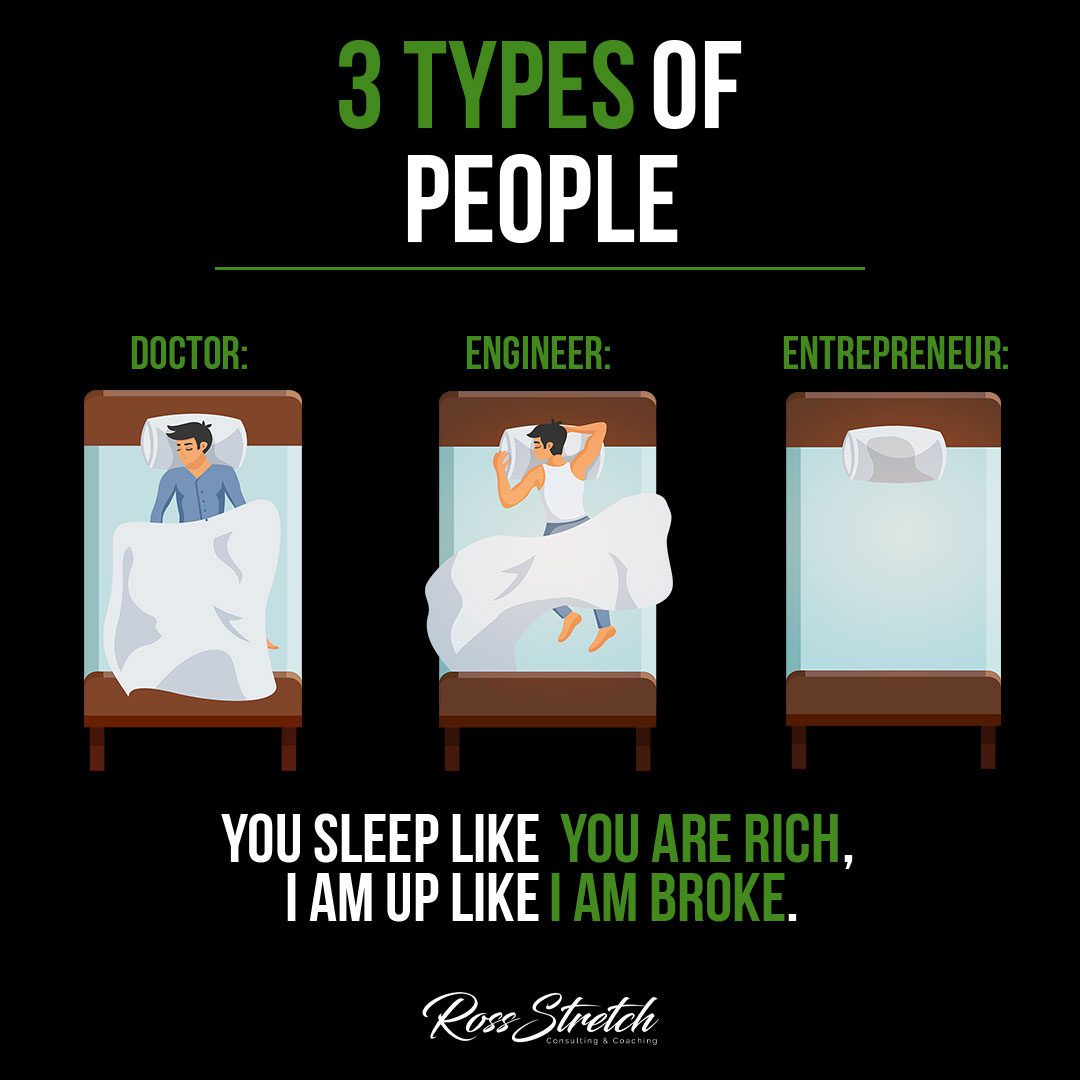
Success rarely looks the same from one profession to the next. A doctor’s path to excellence bears little surface resemblance to an engineer’s or an entrepreneur’s — yet beneath those differences lies a shared architecture of commitment, discipline, and purpose. Examining how these three archetypes approach their work reveals not just what separates them, but what universally binds high achievers across every field.
The Doctor: Precision, Empathy, and Unrelenting Responsibility
Medicine demands a rare combination of intellectual precision and human empathy. Physicians operate in environments where the margin for error is essentially zero — a delayed decision or a missed detail can have consequences that few other professionals face in quite the same way. This reality shapes everything about how doctors approach their work: the meticulous documentation, the obsessive continuing education, the psychological weight of knowing someone’s well-being is directly in their hands.
What is often underappreciated about physicians is the length of the runway required before they ever see a patient independently. A decade or more of formal training — undergraduate education, medical school, residency, and often fellowship — precedes full professional autonomy. This long-game orientation shapes a particular kind of mindset: one that is comfortable with delayed gratification, that measures progress in years rather than quarters, and that values mastery over speed.
Empathy is not a soft skill in medicine — it’s a clinical tool. Physicians who listen carefully, who read emotional cues, who understand the patient’s social context alongside their symptoms, consistently achieve better outcomes. The best doctors are students of human nature as much as they are students of biology and pharmacology.
The Engineer: Systematic Thinking and the Pursuit of Elegant Solutions
Engineers are fundamentally problem solvers, but what distinguishes great engineers from competent ones is the elegance of their solutions. Anyone can force a system to work. It takes a different level of thinking to make a system work efficiently, reliably, and in a way that’s easy to maintain and improve over time. This commitment to elegant design — in code, in structures, in circuits — is a hallmark of engineering excellence across every discipline.
The engineering mindset is characterized by a deep comfort with constraints. Rather than being frustrated by limitations — budget, physics, materials, deadlines — skilled engineers treat constraints as the raw material of creativity. The best engineering solutions almost always emerge from working within tight boundaries, not despite them. This is a lesson with broad applicability: knowing what you can’t do often clarifies exactly what you should do.
Engineers also possess a unique relationship with failure. In most professions, failure is something to minimize and avoid. In engineering, iterative failure is a design methodology. Prototypes break so that production models don’t. Tests fail so that deployments succeed. This tolerance — even embrace — of structured failure as a learning mechanism gives engineers a resilience and pragmatism that serves them well beyond the lab or the codebase.
The Entrepreneur: Vision, Tenacity, and the Willingness to Bet on Yourself
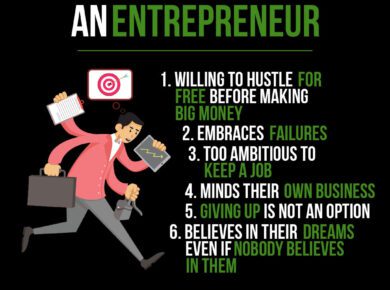
Entrepreneurship is defined by a paradox: the entrepreneur must simultaneously hold an unwavering belief in their vision and remain radically open to changing every aspect of how that vision gets executed. The ones who succeed are those who can distinguish between the idea — which they must protect with conviction — and the implementation, which must remain fluid and responsive to what the market reveals. This balance is genuinely difficult, and it’s why most ventures fail. Founders either pivot too quickly and lose their core identity, or hold on too tightly to a specific execution that the market has clearly rejected.
The popular narrative around entrepreneurship focuses heavily on inspiration and lifestyle. The more accurate picture involves relentless problem-solving, uncomfortable conversations with customers, cashflow management, and the psychological challenge of carrying uncertainty that never fully resolves. Successful entrepreneurs don’t eliminate risk — they get better at calculating which risks are worth taking and building systems that can absorb inevitable setbacks.
What separates entrepreneurs who build lasting companies from those who flame out is often not intelligence or work ethic — it’s resilience and resourcefulness. The ability to find a path forward when the obvious path is blocked, to recruit people who believe in something that doesn’t yet exist, and to keep moving when there is no map — these are the defining characteristics of the entrepreneurial mindset at its most essential.
The Common Thread: Passion as a Practical Advantage
Despite the surface differences between these three professional archetypes, the same foundations appear in each. Sustained high performance in medicine, engineering, or entrepreneurship requires more than skill — it requires a genuine investment in the work that transcends external incentives. The doctor who is only in it for income burns out. The engineer who stops being curious about problems stops innovating. The entrepreneur who loses belief in what they’re building stops making the sacrifices that building requires.
Passion, in this context, isn’t a motivational sentiment — it’s a practical competitive advantage. People who love their work put in more hours, think about problems more deeply, seek out harder challenges, and recover from setbacks faster. This compounds over time. A decade of sustained, passion-driven effort creates capabilities and reputations that are genuinely difficult to replicate through any other means.
Continuous learning is the other universal factor. Each of these fields changes rapidly enough that resting on credentials earned five or ten years ago is a reliable path toward irrelevance. The professionals who sustain excellence — in any field — treat their careers as a permanent state of learning rather than a destination to be reached and then maintained without further effort.
Conclusion
The mindsets of doctors, engineers, and entrepreneurs reveal that success is not one thing — it’s a family of related qualities that express themselves differently depending on the context. Precision and empathy, systematic thinking and comfort with failure, vision and resilience: each profession asks for a different combination, but all of them require genuine commitment to the work and a willingness to keep growing. The most transferable insight across all three is this: the professionals who remain curious, take their craft seriously, and invest in people as deliberately as in skills tend to build careers that genuinely matter.
Resources
- Harvard Business Review: What Makes an Entrepreneur — Research-backed breakdown of entrepreneurial traits and behaviors
- AAMC Medical Education Research — Data on physician training, specialization, and workforce trends
- Engineering UK Research — Reports on engineering skills, careers, and industry outlook
- Kauffman Foundation Entrepreneurship Research — Leading nonprofit research on entrepreneurship and innovation

 Ross Stretch