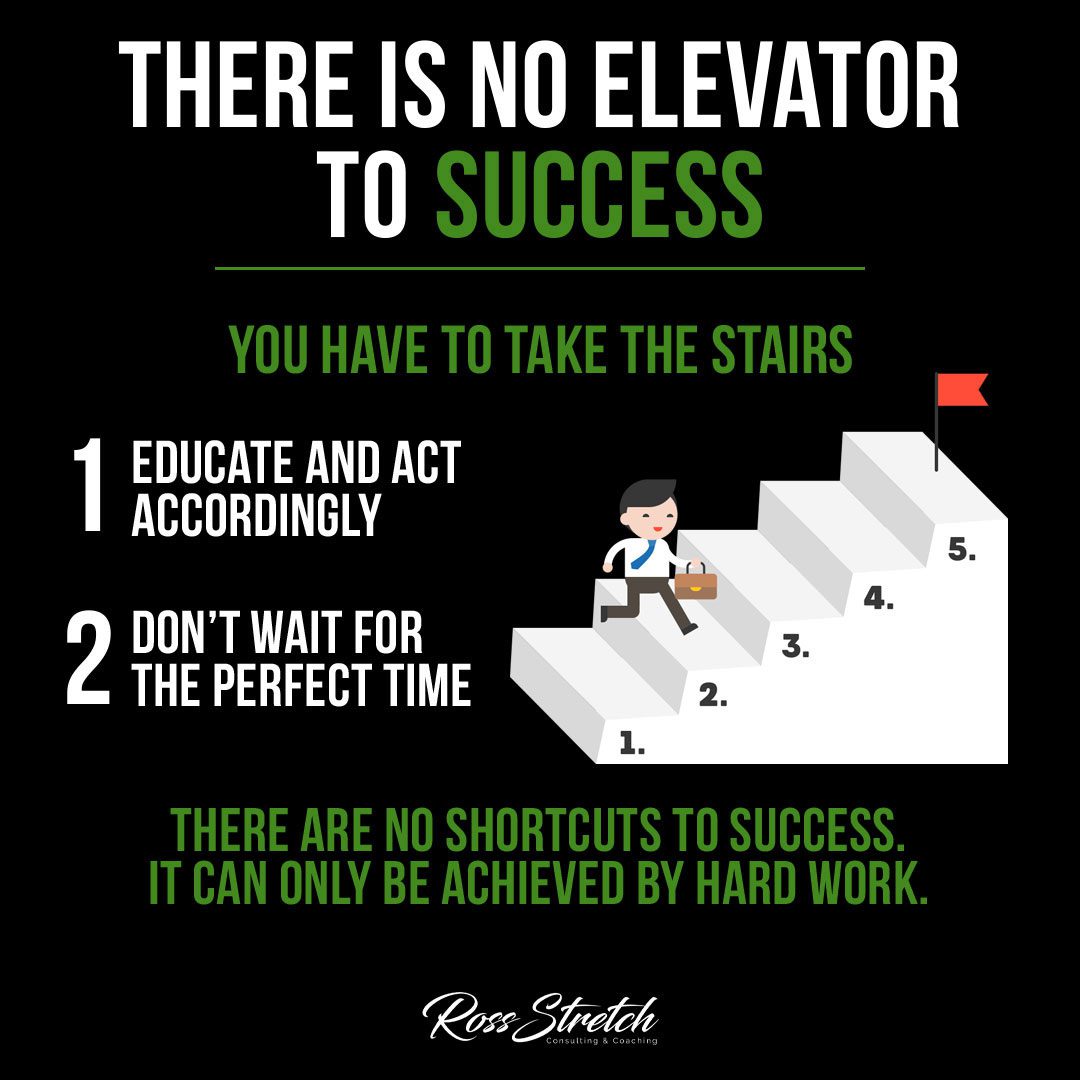
There is a persistent fantasy about success: that somewhere there is a shortcut, a connection, a single breakthrough moment that compresses years of work into one lucky break. That fantasy persists because success stories are usually told in retrospect, edited down from years of grinding effort into a highlight reel that makes the climb look effortless. The truth is less cinematic and far more actionable. Success is built step by step, on a staircase without an elevator, and the people who reach the top are simply the ones who kept climbing when others stopped.
This is not a discouraging message. It is actually liberating. If success rewards consistency more than genius, patience more than luck, and deliberate action more than a flawless strategy, then it is available to far more people than the highlight-reel version suggests. The stairs are steep, but they are accessible — and every step you take creates momentum for the next one.
Education: Building the Foundation You Stand On
Every staircase starts at the ground floor, and in the climb to success, education is the foundation. Not education in the narrow sense of formal credentials — though those matter in some fields — but education in its fullest expression: developing genuine competence, staying current in your domain, and building the mental models that allow you to navigate complex decisions with clarity and confidence.
The most accomplished professionals across every industry are relentless learners. They read broadly, seek feedback actively, and study their craft with a seriousness that casual participants rarely match. This commitment to continuous learning is what separates professionals who plateau early from those who continue developing throughout their careers. The moment you stop treating your competence as something to be actively built is the moment your competitive edge begins to erode.
Practical education matters as much as formal instruction. Apprenticeship, mentorship, and learning through direct experience often deliver more lasting value than additional degrees. The important thing is the orientation — approaching every project, every role, and every challenge as an opportunity to become more capable of the next one. That growth mindset compounds over time in ways that passive career management simply cannot replicate.
Action Over Perfection
Analysis paralysis is one of the most common reasons talented people fail to progress. They wait until conditions are ideal, the plan is fully formed, or the timing is perfect — none of which ever fully arrive. Successful people develop a bias toward action. They make decisions with imperfect information, launch before everything is ready, and learn from real-world results rather than endlessly refining a strategy that exists only on paper.
This is not recklessness — it is an honest acknowledgment that real-world feedback is irreplaceable. No amount of planning produces the clarity that comes from actually doing the thing and observing what happens. The entrepreneur who ships an imperfect product and iterates learns faster than the one who spends six more months perfecting a pre-launch version. The professional who applies for the role they feel slightly underqualified for learns more from the process than the one who waits until they feel completely ready.
Action also creates momentum. Each step forward, however small, changes your perspective on what is possible and reveals the next step more clearly. Inaction is self-reinforcing — the longer you wait, the more daunting the climb appears, and the easier it becomes to rationalize waiting a little longer. Movement, even imperfect movement, breaks that inertia and puts you back on the staircase.
Hard Work Is Not Optional
There is an entire genre of productivity content promising to help you achieve more while working less. Some of it is genuinely useful — efficiency matters, and working smarter has real value. But there is a baseline of sustained effort beneath every meaningful achievement that cannot be automated, delegated, or optimized away. Building something worthwhile requires consistent hard work over an extended period, and the people who pretend otherwise are usually selling something.
The most successful professionals in demanding fields — medicine, law, technology, finance, entrepreneurship — consistently report working harder and longer than their peers, especially during the formative stages of their careers. That investment of time and energy is not a penalty. It is the cost of developing the depth of expertise that eventually allows them to command premium compensation, leadership positions, and the freedom to work entirely on their own terms.
Hard work also builds character in ways that matter beyond any specific outcome. The discipline required to outwork your competition in one domain transfers to others. The habits of focus, follow-through, and uncompromising quality that you develop in one area of your life become assets in every other area that matters to you. The staircase, in this sense, builds the climber as much as it is built by them.
Persistence Through the Inevitable Setbacks
Every meaningful goal includes obstacles. Failed projects, rejection, market downturns, personal setbacks — these are not aberrations in the path to success; they are structural features of it. The distinguishing characteristic of people who ultimately succeed is not that they avoided these obstacles but that they did not stop when they encountered them. They adapted, learned, and kept climbing.
Persistence is not the same as stubbornness. It includes the wisdom to distinguish between a flawed strategy worth abandoning and a sound strategy worth continuing through short-term adversity. When you face a setback, the productive question is not whether to quit but what you can learn from the experience and how it should change your approach. That orientation converts obstacles into useful data rather than definitive dead ends.
Resilience is built through adversity, not around it. Each time you recover from a difficult stretch, adapt your approach, and continue forward, you become more capable of handling the next challenge. That accumulated resilience is one of the most valuable professional assets anyone can possess — and it is only available to those willing to step onto the staircase and keep climbing regardless of what they encounter on the way up.
The Role of Mentors and Community
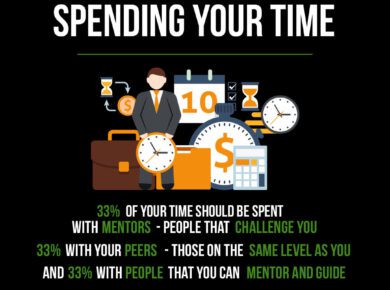
No one climbs the staircase entirely alone. The professionals who progress most efficiently have access to people who have already climbed further — mentors who can identify expensive mistakes before they happen, open doors that would otherwise remain closed, and offer perspective that is impossible to develop entirely from within your own experience. Finding and maintaining strong mentorship relationships is one of the highest-return investments you can make in your career.
Mentors are rarely assigned — they are earned through demonstrated commitment, genuine curiosity, and the willingness to implement feedback rather than simply receive it. The best mentor relationships are reciprocal: you bring energy, initiative, and fresh perspective; they bring experience, networks, and earned wisdom. Treat those relationships with the seriousness they deserve, and they will compound over time in ways you cannot fully anticipate when you first form them.
Alongside formal mentors, the people you spend the most time with shape your trajectory more than almost any other environmental factor. Surrounding yourself with ambitious, high-integrity people who are operating at or above your current level raises your standards, expands your sense of what is possible, and creates a context where continued growth is the norm. The right community does not just support the climb — it accelerates it.
Conclusion
The staircase metaphor endures because it is accurate. Success is not a secret — it is a structure. Educate yourself continuously, act before you feel fully ready, work harder than your competition, persist through adversity without losing the ability to adapt, and find the people who have gone further and learn deliberately from them. There is no elevator. But the stairs are there, they are accessible, and every step you take brings you closer to the top than you were before.
Resources

 Ross Stretch