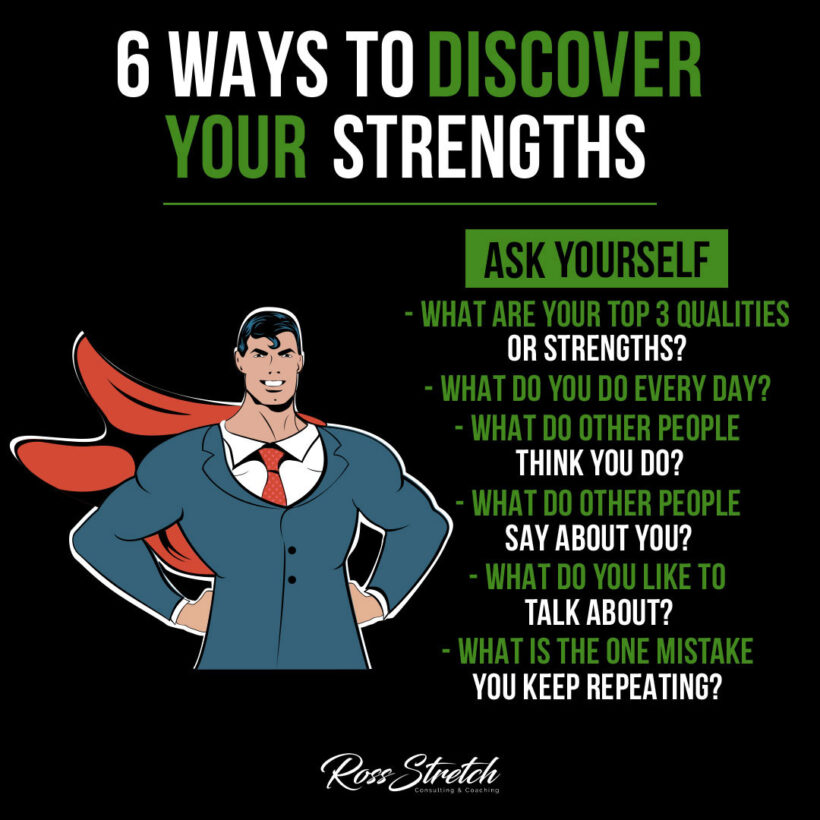

Most people can’t articulate their top strengths on demand — and that gap costs them in job interviews, salary negotiations, and career pivots. Discovering your strengths is not a soft exercise in self-esteem; it’s a strategic advantage that determines which opportunities you pursue, which roles you thrive in, and how you position yourself in a competitive market. These six proven methods will help you uncover what you’re genuinely exceptional at — and give you a concrete plan to put those insights to work immediately.
1. Take a Validated Strengths Assessment
Stop Guessing — Let the Data Tell You
Self-reflection has limits — chiefly, your own blind spots and self-serving biases. Validated psychometric assessments like Gallup’s CliftonStrengths or the VIA Character Strengths survey use decades of research to surface patterns you might never identify on your own. These tools give you a precise, shared language for your strengths that is recognized and respected in professional contexts.
- Actionable Tip: Take the CliftonStrengths assessment at gallup.com and identify your top five themes. For each one, write down a specific professional situation — a project, a presentation, a negotiation — where that theme was clearly at work.
- Why It Works: Psychometric assessments bypass self-bias by comparing your responses to hundreds of thousands of others. The results reflect actual behavioral patterns, not how you feel on a given day — making them far more reliable than gut instinct alone.
Pro Tip:
Don’t just read the report. Book 30 minutes with a certified strengths coach to interpret your results in the context of your specific career goals. Data becomes direction when someone helps you apply it to real decisions.
2. Track When You Feel Energized vs. Drained
Your Energy Is the Most Honest Signal You Have
Strengths aren’t just skills — they’re activities that leave you energized rather than depleted. The tasks where you lose track of time, feel most capable, and generate your best work are not accidents. That energy signature is one of the most reliable indicators of a genuine strength, because it persists across contexts and doesn’t require willpower to sustain.
- Actionable Tip: For one week, rate each major task you complete on two dimensions — performance (1-5, how well did you do?) and energy (1-5, how did it feel to do it?). Tasks that score high on both are your core strengths. These are where to invest more of your professional time.
- Why It Works: Psychologist Mihaly Csikszentmihalyi’s research on flow states demonstrates that sustainable excellence emerges when competence and engagement converge. High performance with high energy is the signature of a strength; high performance with low energy is a skill that will eventually burn you out.
Pro Tip:
Use your energy audit to reshape your role over time. Identify which 20% of your responsibilities generate 80% of your best results and highest energy — then build a case to your manager for spending more time in that zone. This is how ambitious professionals engineer roles that actually play to their strengths.
3. Request Structured Feedback from Your Inner Circle
Other People See What You’ve Stopped Noticing
Your greatest strengths are often invisible to you because you’ve had them so long that they feel ordinary. The people around you — colleagues, managers, close friends — observe patterns in your behavior that you take for granted every day. Actively soliciting this feedback is one of the fastest and most accurate ways to surface what you genuinely do better than most people around you.
- Actionable Tip: Email five people across different areas of your life — one manager, two peers, two close friends — with this exact prompt: “What do you think I do better than most people? What do you most often rely on me for?” Compile the responses and look for themes that appear across multiple answers.
- Why It Works: External feedback bypasses the two failure modes of self-assessment: imposter syndrome (undervaluing real strengths) and overconfidence (overvaluing surface-level skills). Multiple perspectives from different contexts triangulate toward truth more reliably than any single self-evaluation.
Pro Tip:
For a more rigorous approach, use the Reflected Best Self Exercise developed at the University of Michigan’s Ross School of Business. It asks contacts to share specific stories of when you were at your best — stories reveal strengths in action, not just in theory, and are far more useful than generic adjective lists.
4. Audit Your Compliments and Recurring Positive Feedback
Recurring Praise Is a Pattern — and Patterns Are Data
Over your career, certain phrases keep appearing in your performance reviews, emails, and casual conversations. “You always find a way.” “You’re the only one who can explain this clearly.” “Everyone trusts your judgment on this.” Those recurring phrases are your strengths signature, and most people never systematically collect or analyze them. That’s a significant missed opportunity.
- Actionable Tip: Create a “strengths bank” document today. Pull positive feedback from performance reviews, LinkedIn recommendations, Slack messages, and emails going back two years. Categorize by theme. The categories that appear three or more times across different sources represent your genuine differentiators.
- Why It Works: Consistent praise from multiple sources over extended time is the most reliable indicator of a genuine strength — more reliable than any single assessment or moment of self-reflection. It’s real-world evidence, collected in high-stakes conditions, by people with direct experience of your work.
Pro Tip:
Keep this document live and add to it every time you receive meaningful positive feedback. Over 12 months, it becomes a powerful asset — invaluable for promotion conversations, LinkedIn rewrites, and building a personal brand that resonates because it’s grounded in actual evidence rather than aspiration.
5. Notice What You Naturally Teach Others
If You Can Teach It Fluently, You Own It at a Deep Level
Teaching is one of the most revealing tests of genuine mastery. When colleagues, friends, or family consistently come to you for guidance on a specific topic — and you find yourself explaining it clearly, patiently, and with examples that land — that’s a reliable strength indicator. The subject matter you naturally teach reflects deep competence, not just surface familiarity with something you once read about.
- Actionable Tip: List the five topics or skills people most frequently ask you to help with or explain. For each one, estimate how long you’ve been doing it and how naturally the explanations come. Topics that are both long-standing and effortless to explain are core strengths worth building on professionally.
- Why It Works: Research on tacit knowledge and expertise shows that fluent knowledge transfer requires deep, often unconscious competence. If you can explain something clearly without preparation, you’ve internalized it at a level that separates you from people who merely understand it theoretically.
Pro Tip:
Formalize your teaching into content — a LinkedIn article, a short video series, an internal workshop at your organization. The process of structuring your knowledge for an audience reveals the depth and edges of your strength, and simultaneously positions you as an authority in the eyes of people who matter to your career.
6. Examine Your Recurring Mistakes for Hidden Strengths
Most Chronic Mistakes Are Overused Strengths in Disguise
This is counterintuitive but powerful: most persistent professional mistakes are not evidence of weakness — they are evidence of a strength operating without appropriate boundaries. If you consistently over-commit, it’s because you’re naturally driven and optimistic. If you’re repeatedly told you’re too direct, it’s because you value honesty and efficiency above social comfort. The strength is real. It just needs a governor.
- Actionable Tip: Think of your three most persistent professional patterns or mistakes. For each one, ask: “What positive drive is at the root of this behavior?” Name the underlying strength, then define the specific discipline needed to channel it productively. For example: a “natural leadership instinct” needs the counterbalance of “deliberate delegation.”
- Why It Works: Psychologist Robert Hogan’s research on leadership derailment shows that almost every destructive professional behavior is a strength that has been overused under pressure. Addressing the behavior without recognizing the underlying strength treats the symptom while leaving the cause intact — which is why most professional development fails to produce lasting change.
Pro Tip:
The Hogan Assessment is specifically designed to identify “derailers” — the shadow behaviors that emerge when strengths are pushed past their effective range under stress. Widely used in executive coaching and leadership development, it provides one of the most rigorous maps available of exactly this dynamic, and is worth the investment if you’re serious about long-term leadership growth.
Start Where You Are — Then Build on It
The most successful professionals are not the ones who are best at everything — they’re the ones who know precisely what they’re exceptional at and position themselves accordingly. Use these six methods as a system, not a one-time exercise. Return to them annually as your career evolves, your role changes, and your definition of success sharpens. Self-knowledge is not a destination; it’s a practice that compounds over time.
Resources

 Ross Stretch