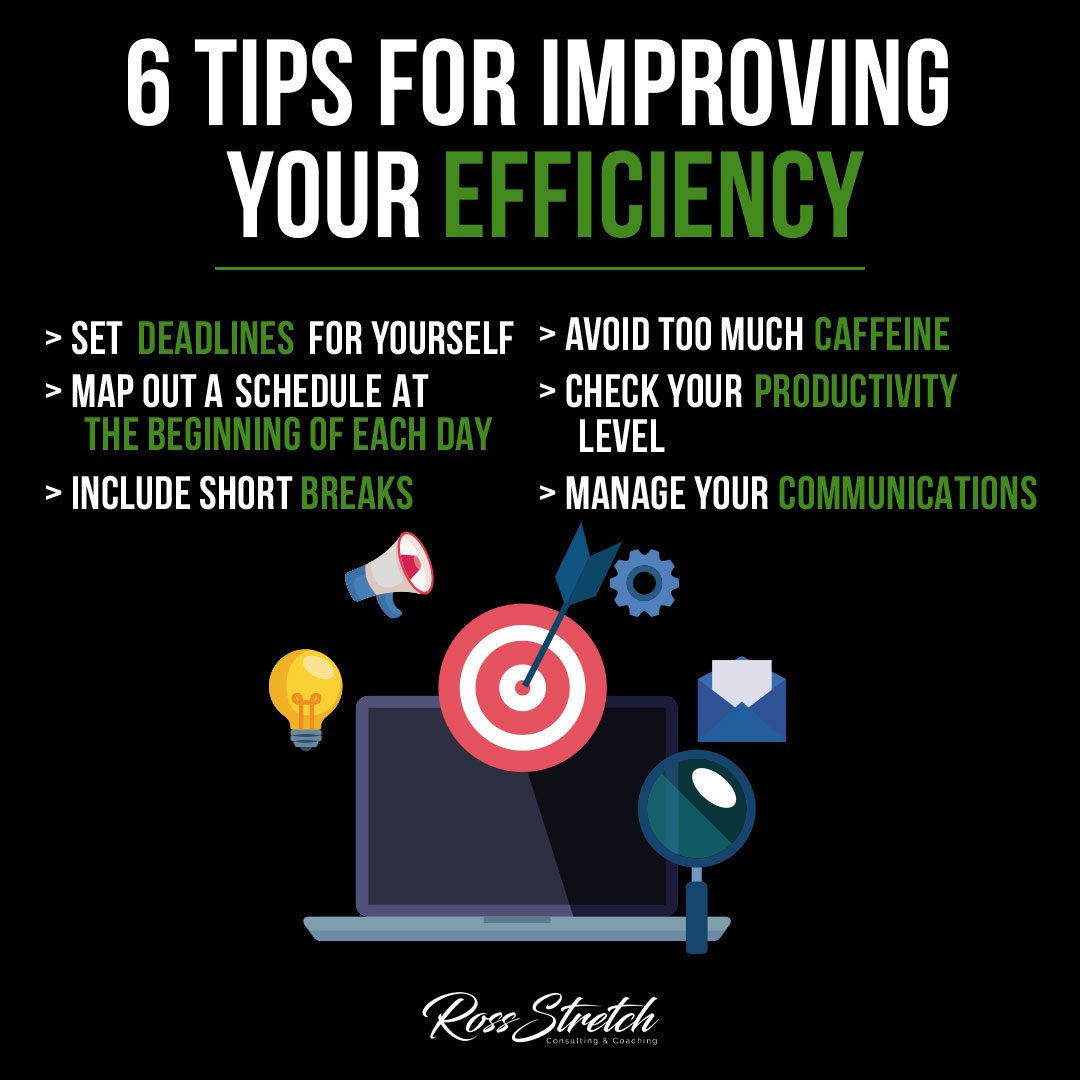
Most people don’t have a time problem — they have a priority problem. Productivity isn’t about grinding longer hours; it’s about eliminating friction and replacing it with ruthless intention. Whether you’re managing a side hustle, climbing the corporate ladder, or building something from scratch, these 6 proven efficiency tips will help you reclaim your time, sharpen your focus, and consistently accomplish more every single day.
1. Set Deadlines for Yourself
Create Urgency on Your Own Terms
Without deadlines, tasks expand to fill all available time — a phenomenon known as Parkinson’s Law. Self-imposed deadlines create urgency and force prioritization, turning vague intentions into concrete commitments. The key is making them specific, visible, and genuinely non-negotiable.
- Actionable Tip: Break every major project into sub-tasks with individual due dates and block those deadlines in your calendar as hard appointments — not suggestions. Treat them the way you would a meeting with your most important client.
- Why It Works: Specific deadlines trigger the brain’s focus response and reduce decision fatigue. Research shows people with written deadlines are 42% more likely to complete their goals than those relying on vague intentions alone.
Pro Tip:
Use commitment devices — tell a colleague, accountability partner, or mentor about your deadline. Social accountability dramatically increases follow-through because the cost of failure is no longer private. When someone else is watching, execution becomes non-optional.
2. Map Out a Schedule at the Beginning of Each Day
Your Morning Plan Is Your Competitive Edge
High performers don’t wing their days — they design them. Spending 10-15 minutes planning your schedule each morning protects your most important work with dedicated time rather than leaving it to compete with reactive tasks. A clear daily plan is the single most underrated tool for consistent execution at a high level.
- Actionable Tip: Each morning, identify your top three must-complete tasks and time-block each one in your calendar before anything else gets scheduled. Guard those blocks the same way you would a board meeting or a client call you cannot reschedule.
- Why It Works: Time-blocking forces intentional energy allocation before the day’s chaos takes over. Cal Newport’s research shows structured time-blocking can increase meaningful work output by up to 50% compared to reactive, list-based approaches to daily work.
Pro Tip:
Plan the night before for an even greater edge. When you wake up knowing exactly what you’re doing and why it matters, you eliminate the “what do I tackle first?” paralysis that kills momentum during the critical first hour of every productive morning.
3. Include Short Breaks
Rest Is a Productivity Strategy, Not a Weakness
Sustained focus without rest is a myth. Cognitive performance declines sharply after 60-90 minutes of intensive work, and pushing through that wall produces rapidly diminishing returns. Strategic breaks aren’t wasted time — they are the recovery mechanism that keeps your brain operating at peak capacity throughout the entire workday.
- Actionable Tip: Use the Pomodoro Technique — work in focused 25-minute blocks, take a 5-minute break, and after four rounds take a longer 20-30 minute rest. Set a timer and treat both the work block and the break as non-negotiable commitments to yourself.
- Why It Works: Short breaks prevent decision fatigue and allow the prefrontal cortex to consolidate information and reset attention. Research from the University of Illinois found that brief diversions from a task significantly improve sustained concentration compared to unbroken, marathon work sessions.
Pro Tip:
Use your breaks to move your body, not scroll your phone. A 5-minute walk increases cerebral blood flow by up to 15%, measurably improving concentration and creative thinking when you return to your desk — and it costs you nothing.
4. Avoid Too Much Caffeine
Manage Your Energy, Not Just Your Stimulants
Caffeine is a tool, not a fuel source — and like any tool, it works against you when misused. Excessive consumption creates a cycle of stimulation and crashes that erodes consistent energy levels and destroys sleep quality over time. Understanding how to use caffeine strategically can transform it from a dependency crutch into a genuine, measured performance enhancer.
- Actionable Tip: Cap caffeine at 200-400mg per day (roughly 2-3 cups of coffee), cut consumption by 2pm to protect sleep quality, and drink at least eight glasses of water daily — dehydration alone is one of the leading causes of the afternoon energy crashes most people try to solve with more coffee.
- Why It Works: Caffeine works by blocking adenosine receptors, delaying the onset of fatigue — but when sleep is disrupted, you need progressively more caffeine to function, creating dependency. Protecting sleep quality is the single highest-leverage productivity intervention available to any ambitious professional.
Pro Tip:
Delay your first coffee 90-120 minutes after waking. This allows cortisol — your body’s natural alertness hormone — to peak first. When caffeine arrives later, it amplifies an already alert brain rather than substituting for the natural wakefulness your body is trying to produce on its own.
5. Check Your Productivity Level
What Gets Measured Gets Improved
You cannot optimize what you don’t track. Regularly auditing how you actually spend your time reveals uncomfortable truths about where your hours go versus where you think they go. Most professionals dramatically overestimate their productive output and underestimate the time lost to low-value, reactive busywork.
- Actionable Tip: Run a time audit for one week using Toggl Track or RescueTime. Categorize every activity and calculate how many hours actually moved your most important goals forward — versus how many were spent on tasks that felt productive but generated little real output or value.
- Why It Works: Time audits create data-driven self-awareness that drives genuine behavioral change. When you see concretely that you lost three hours to passive email checking or unnecessary meetings, the motivation to restructure those patterns becomes visceral rather than abstract and easy to ignore.
Pro Tip:
Apply the Eisenhower Matrix to your task list: categorize every item by urgency and importance. Your highest-value hours belong in the Important-but-Not-Urgent quadrant — strategic thinking, skill development, and key relationship building. These are the activities that build your future self, not just your today.
6. Manage Your Communications
Stop Letting Your Inbox Run Your Day
Constant communication interruptions are among the biggest hidden productivity killers in modern work. Every notification that pulls your attention away requires up to 23 minutes of recovery time to fully return to deep focus — meaning five interruptions can quietly consume nearly two full hours of productive capacity. Reclaiming control of your communications isn’t antisocial; it is essential.
- Actionable Tip: Set two or three designated windows per day for checking email and messages (e.g., 9am, 12:30pm, and 4pm), turn off all non-essential push notifications, and communicate this schedule to your team proactively so expectations are managed before they become frustrations.
- Why It Works: Batching communications eliminates context-switching costs and protects your deep work windows. Research from UC Irvine’s Gloria Mark found that the average knowledge worker is interrupted every three minutes — and rarely achieves a full return to their original level of concentration after each break.
Pro Tip:
Apply David Allen’s Two-Minute Rule from Getting Things Done: if a message requires a response that takes under two minutes, handle it immediately during your communication window. If it takes longer, schedule a dedicated block to address it properly. This keeps your inbox from becoming a second task list you perpetually defer and feel guilty about.
Take Back Your Time Starting Today
Productivity isn’t a personality trait you’re born with — it’s a system you deliberately build and continuously refine. By setting firm deadlines, designing your days with intention, protecting recovery time, managing your stimulants strategically, measuring your output honestly, and taking control of your communications, you create an environment where high performance becomes the default rather than the exception. Start with one of these six strategies this week, master it, then stack the next. Small, disciplined changes compound into extraordinary long-term results.
Resources


 Ross Stretch