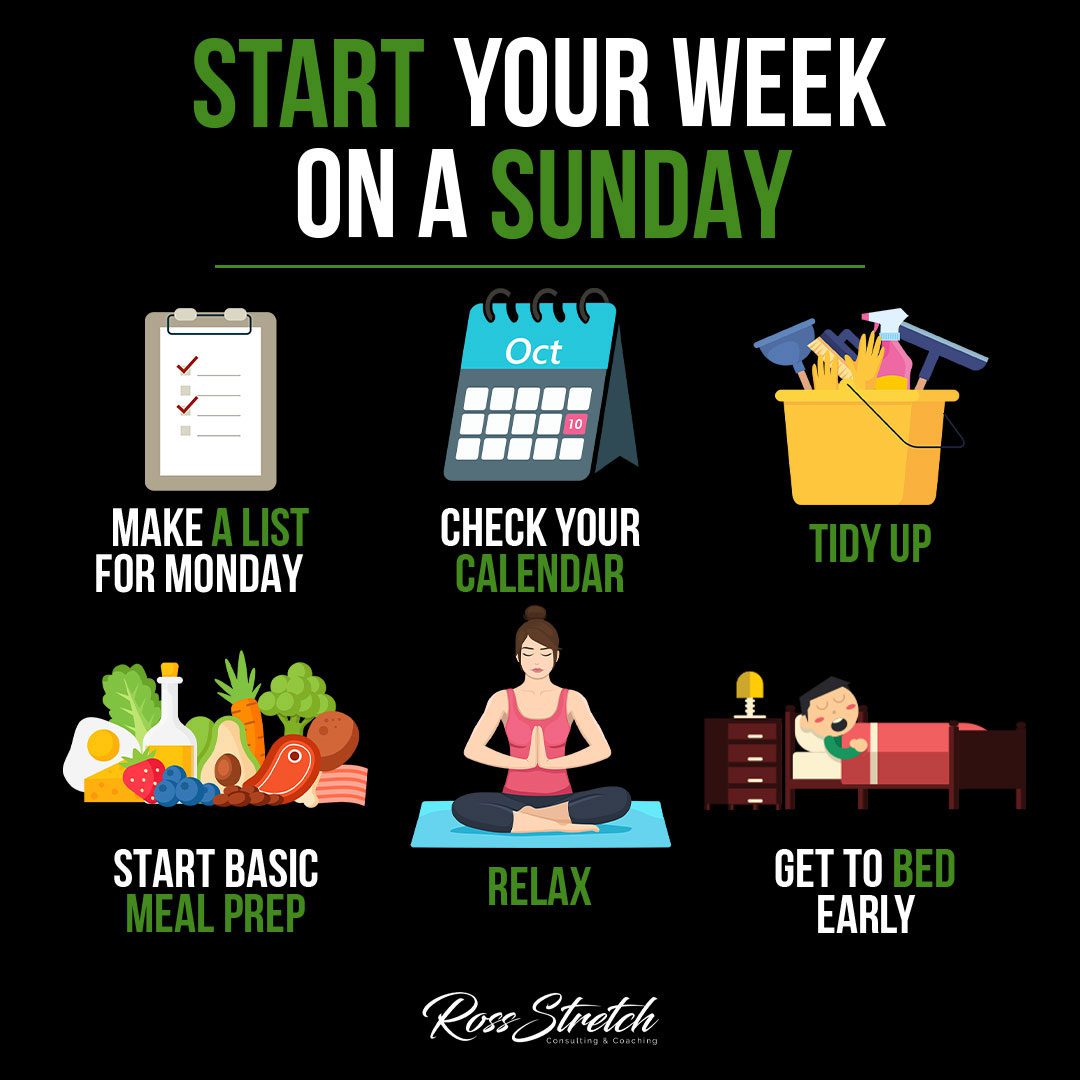
The way you spend Sunday afternoon shapes the entire week that follows. High performers across business, athletics, and creative fields treat Sunday as a planning day — a quiet window to get ahead of the week rather than stumble into Monday unprepared. The investment is modest: an hour or two of intentional preparation can eliminate days of scattered, reactive work. These six practices will help you build a Sunday routine that sets you up for a genuinely productive and less stressful week.
Make a List for Monday
The Sunday task list is one of the simplest and most effective productivity tools available. Spend fifteen minutes on Sunday evening writing down the three to five most important things you need to accomplish on Monday. Not everything — just the highest-priority items that will move your work, finances, or personal projects forward in a meaningful way.
The value of this practice goes beyond the list itself. Writing down Monday’s priorities the night before allows your brain to process them overnight. People who do this consistently report that they wake up with more mental clarity and less of the foggy, where-do-I-start feeling that slows down the first hour of most workdays. It also protects you from the inbox-first habit that turns Monday morning into a reactive scramble instead of a deliberate start.
- Limit your Monday list to three to five high-priority items — more than that creates overwhelm, not clarity
- Identify your single most important task and plan to do it first thing Monday morning, before checking email
- Review what didn’t get done last week and decide whether it carries forward or gets dropped entirely
Review Your Calendar
A Sunday calendar review takes ten minutes and prevents the low-grade anxiety of walking into the week without knowing what’s coming. Open your calendar and look at every appointment, meeting, and deadline for the next seven days. Note anything that needs preparation — a client call you should research for, a deadline that requires work earlier in the week, a personal commitment that will limit your available time on certain days.
Time blocking based on Sunday’s calendar review is one of the most consistently recommended habits among high-output professionals. When you can see the week laid out clearly, you can make intelligent decisions about where to allocate effort rather than reacting to whatever feels most urgent in the moment. It also helps you notice potential conflicts before they become problems that require last-minute scrambling.
- Look for back-to-back meetings that leave no buffer for transitions or follow-up — consider rescheduling if possible
- Identify any mid-week deadlines that require preparation before Monday; schedule that work time now
- Check that personal commitments are accounted for alongside professional ones — family time, exercise, rest
Tidy Your Workspace
A cluttered workspace is a mild but constant cognitive tax. Research in environmental psychology consistently shows that physical disorder increases stress and reduces the ability to focus. Taking twenty to thirty minutes on Sunday to clean and organize your workspace — physical or digital — means you start Monday in an environment that supports clarity rather than competing with it.
This doesn’t require a deep clean. Clear the desk. File or discard loose papers. Close the browser tabs from last week. Archive emails that don’t need a response. The goal is a clean starting point — a workspace that signals “a new week with new possibilities” rather than “the same pile of unfinished business from last Friday.” Small environmental adjustments like this have a disproportionate psychological impact on how you show up when the week begins.
- Spend twenty minutes on physical cleanup: desk, bag, any shared workspace you use regularly
- Do a digital sweep: archive processed emails, close unused tabs, clear your desktop
- Set out anything you’ll need for Monday morning — notebook, charger — so the start is frictionless
Do Basic Meal Prep
Nutrition decisions made when you’re tired, hungry, and pressed for time are almost always worse than the ones you make in advance. A small amount of Sunday meal prep — even thirty to forty-five minutes — can dramatically reduce the number of decisions you need to make during busy weekdays and make it far easier to eat in a way that supports your energy and focus throughout the week.
This doesn’t mean preparing seven days of Tupperware containers. It means doing the basic work that removes friction: washing and chopping vegetables, cooking a batch of protein or grains, making sure healthy snacks are accessible, and planning at least three to four weekday dinners. The goal is decision fatigue reduction — saving your mental bandwidth for the choices that actually matter to your work and goals.
- Cook one large batch of a staple — rice, roasted vegetables, grilled chicken — that can serve as the base for multiple meals
- Prep weekday lunches on Sunday to avoid midday takeout decisions that drain time and money
- Write a simple dinner plan for the week so grocery shopping and cooking are guided, not improvised nightly
Protect Time for Rest and Recovery
A Sunday routine that’s all preparation and no recovery defeats its own purpose. Rest is not a reward for completing your to-do list — it’s a precondition for doing the list well. Engage in at least one activity on Sunday that genuinely replenishes you: a long walk, reading for pleasure, time with people you enjoy, a hobby that has nothing to do with productivity. Passive consumption of social media or streaming doesn’t tend to leave people feeling restored.
The best performers in almost every field understand that recovery is part of the performance cycle, not separate from it. Athletes periodize their training to include recovery phases. Writers take intentional breaks. Entrepreneurs who never stop working tend to make poor decisions at scale because their judgment is chronically depleted. Sunday rest is a strategic investment in Monday clarity, not an indulgence.
- Identify at least one activity that you find genuinely restorative — not just passive — and build it into every Sunday
- Consider a phone-free window of one to two hours on Sunday afternoon
- Protect social time with people who energize you rather than drain you
Go to Bed at a Consistent Time
Sleep is the single highest-leverage health and performance variable available, and Sunday night is where most people sabotage their entire week. Staying up late — to watch one more episode, scroll longer, or squeeze in work that could wait — shifts your sleep phase and creates a form of mild jet lag that compounds across the week. Sleep researchers call this “social jet lag,” and it measurably impairs cognitive performance, mood, and immune function throughout the days that follow.
Setting a consistent Sunday bedtime — and treating it with the same firmness as any other appointment — is one of the highest-return changes you can make to your weekly performance. The goal is to wake up on Monday feeling genuinely rested, not recovering from a weekend of disrupted sleep. This single habit, maintained consistently, will outperform almost any productivity system you can layer on top of it.
- Set a Sunday bedtime that allows seven to nine hours before your alarm, and put it in your calendar as a recurring reminder
- Start a wind-down routine sixty minutes before bed: dim lights, no screens, something calming
- Avoid scheduling anything stimulating — intense exercise, difficult conversations — in the two hours before bed on Sunday nights
Conclusion
None of these practices require heroic effort. The cumulative effect of a well-structured Sunday — a clear task list, a reviewed calendar, a tidy workspace, prepared food, genuine rest, and a solid night of sleep — is a Monday that starts from a position of strength rather than scramble. Treat Sunday as an investment in the version of yourself that shows up Monday morning, and you’ll find that the week looks manageable in ways it never did before.
Resources


 Ross Stretch