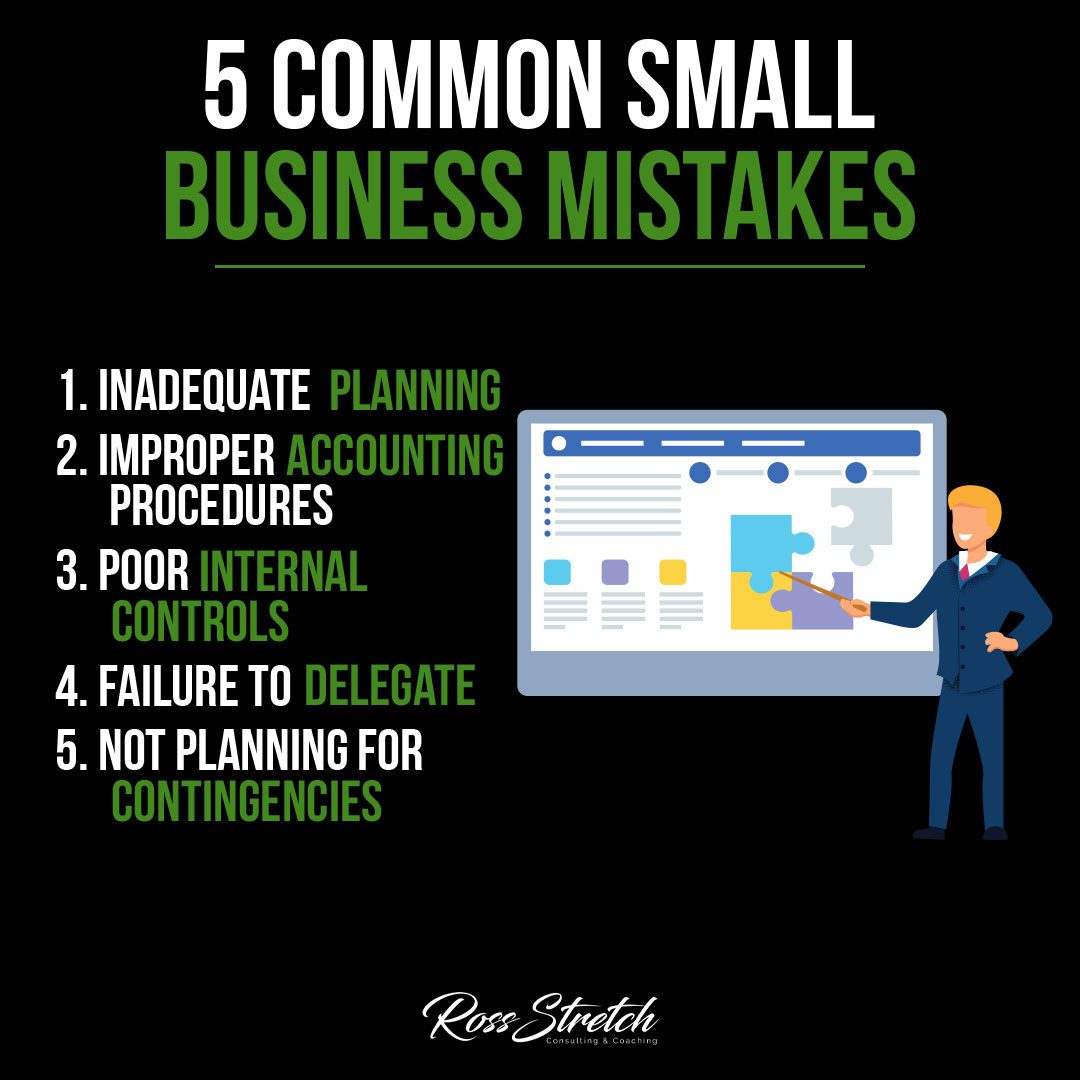
Starting a small business is one of the most rewarding things you can do — and one of the most humbling. The majority of businesses that fail don’t fail because of bad products or bad markets. They fail because of preventable operational mistakes that compound over time. Understanding these pitfalls before they derail you is far less painful than learning from them firsthand.
1. Inadequate Planning
Most Business Problems Begin Before the Business Does
The excitement of starting a business can make planning feel like a bureaucratic obstacle rather than a strategic advantage. But a business that launches without a solid plan is operating on optimism rather than strategy. Without clarity on your market, your customers, your competition, and your financial projections, early decisions get made reactively — and reactive decisions in a new business are expensive.
A good business plan doesn’t need to be a 50-page document — but it does need to answer the fundamental questions: Who is your target customer? What problem are you solving for them? How will you acquire customers affordably? What does your cash flow look like in months 1, 6, and 12? Having clear answers to these questions before launch dramatically improves your odds.
- Actionable Tip: Complete a one-page business plan using the Lean Canvas format before spending a dollar on the business. It forces clarity on every critical variable in under an hour.
- Why It Works: Plans aren’t about predicting the future accurately — they’re about forcing you to think through assumptions before they become expensive surprises.
Pro Tip:
Revisit your plan quarterly, not just at launch. Markets shift, customer preferences change, and your assumptions from month one will often look different six months in. A plan you never update is just a historical document — not a business tool.
2. Improper Accounting and Financial Tracking
You Can’t Manage What You Don’t Measure
Poor financial hygiene is one of the most common and most damaging mistakes small business owners make. Mixing personal and business expenses, failing to track accounts receivable, or losing receipts may feel like minor inconveniences — but they create serious problems at tax time, make it nearly impossible to understand your true profitability, and can lead to decisions based on inaccurate information.
Many small business owners avoid their numbers because the picture isn’t comfortable to look at. But financial avoidance doesn’t improve reality — it just delays the moment you’re forced to confront it, usually under worse circumstances. Knowing your numbers gives you power; avoiding them gives your problems time to grow.
- Actionable Tip: Open a dedicated business bank account and credit card immediately — even before revenue starts. Use accounting software like Wave (free) or QuickBooks to record every transaction from day one.
- Why It Works: Clean financial records save hours at tax time, unlock access to business credit, and give you the data you need to make confident pricing and spending decisions.
Pro Tip:
Schedule a monthly “money date” — 60–90 minutes with your books, your bank statements, and your P&L. Review what came in, what went out, and whether the numbers tell the same story your gut does. Most business surprises aren’t really surprises — they were visible in the numbers weeks earlier for anyone who was looking.
3. Weak Internal Controls
Trust Is Essential — But So Is Verification
Small businesses often operate with minimal oversight, especially in the early stages when the owner is wearing every hat. That informality creates real vulnerabilities. Without proper controls over cash handling, purchasing, payroll, and inventory, small businesses are disproportionately exposed to both accidental errors and deliberate fraud — often from people they trust.
Studies consistently show that small businesses lose a greater proportion of their revenue to fraud than large corporations, precisely because they lack the systems that large organizations take for granted. Putting basic controls in place isn’t a sign of distrust toward your team — it’s a sign of professional management.
- Actionable Tip: Separate financial duties wherever possible — the person who approves expenses shouldn’t be the same person who records them. Conduct a brief monthly reconciliation of bank statements against your accounting records.
- Why It Works: Segregation of duties is the single most effective deterrent to both fraud and accidental error. When two people are involved in any financial transaction, mistakes are far less likely to slip through undetected.
Pro Tip:
Set spending authorization limits — any purchase above a defined threshold requires owner approval. This simple policy catches unnecessary or unauthorized spending before it happens rather than after it shows up in your bank statement.
4. Failure to Delegate
The Business That Needs You for Everything Will Never Truly Grow
Many small business owners struggle to delegate because they believe no one else can do the work quite as well, or because they don’t trust the process of teaching someone else. This instinct is understandable — but it’s a ceiling. A business that requires the owner to personally handle every task is not a business; it’s a self-employment trap that limits growth to whatever one person can physically accomplish.
Effective delegation is a learnable skill. It starts with identifying which tasks genuinely require your specific expertise and judgment — and which tasks consume your time but could be handled by someone else with the right training. Most founders are surprised to discover how much of their week falls into the second category.
- Actionable Tip: List every recurring task you perform in a week. Mark each as “owner-essential” or “delegatable.” Start by handing off one delegatable task to a team member or contractor and document the process as you go.
- Why It Works: Every hour you reclaim from delegatable tasks is an hour you can invest in strategy, sales, and the work that only you can do — which is where your highest leverage as a founder actually lives.
Pro Tip:
Build standard operating procedures (SOPs) for every delegated task. Even a simple one-page document explaining how to complete a recurring process will dramatically reduce errors and the time you spend re-explaining things. SOPs also make hiring faster and onboarding more consistent as your team grows.
5. Not Planning for Contingencies
Every Business Faces Disruption — Plan for It Before It Happens
Unexpected events are not a question of if — they’re a question of when. Economic downturns, supply chain disruptions, key employee departures, equipment failures, and sudden drops in demand all happen to businesses that are doing everything else right. The businesses that survive and recover quickly are the ones that planned for disruption before it arrived.
The most foundational contingency is a cash reserve. Financial advisors commonly recommend that small businesses maintain three to six months of operating expenses in liquid savings. This isn’t money sitting idle — it’s insurance that buys you time to adapt when circumstances change suddenly and without warning.
- Actionable Tip: Build a simple business continuity checklist that covers your three most likely disruption scenarios: a key person becoming unavailable, a major customer churning, and a 30% drop in revenue for 60 days. What would you do in each case?
- Why It Works: Decisions made in advance — before stress, urgency, and uncertainty cloud your judgment — are almost always better than decisions made reactively in the middle of a crisis.
Pro Tip:
Identify which single person, supplier, or customer, if lost, would cause the most damage to your business. Then spend time reducing that dependency — cross-train employees, diversify your supplier base, or focus on expanding your customer base so no single account represents more than 20–25% of revenue. Concentration risk is one of the most common and most dangerous vulnerabilities in small businesses.
Conclusion
The most successful small businesses aren’t the ones that never make mistakes — they’re the ones that catch mistakes early, learn from them quickly, and build systems that prevent the same error from recurring. Solid planning, clean financials, basic internal controls, a willingness to delegate, and preparation for the unexpected aren’t glamorous — but they’re the foundation that every durable business is built on. Get these fundamentals right and you’ll give your business the structural strength to grow through whatever comes next.
Resources


 Ross Stretch