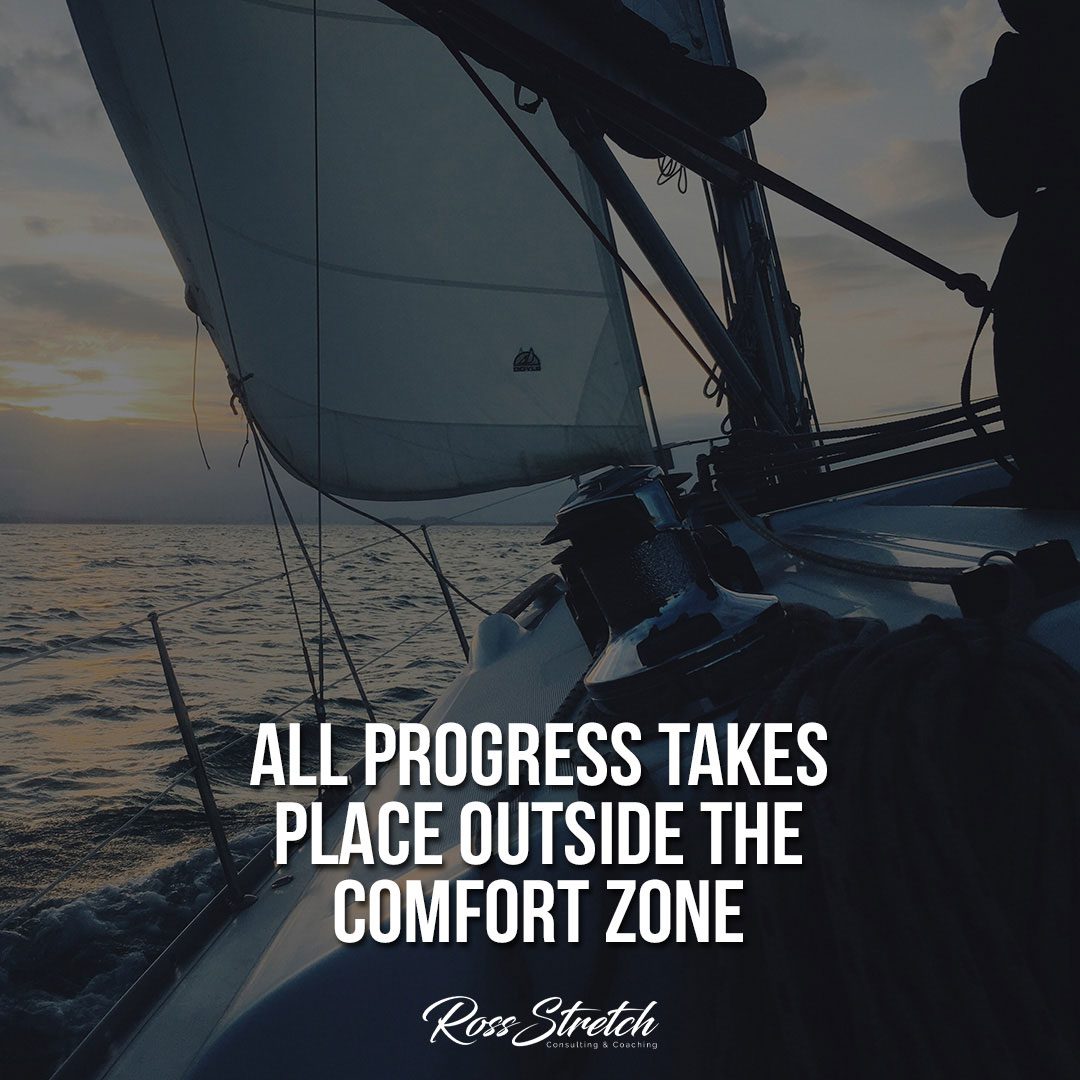
The quote attributed to Michael John Bobak — “All progress takes place outside the comfort zone” — is one of those statements that is easy to agree with and almost impossible to consistently live by. We understand it intellectually: growth requires discomfort, success demands risk, and meaningful change only happens when we push against the edges of what feels safe and familiar. Yet day after day, most people choose the known path, the predictable outcome, and the comfortable routine — and wonder why their results don’t change. Closing the gap between knowing this truth and actually living it requires a serious understanding of comfort zone psychology and a practical system for expanding your personal limits in a sustainable way.
Why This Matters More Than You Think
The comfort zone is not just a metaphor — it is a measurable psychological state. Behaviorally, it represents the set of activities and environments in which we operate with low anxiety and high consistency. Within our comfort zones, performance is steady but rarely exceptional. The brain defaults to established neural pathways, drawing on familiar responses rather than generating new ones. It is a highly efficient state for maintaining the status quo — and a terrible state for growing beyond it.
The problem is that comfort zones are not static. Left unchallenged, they shrink. The executive who stops taking creative risks gradually becomes risk-averse across all decisions. The entrepreneur who stops exploring unfamiliar markets becomes entirely dependent on what already works — until the market shifts and it no longer does. The person who avoids difficult conversations finds that the difficulty of those conversations grows in direct proportion to how long they have been postponed. Comfort zones don’t maintain themselves; they contract unless deliberately and consistently expanded.
This is why the stakes of staying comfortable are higher than they appear. It is not simply that you won’t reach your goals — it’s that the zone of what feels possible to you will gradually narrow over time. The people who consistently achieve at high levels understand this dynamic and deliberately engineer discomfort into their lives as a practice, not merely as an occasional accident. They treat growth as a discipline with a system behind it, not as a destination to be reached once and then maintained effortlessly.
The Science Behind It
In 1908, psychologists Robert Yerkes and John Dodson established what became known as the Yerkes-Dodson law: performance improves with increased arousal (mental engagement), but only up to a point. Too little arousal — the comfort zone — produces routine, adequate performance. Too much arousal — panic — produces paralysis. The optimal performance space lies just beyond the edge of comfort, in a zone where arousal is elevated enough to sharpen focus without triggering shutdown. Athletes, military personnel, and elite performers in every field have learned to operate from this zone consistently, not accidentally.
Neuroscience adds an important dimension. When we take on genuine challenges — learning unfamiliar skills, navigating new environments, accepting meaningful risks — the brain releases dopamine and norepinephrine. These neurochemicals sharpen attention, strengthen memory formation, and create the subjective experience of engagement and purpose. The discomfort you feel when stepping outside your comfort zone is not a signal to retreat — it is a signal that your brain is actively building new capacity. The unease is the growth itself, not a warning against it.
How to Apply This in Your Life
Step 1: Map Your Comfort Zone Boundaries
You cannot expand what you have not identified. Take time to honestly map the areas of your life where you consistently default to safety over growth. This might be professional (avoiding leadership roles, not speaking up in meetings, delaying a business idea you’ve been sitting on for years), social (avoiding meaningful networking, staying confined to the same social circle), or personal (never traveling alone, not pursuing a creative passion, avoiding physical challenges). Write these areas down explicitly. The act of naming your boundaries is the first concrete step toward moving past them.
Step 2: Set Goals That Require Growth
A goal that fits comfortably within your existing abilities is not a goal — it is a task. Genuine goals should create a small but real sense of anxiety when you think seriously about them, because they require you to become someone slightly different from who you are today. Set one significant goal in each important area of your life that sits clearly in the stretch zone: challenging enough to require genuine effort, achievable enough to remain credible. Then work backward to identify the specific uncomfortable actions required to make it real.
Step 3: Take Small, Consistent Steps
Dramatic leaps outside the comfort zone make compelling stories but tend to produce inconsistent results. Research on behavior change consistently shows that small, incremental exposures produce more durable expansion than periodic bursts of extreme effort. Speak up once in every meeting. Send one cold outreach message per day. Spend 20 minutes on a creative project you’ve been avoiding. These micro-expansions compound over time, and the boundary of what feels comfortable shifts outward naturally as a result of repeated, intentional practice.
Step 4: Reframe Discomfort as Signal, Not Threat
The single greatest barrier to sustained growth outside the comfort zone is misinterpreting discomfort as danger. In the modern context, the anxiety before a difficult conversation, the uncertainty of a new project, or the exposure of speaking in public are not genuine threats — they are signals that something significant is happening. Train yourself to recognize that feeling as evidence of growth, not as a reason to retreat. The reframe is not just motivational — it is neurologically accurate. You are experiencing what development actually feels like from the inside.
Step 5: Build Accountability and Community
Sustained growth outside the comfort zone is genuinely difficult to maintain in isolation. Surround yourself with people who are themselves committed to growth — who challenge your thinking, model their own willingness to be uncomfortable, and hold you to the standards you’ve publicly committed to. Whether this is a mentor, a peer mastermind group, or a single trusted accountability partner, external support dramatically increases the likelihood that you continue pressing forward when discomfort is at its most acute.
Common Mistakes People Make
- Waiting for motivation before acting: Motivation reliably follows action — it does not precede it. Waiting until you feel ready to step outside your comfort zone means waiting indefinitely. Start before you feel ready; the readiness comes after.
- Treating discomfort as evidence of failure: Feeling anxious, uncertain, or awkward is not a sign something has gone wrong — it is a sign something new is happening. Confusing these signals causes people to retreat precisely when they are closest to a breakthrough.
- Trying to transform everything simultaneously: Wholesale change across all areas of life at once is a reliable recipe for overwhelm and regression to old patterns. Choose one or two areas to actively expand and invest deeply before adding more. Depth before breadth.
- Measuring growth against someone else’s comfort zone: What constitutes a genuine stretch is entirely personal and context-dependent. Don’t dismiss your own growth because it looks smaller than someone else’s leap, and don’t wait until you’re ready for the dramatic version — start where you actually are.
The Bottom Line
All meaningful progress — in business, relationships, creative work, physical health, and personal development — happens at the edge of what is currently comfortable. This is not a motivational platitude; it is a description of how human growth actually operates, grounded in decades of research in psychology and neuroscience. The question is never whether the discomfort is worth it. It always is. The only real question is whether you are willing to choose it deliberately, rather than waiting for circumstances to force it upon you.
Start where you are today. Take one genuine step into unfamiliar territory — not a perfect step, not a dramatic leap, just an honest step beyond what feels safe. Repeat that tomorrow, and the day after. The compound effect of small, consistent expansions beyond your comfort zone is the most reliable path available to the goals you have been postponing, the version of yourself you know you are capable of becoming, and the life that is waiting just outside the edges of what currently feels certain.
Resources


 Ross Stretch