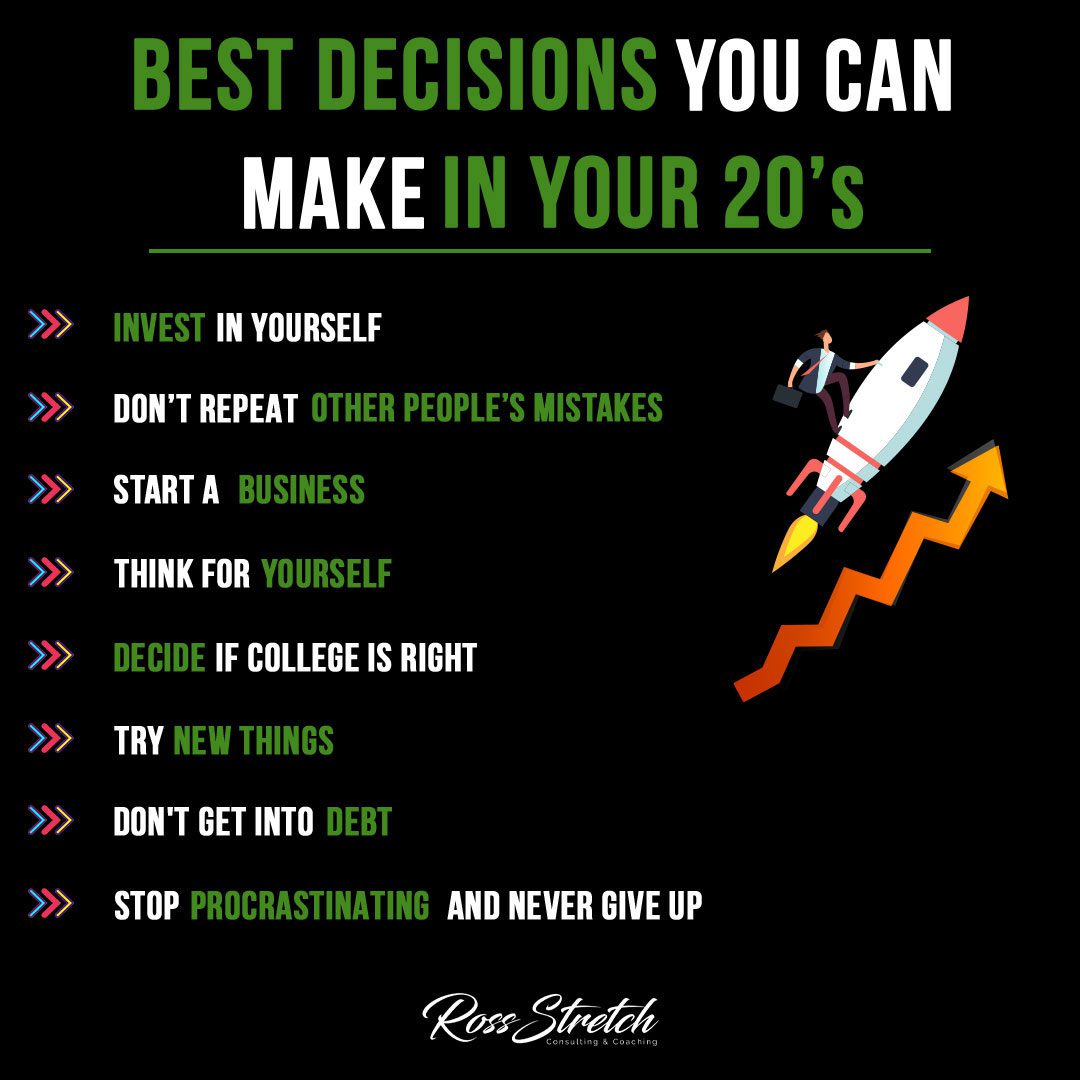
Your twenties are the most financially and professionally leveraged decade of your life. Choices made between 22 and 30 compound for the next forty years — in your career, your wealth, your health, and your relationships. The good news is that the bar is not perfection. A handful of deliberate decisions made during this window can separate a life of financial stress and professional dissatisfaction from one of genuine freedom and fulfillment. The key is knowing which decisions matter most — and acting on them while time and compounding are still your most powerful assets.
\
\
\
\
Start Investing — Even Small Amounts — Right Now
\
\
The single most powerful financial decision you can make in your 20s is to start investing as early as possible. Compound growth requires time to do its work. Money invested at 22 in a diversified index fund grows into a significantly larger sum than the same amount invested at 35 — the math is not even close. Every year you wait is a year of compound growth you cannot recover.
\
\
You do not need a lot of money to start. Contributing $50 or $100 per month to a Roth IRA or broad-market index fund in your early 20s builds habits and real wealth simultaneously. If your employer offers a 401(k) match, contribute enough to capture the full match — that is an immediate 50 to 100 percent return on your contribution before any market growth occurs. Treat investing as a non-negotiable expense, not an afterthought you will get to later.
\
\
The psychological benefit of beginning early is also significant. When you have money invested, you begin to think like an investor — paying attention to financial news, reading about market dynamics, and making decisions with a longer time horizon in mind. That shift in perspective accelerates wealth-building in every direction.
\
\
\
\
Build Marketable Skills More Than Credentials
\
\
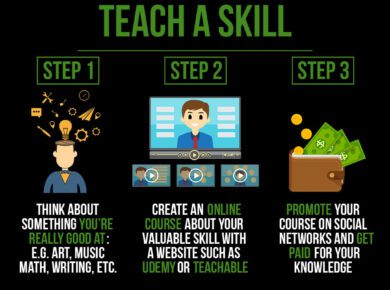
Higher education can open doors, but credentials alone no longer guarantee financial success. The most valuable thing you can build in your 20s is a specific, demonstrable skill set that the market is willing to pay well for. This could come through a traditional degree, online certifications, self-directed learning, or hands-on experience — often some combination of all four.
\
\
Identify where your interests and market demand intersect. Fields like software development, data analysis, financial advising, skilled trades, sales, and digital marketing consistently offer high earning potential and job security. Investing time in building genuine expertise in one of these areas — rather than collecting vague credentials — accelerates both your career trajectory and your income ceiling.
\
\
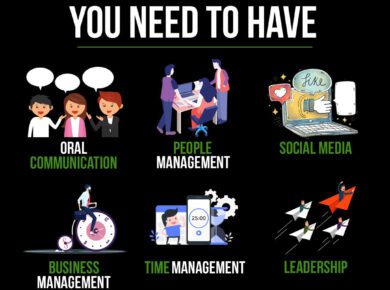
Do not undervalue soft skills either. Communication, persuasion, leadership, and the ability to manage relationships are consistently cited by employers as key differentiating factors. The technical talent who can also present clearly and manage a team earns more, advances faster, and has more options than the one who cannot.
\
\
\
\
Take Smart Entrepreneurial Risks While You Can
\
\
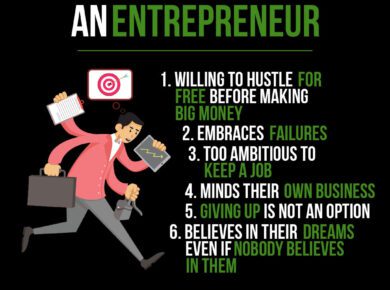
Entrepreneurship in your 20s carries a risk profile that simply does not exist in your 40s. When you have fewer dependents, lower fixed costs, and more energy to absorb setbacks, the downside of a failed business is relatively manageable. The upside — financial independence, skill acceleration, and the possibility of building something significant — is enormous.
\
\
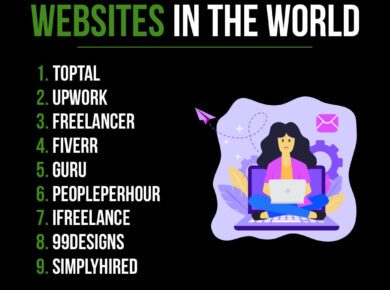
This does not mean quitting your job and gambling everything. It means building something on the side: a freelance service, an online store, a content channel, a small consulting practice. Many successful entrepreneurs started with nights and weekends, building until the income justified a full transition. The experience of running even a small business teaches you more about money, marketing, and people than most formal education programs.
\
\
Even if the venture fails, the skills you develop — selling, financial management, problem-solving under pressure, customer communication — are directly transferable and make you more valuable in any professional context. Failure at 26 is a learning experience. Waiting until 50 to try carries very different personal and financial costs.
\
\
\
\
Manage Debt as an Urgent Priority
\
\
Debt is a drag on every financial goal you have. Student loans, car payments, and credit card balances consume income that could be building wealth. Treating debt reduction as urgent — not something to manage slowly while spending freely on everything else — is one of the highest-return decisions you can make in your 20s.
\
\
Avoid consumer debt for anything that depreciates. Credit card balances at 20-plus percent interest are wealth destroyers. A car payment on a vehicle you cannot afford outright is a monthly tax on your financial progress. Draw a sharp line between debt that builds something — a business loan, a mortgage on an appreciating property, education with a clear return — and debt that funds consumption.
\
\
If you carry high-interest debt, attack it aggressively using either the avalanche method (highest interest rate first) or the snowball method (smallest balance first for momentum). Build a basic emergency fund first, then direct every available dollar at debt elimination. The guaranteed return on paying off high-interest debt matches its interest rate — nothing in the market can offer that certainty.
\
\
\
\
Develop Independent Thinking and Learn From Others
\
\
The ability to think for yourself — to analyze a situation critically rather than follow the crowd — is one of the most valuable skills you can develop. In your 20s, you will encounter enormous pressure to make decisions based on what peers, family, or social norms expect. The people who ultimately succeed financially and professionally are those who can distinguish between conventional wisdom and actual wisdom.
\
\
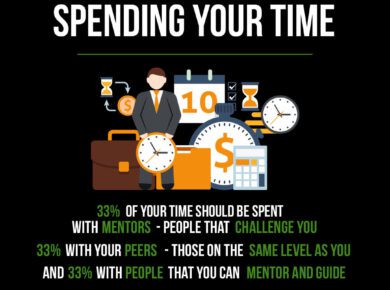
Reading biographies of people who have built the kind of life you want is one of the most efficient uses of time available. Books on entrepreneurship, investing, and personal development compress decades of hard-won knowledge into hours of reading. Seek out mentors in your field and in life — people who are ten to twenty years ahead of where you want to be. Their experience is a roadmap of what to pursue and what to avoid.
\
\
\
\
Invest in Your Network Deliberately
\
\
Career research is consistent: who you know shapes what opportunities come to you. Building a strong professional network in your 20s — when everyone is early in their careers and more accessible — creates connections that pay dividends for decades. The colleague who becomes a business partner, the mentor who opens a door at the right moment, the peer who grows into an industry leader — these relationships often begin in your 20s when the social barriers to connection are lowest.
\
\
Networking does not require being extroverted or transactional. Show genuine interest in what people are building. Be reliable when you say you will do something. Offer value before asking for it. Stay in regular contact with former colleagues. The compound interest on good relationships rivals the financial kind in long-term importance.
\
\
\
\
Conclusion: The Decisions That Compound
\
\
Your 20s are not a dress rehearsal. The financial, professional, and personal habits you build now will compound — for better or worse — for the rest of your life. Start investing early, develop marketable skills, take calculated entrepreneurial risks, eliminate debt aggressively, and build relationships intentionally. None of these decisions are glamorous in the moment. All of them are transformative over time. The best time to make these decisions was the day you turned 22. The second-best time is right now.
\
\
\
\
Resources
\
\

 Ross Stretch