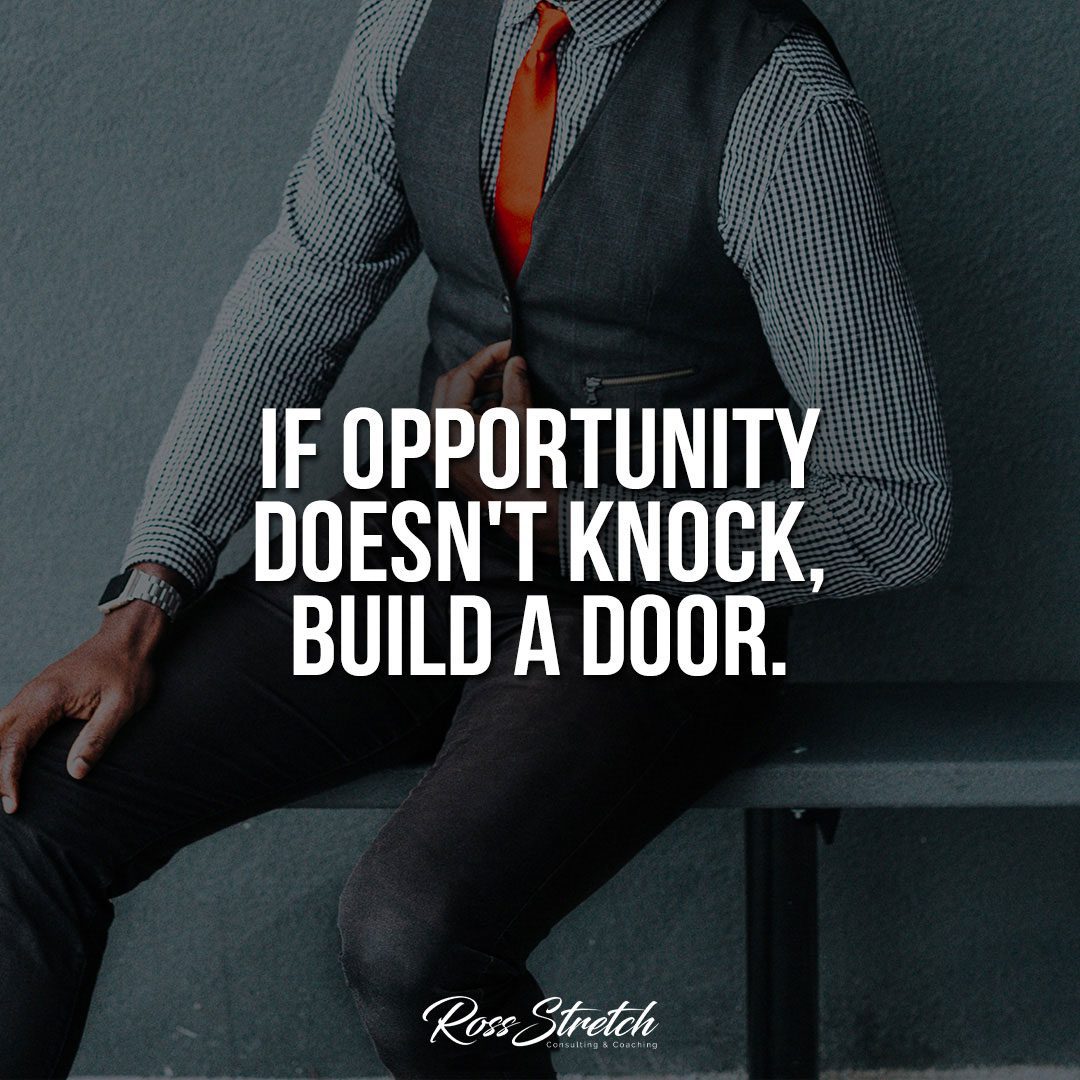
There is a fundamental difference between people who wait for opportunities to arrive and people who go out and build them. The passive approach — positioning yourself correctly, staying visible, hoping your moment comes — has its place. But the professionals who consistently outperform their peers tend to operate from a different assumption: if the door does not exist, they build it. This article explores what that proactive mindset looks like in practice and how to develop the skills and habits that turn opportunity creation into a repeatable competitive advantage.
The Problem with Waiting
Waiting for opportunity is not inherently wrong. Sometimes patience is exactly the right strategy. But as a default orientation, it comes with serious risks. It hands the control of your career or business trajectory to external forces — market conditions, other people’s decisions, timing, and luck. When those forces align in your favor, great. When they don’t, you are left with nothing to show for your patience.
The professionals who reach the highest levels of achievement in business and finance tend to share a common trait: they treat opportunity as something to be created, not simply discovered. They do not merely scan the horizon for chances — they actively shape the conditions that make opportunities available to them. That shift in orientation, from passive to active, is often the single most important change an ambitious person can make.
This does not mean ignoring circumstances or being reckless. Proactive opportunity creation is not the same as impulsiveness. It is the deliberate development of skills, relationships, and positioning that make you ready to move decisively when the right moment arrives — and increasingly capable of generating that moment yourself, regardless of what conditions exist around you.
Building the Opportunity Mindset
The first step toward creating your own opportunities is developing the genuine belief that you can. This sounds simple, but it runs directly against mental models many people hold without examining them — that success is distributed by luck or talent, that opportunities flow naturally to those who are already established, that conditions have to be right before you can act. These beliefs function as self-imposed ceilings, and dismantling them is prerequisite work.
A growth mindset — the belief that your abilities and circumstances are malleable rather than fixed — is the cognitive foundation of proactive opportunity creation. When you believe that skills can be developed, that relationships can be built, and that circumstances can be shifted through disciplined effort, you naturally begin looking for leverage points rather than waiting for conditions to improve on their own.
Cultivating resilience is equally important. Building doors of opportunity means taking risks, some of which will not pay off. Rejection, failure, and slow progress are not exceptions to the process — they are central features of it. Developing the ability to absorb those setbacks without abandoning your direction is what separates people who eventually break through from those who return to simply waiting.
The Skills That Open Doors
Self-awareness is the starting point. Understanding your genuine strengths, areas of deep interest, and the value you can credibly offer others gives you the raw material for building opportunities. The most durable opportunities are those that sit at the intersection of what you do well, what you find meaningful, and what the market needs. That intersection is worth mapping carefully — it becomes your personal zone of competitive advantage.
Continuous skill development keeps that advantage sharp. Markets evolve, industries shift, and the skills that were valuable five years ago may not be sufficient today. Investing consistently in learning — through formal education, mentorship, self-directed study, or deliberate practice — ensures you remain relevant and continue developing capabilities that others find genuinely valuable. The professionals who build the most doors are almost always the ones who invest most heavily in their own development.
Adaptability is the skill that ties everything together. The ability to read changing conditions, pivot when necessary, and apply your core competencies in new contexts is what allows opportunity creators to remain effective across different environments. Rigid specialists can succeed in stable conditions. In dynamic environments, adaptability is the superior edge, and the pace of change in business today rewards it more than ever.
Networking as a Door-Building Tool
Most significant opportunities in business and career come through relationships, not job boards or cold applications. The people in your network open doors by referring you, collaborating with you, recommending you, investing in your ideas, or simply making introductions that change the trajectory of your work. This makes intentional relationship-building one of the highest-return activities available to any ambitious professional.
Effective networking is not about collecting contacts — it is about adding genuine value to a curated set of relationships. The professionals who build the strongest networks are those who approach every connection with a contribution mindset: What can I offer this person? How can I be useful to them? Over time, those contributions create reciprocal goodwill that translates into referrals, partnerships, and opportunities that never appear on the open market.
Seek out mentors who are operating where you want to be in five years. Join communities of people working at the level you aspire to reach. Be intentional about who you spend consistent time with, because your environment shapes your thinking and your access to resources more than almost any other factor in your professional development.
Entrepreneurship as the Ultimate Opportunity Engine
For many ambitious professionals, the most powerful door they can build is their own business. Entrepreneurship is the fullest expression of the opportunity-creation mindset — rather than fitting yourself into someone else’s structure, you design the structure yourself. You identify a problem the market has not fully solved, build a solution, and create the mechanism through which opportunity flows continuously.
This does not require starting a venture-backed startup. The same entrepreneurial approach applies to freelancing, consulting, content creation, investing, and building any form of independent income. The core act is the same in each case: identifying a gap between what exists and what people need, and positioning yourself to fill it better than current alternatives. When you can do that repeatedly, you stop waiting for opportunity entirely.
The entrepreneurial mindset also carries over powerfully into employment. The professionals who advance fastest within organizations are typically those who identify and solve problems without being asked, take initiative before being directed, and consistently create value beyond their job description. They build doors within their organizations the same way entrepreneurs build them in markets — by seeing what needs to exist and making it happen.
Conclusion
Waiting for opportunity to knock is a strategy that occasionally works. Building your own door is a strategy that works reliably, regardless of timing, luck, or circumstance. Develop the skills, build the relationships, cultivate the mindset, and take the initiative. The professional who consistently creates opportunities for themselves and others will always outperform the one who waits for permission. Be the architect of your own door — and keep building.
Resources
- The 7 Habits of Highly Effective People by Stephen R. Covey — A foundational framework for proactive living and purposeful achievement in every area of life.
- Deep Work by Cal Newport — How focused, deliberate effort creates rare and valuable results in a distracted world.
- Entrepreneur.com — Leadership and Growth — Articles and resources on building a proactive entrepreneurial mindset at every stage.
- Atomic Habits by James Clear — Practical strategies for building the consistent daily behaviors that create long-term opportunity.


 Ross Stretch