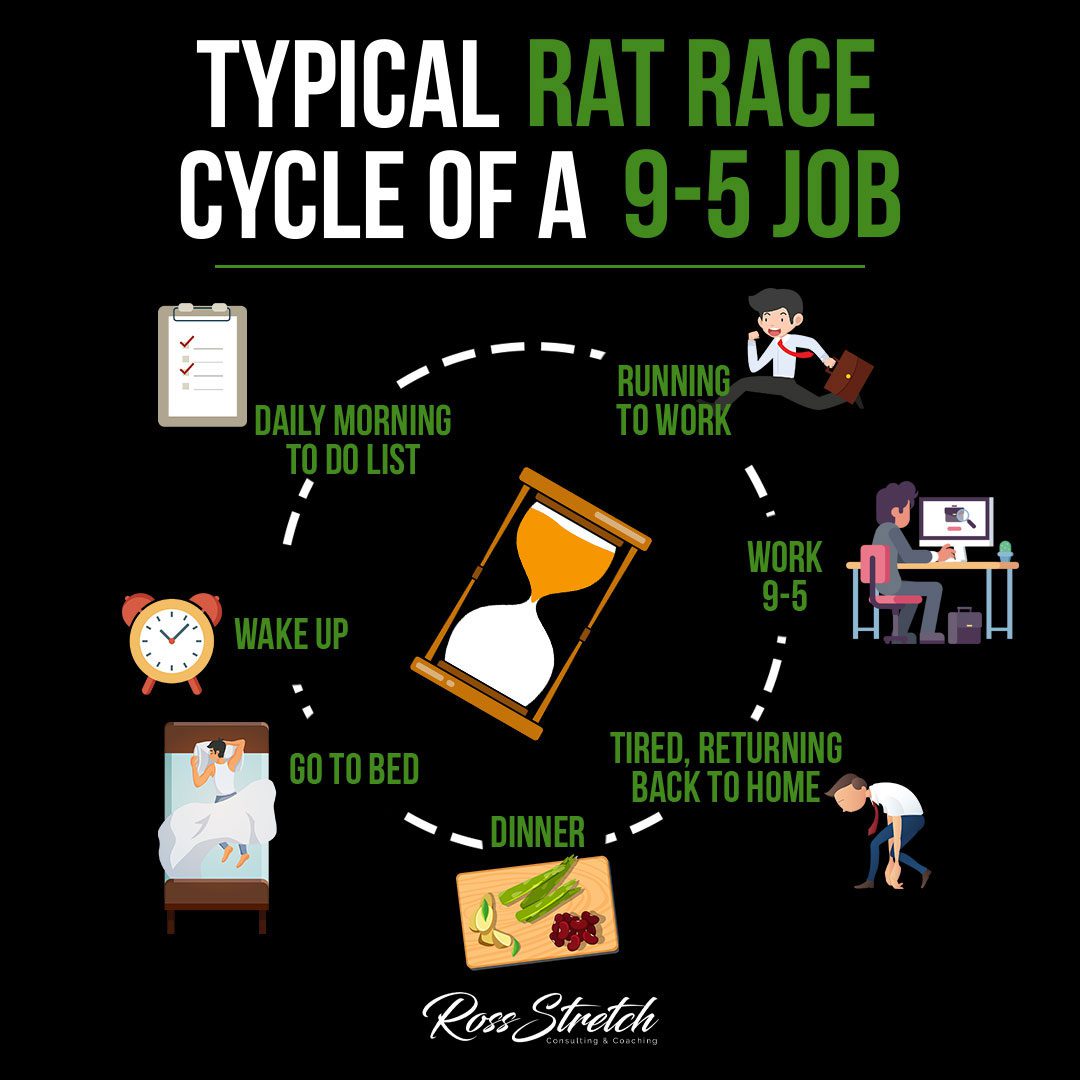
The rat race is not just a metaphor — it is a precise description of what happens when your work consumes your life without building toward anything more than next month’s bills. The typical 9-5 cycle keeps millions of people in a pattern of waking, commuting, working, recovering, and repeating indefinitely, with little sense that the effort is building toward genuine freedom. Breaking out of that cycle is absolutely possible — and it starts with understanding exactly how the trap is constructed and what it takes to dismantle it with intention and strategy.
What the Rat Race Really Costs You
The financial cost of the traditional employment model is obvious — you trade your time for a fixed income with limited upside. But the less-discussed cost is what that arrangement does to everything else in your life. Time poverty is real: when you spend 40 to 50 hours per week at a job, plus commuting and recovery time, the hours available for health, relationships, creativity, and personal development shrink to a thin margin.
That margin is where the quality of your life actually lives. Relationships require time. Health requires consistent time and attention. Building anything outside your job — a business, a skill, a creative project — requires protected, recurring time. The conventional employment structure allocates most of your best waking hours to an employer and leaves you with evenings and weekends that are often consumed by recovery from the week.
The psychological cost compounds the financial one. Many people trapped in the rat race report a persistent sense of purposelessness — working hard at something that does not align with their values or ambitions, with no clear path toward anything different. Research consistently links financial stress, lack of workplace autonomy, and feeling trapped in an unchangeable situation to higher rates of anxiety, depression, and physical health decline. Recognizing these costs clearly is the first meaningful step toward doing something about them.
Building Financial Independence: Your Real Exit Strategy
Financial independence — the point at which your assets generate enough income to cover your expenses without relying on employment — is the ultimate escape from the rat race. It does not require being wealthy by conventional standards. It requires having your money work harder than you do. For most people, that means consistent saving, aggressive debt elimination, and disciplined investing sustained over a period of years.
The core principle is straightforward: the higher your savings rate, the faster you build the asset base that eventually replaces your need to work for others. Most people save 10 to 15 percent of their income and spend 40-plus years working. People who save 30 to 50 percent compress that timeline dramatically. Not everyone can save at those rates, but moving your savings rate meaningfully upward — from 10 to 20 percent, for example — has a compounding effect on how quickly options open up.
Financial independence is not a binary destination. Every step toward it expands your leverage and reduces your dependence on a single paycheck. Building an investment portfolio, eliminating consumer debt, developing even modest passive income, and reducing fixed lifestyle costs all move you closer — and every step taken creates more breathing room to take the next one.
Rethinking What Work Can Look Like
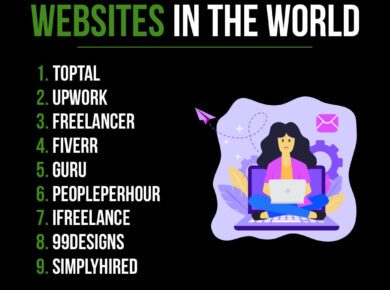
The traditional employment model is one option, not the only one. Remote work, freelancing, consulting, entrepreneurship, and the creator economy have all expanded the range of viable work arrangements available to people with marketable skills. Many of these alternatives offer greater autonomy, better income potential over time, and dramatically more flexibility than a conventional job — without requiring you to take extreme risks.
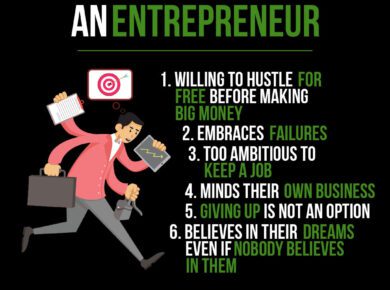
The transition rarely happens all at once. A more realistic path is building an income-generating side project while employed, validating that it generates real revenue, growing it until it can replace or meaningfully supplement your employment income, and then making a deliberate transition. This approach reduces risk and allows you to test your assumptions about working for yourself before fully committing your financial security to it.
Remote work, where available, is also worth pursuing aggressively even within a traditional employment structure. Eliminating a commute, gaining geographic flexibility, and recovering several hours of daily productive time transforms the work-life equation significantly. Many people who make the switch to remote work report substantial improvements to their sense of autonomy and control, even without changing their actual role or employer.
Time Management as a Liberation Strategy
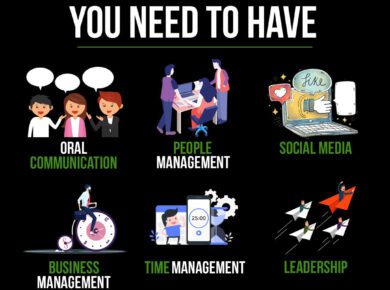
The most common complaint of people trapped in the rat race is that they do not have enough time. The most common reality is that they have time they are not protecting or directing intentionally. Effective time management is not about squeezing more productivity out of every minute — it is about being ruthlessly selective about where your time goes and defending the margins that matter most to your long-term goals.
Techniques like time-blocking — scheduling every hour of your day in advance, including personal time — dramatically reduce the drift that allows urgent-but-unimportant tasks to consume everything. The Pomodoro Technique, which structures deep work into focused 25-minute sessions separated by short breaks, helps maintain quality output without burning out. These are not productivity hacks — they are tools for reclaiming sovereignty over your own schedule.
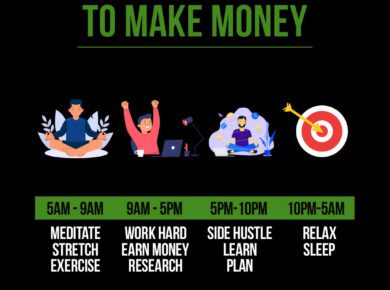
Outside of work, guard your discretionary hours aggressively. The time before and after a conventional workday is often the most valuable real estate available to someone building something different. One focused hour each morning on a side project or skill-building adds up to more than 350 hours per year — enough to learn a high-value skill thoroughly or advance a business idea from concept to early revenue.
Finding Work That Aligns With Your Values
Not everyone needs to escape employment entirely — many people want to escape meaningless employment specifically. A career that aligns with your skills, values, and intrinsic motivations is not a luxury. It is a key determinant of long-term well-being, performance, and sustainability. People who find their work meaningful are more productive, more resilient under pressure, and significantly healthier than those who do not.
Finding that work requires honest self-assessment. What problems do you genuinely care about solving? What skills do you have that others value — and that you actually enjoy using? Where do those intersect with real market demand? The answers point toward career directions worth pursuing even if they require investment, a transition period, or a temporary reduction in income.
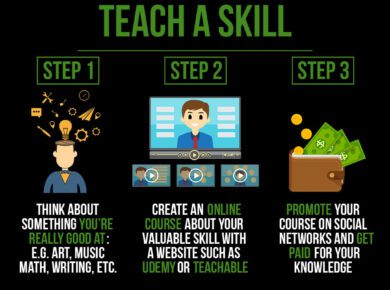
Upskilling — deliberately acquiring skills that open access to better career options — is one of the highest-return investments available to someone who feels stuck. Online learning platforms, professional certifications, and hands-on project experience can accomplish in months what a two-year degree takes years and significant debt to produce. Identifying the specific skill that unlocks your next career transition and pursuing it methodically is a concrete action available to almost anyone, regardless of current circumstances.
Conclusion: Escaping the Grind Requires a Plan
Breaking free from the rat race is not an accident — it is the result of specific decisions made consistently over time. Build financial independence through deliberate saving and investing. Develop skills and income streams that expand your options beyond a single employer. Protect your time and direct it toward what you are actually building. Pursue work that aligns with what you care about and what you are good at.
None of this is fast, and none of it is easy. But the alternative — staying in a cycle that trades your time for just enough to repeat the trade — compounds in the wrong direction. Every month spent building toward a different arrangement brings you closer to it. The most important step is the first deliberate one.
Resources

 Ross Stretch