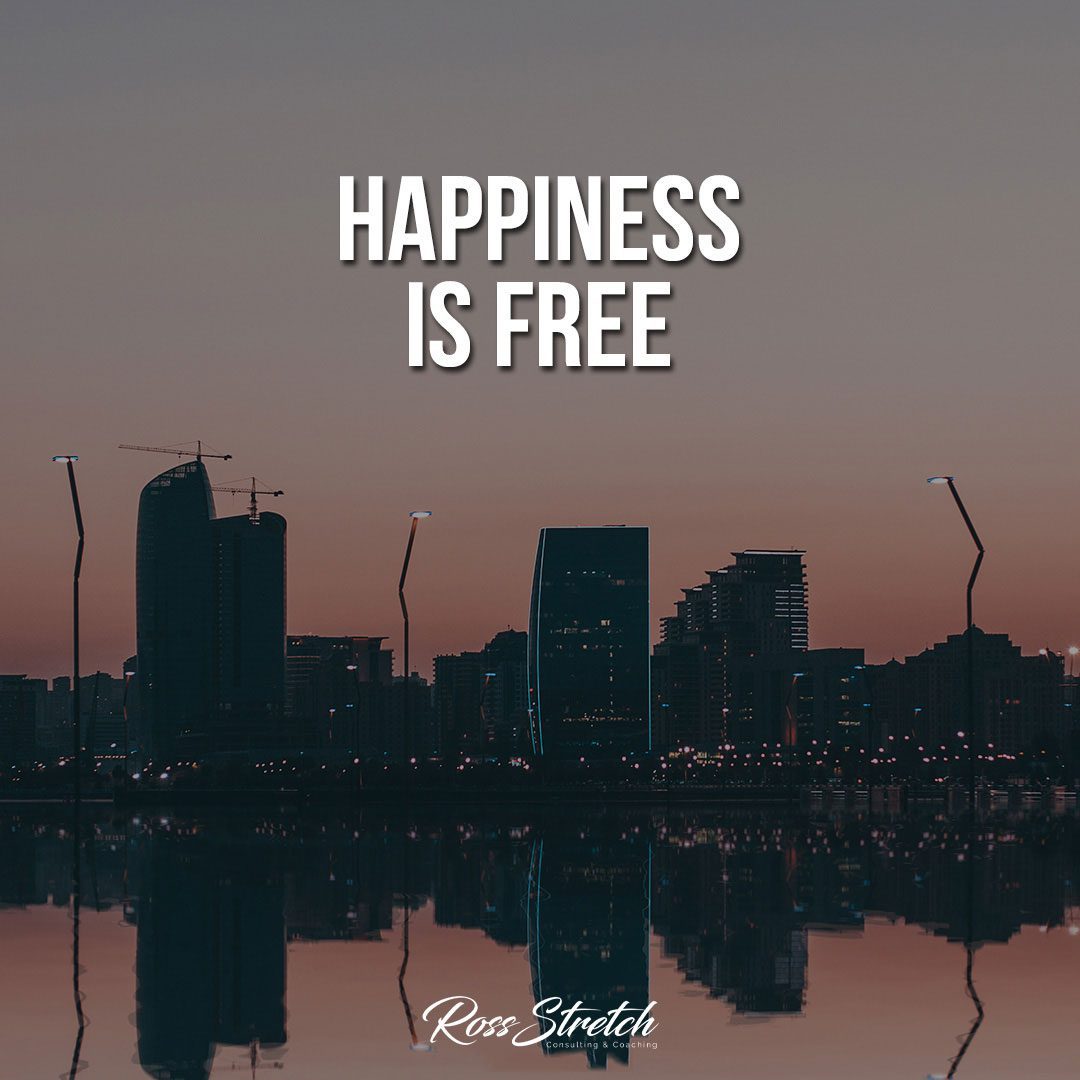
Somewhere along the way, most people absorb a belief that happiness is something you earn — through money, status, achievement, or the right set of external circumstances. Work hard enough, buy the right things, reach the next milestone, and happiness will arrive. This is perhaps the most widespread and costly misconception in modern life, because it keeps people running toward something that external circumstances alone can never fully deliver.
The evidence tells a very different story. Decades of research in positive psychology, neuroscience, and behavioral economics consistently show that lasting happiness does not come from external acquisitions. It comes from within — from habits, relationships, mindset, and meaning. And unlike a salary or a luxury purchase, these things are available to virtually anyone. Happiness, in its truest form, is free.
The Hedonic Treadmill: Why More Is Never Enough
In 1978, psychologists Philip Brickman, Dan Coates, and Ronnie Janoff-Bulman published a landmark study comparing the happiness levels of lottery winners and accident victims. The findings surprised many: within a year, both groups had returned to roughly the same level of happiness they experienced before their life-altering events. This phenomenon — called hedonic adaptation — explains why the raise, the new car, or the bigger house only makes you happier for a short while before your baseline resets.
This is the treadmill: you keep running, but you never actually get anywhere in terms of lasting happiness. Each upgrade feels good briefly, then becomes the new normal, and you find yourself wanting the next thing. Without understanding this mechanism, it is easy to spend an entire lifetime chasing happiness through acquisition and arriving at the end wondering why you never found it.
The solution is not to stop having goals or stop enjoying material things. It is to understand that happiness cannot be located in a future outcome. It has to be built into how you live now, through practices and choices that are largely independent of your income or external circumstances.
What Science Says Actually Makes People Happy
The longest study on happiness in history — the Harvard Study of Adult Development, which has tracked participants for over 80 years — reached a clear conclusion: the quality of your relationships is the most powerful predictor of long-term happiness and health. Not wealth, not fame, not career achievement. The people who maintained warm, connected relationships into old age were healthier, lived longer, and reported greater satisfaction with their lives.
Additional research points to a few other consistent contributors: a sense of purpose and meaning, autonomy over your time and choices, engagement in activities you find intrinsically rewarding, and regular physical movement. Notably, most of these things are available regardless of income level. A meaningful conversation costs nothing. A walk in a park is free. Purpose is not something you purchase — it is something you discover through reflection and contribution.
Practical Habits That Build Genuine Joy
Understanding what makes people happy at a scientific level is valuable, but it only matters if you translate it into daily habits. Gratitude practice is one of the most evidence-backed starting points: taking a few minutes each day to notice and record what you are thankful for has been shown in multiple studies to meaningfully increase well-being over time. The key is consistency and specificity — vague gratitude produces vague results, while specific gratitude directed at real moments and real people produces measurable shifts in mood.
Physical exercise is another high-return habit for happiness. Regular aerobic activity increases dopamine, serotonin, and endorphin levels, producing the neurochemical conditions for positive mood. The research on exercise and depression is so strong that some psychiatrists now prescribe it as a first-line treatment. You do not need a gym membership or an expensive program — thirty minutes of walking five days a week is enough to produce significant mental health benefits.
Reducing passive consumption — particularly social media and news — is also consistently associated with greater happiness. These platforms are engineered to hold attention through novelty and outrage, which reliably produces comparison, anxiety, and dissatisfaction. Replacing even thirty minutes of daily scrolling with reading, a creative pursuit, or a real conversation with someone you care about tends to produce a noticeable shift in mood and energy within weeks.
The Power of Connection and Purpose
Investing in relationships is the highest-return activity available for your happiness. This does not mean maximizing your social calendar — it means deepening the relationships you already have. Show up reliably. Listen attentively. Be honest, even when it is uncomfortable. The depth of connection you feel with even two or three people you genuinely trust and care for is worth more, in terms of daily well-being, than a wide social circle of shallow acquaintances.
Finding meaning and purpose operates through a different mechanism than pleasure, but it is equally essential. People who have a clear sense of why they do what they do — whether that is their work, their creative practice, their role in their community, or their family — are consistently more resilient and report higher satisfaction with life. Purpose is not reserved for grand missions. It can be as simple as knowing that your work helps people, or that the way you show up as a partner or parent makes a real difference in someone’s day.
Happiness Is Contagious — Use That
Nicholas Christakis and James Fowler, in their research on social networks, found that happiness spreads through social connections up to three degrees of separation. Your happiness affects your friends, their friends, and even people you have never met. This is not a metaphor — it is a measurable social phenomenon. When you invest in your own well-being, you are not being self-indulgent. You are contributing to the emotional health of everyone around you.
This also means that the people you spend the most time with have a significant influence on your own happiness baseline. Surrounding yourself with people who are optimistic, generous, and growth-oriented is not just pleasant — it is one of the most effective environmental designs you can make for your own well-being. Joy is not zero-sum. It multiplies when shared, and the people you choose to be around either amplify or dampen yours.
Conclusion
True happiness is not waiting for you on the other side of your next goal or your next purchase. It is built through daily choices: the relationships you invest in, the habits you maintain, the purpose you pursue, and the attention you bring to the good that already exists in your life. None of this requires a specific income level, a particular title, or the perfect set of circumstances.
Treat happiness as a practice rather than a destination. Begin with one small habit this week. Call someone you love. Take a walk without your phone. Write down three things you are grateful for. The return on these small investments accumulates far faster than you expect — and unlike most things worth having, they genuinely cost nothing.
Resources

 Ross Stretch