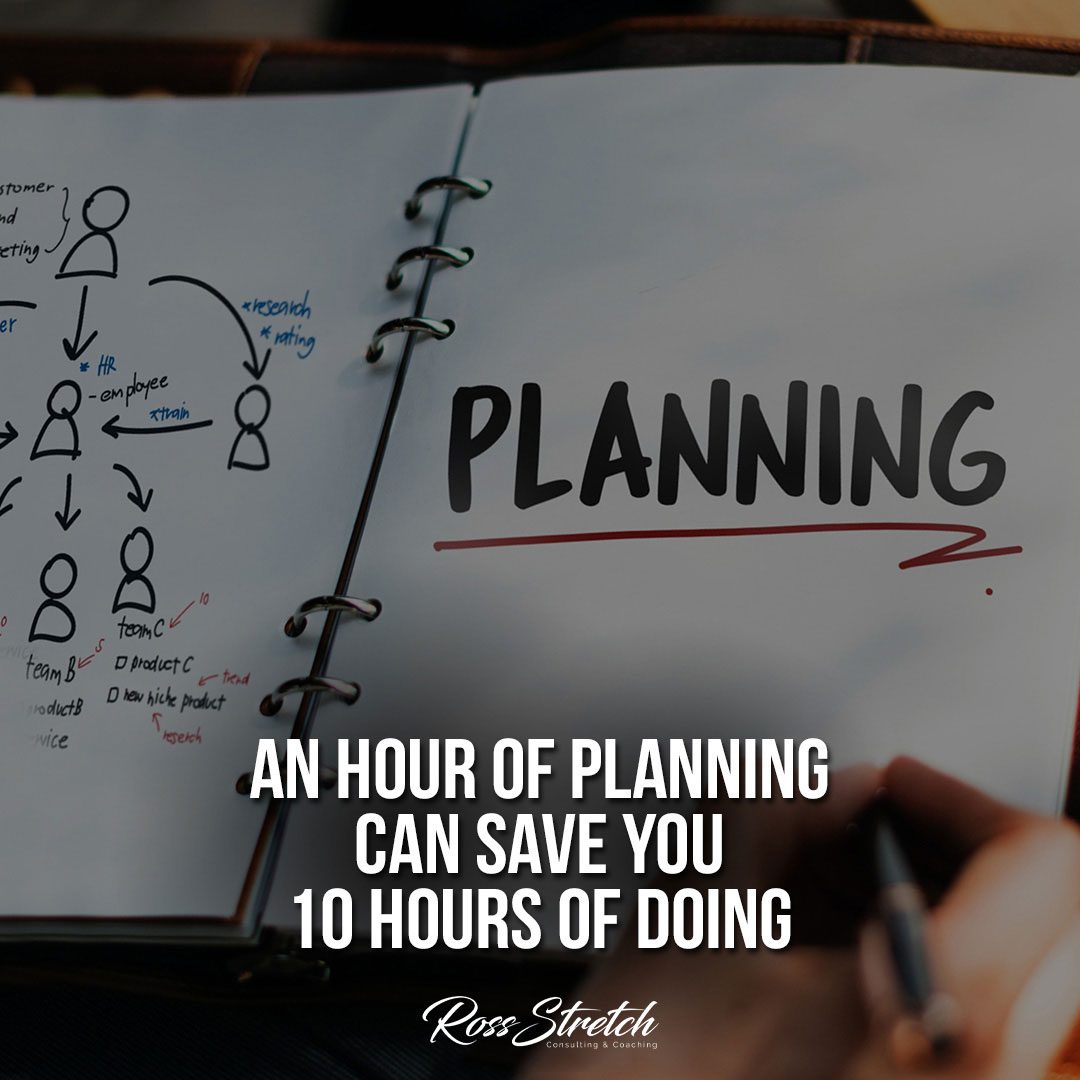
Time is the one resource you cannot earn more of, yet most professionals spend it in a constant state of reaction — putting out fires, attending unnecessary meetings, and redoing work because the brief was unclear. The principle that an hour of planning can save ten hours of doing is not hyperbole — it is a documented productivity reality. The solution is not working harder; it is building the strategic planning habit that separates high performers from the perpetually busy.
Why This Matters
The McKinsey Global Institute estimates that the average knowledge worker spends 28 percent of their workweek managing email alone — before factoring in meetings, interruptions, and unfocused work. Research from the University of California, Irvine found that it takes an average of 23 minutes to regain deep focus after an interruption. Without a clear plan to anchor against, every distraction pulls you off course, and recovering that focus takes far more time than the distraction itself.
Planning creates the mental and operational infrastructure that allows you to work with intention rather than urgency. When you know exactly what you are working toward, in what order, and by what deadline, your brain can enter deep work mode instead of constantly making micro-decisions about what to do next. This is not just about efficiency — it is about the quality of output. Deep, focused work produces significantly better results than fragmented, reactive work. Planning is what makes deep work possible.
Step-by-Step: How to Plan Effectively
Step 1: Define Clear and Specific Objectives
Planning without clearly defined objectives is like building without blueprints — you will produce something, but probably not what you wanted. Begin every planning session by articulating exactly what success looks like for the period you are planning: a day, a week, a quarter. Be specific. “Finish the report” is not an objective. “Complete the first draft of the Q3 financial analysis and send it to the team by Thursday at noon” is an objective. Specificity transforms vague intentions into executable targets and gives you an honest measuring stick.
- Actionable tip: At the start of each week, write down your top three outcomes for the week — not tasks, but results. Let those outcomes drive your daily task selection and say no to everything that doesn’t serve them.
- Why it works: The brain responds to clear targets by organizing attention and effort around them. Ambiguous goals produce ambiguous effort and unpredictable results.
Step 2: Break Large Goals into Small, Specific Tasks
Large goals feel overwhelming and impossible to start because they are too abstract. Breaking them into concrete, actionable subtasks makes them approachable and executable. The rule of thumb: if a task takes more than two hours to complete, it can almost always be broken down further. Each subtask should be something you can sit down and immediately begin without any additional decision-making. This eliminates the friction that causes procrastination and ensures forward movement even on low-energy days.
- Actionable tip: Use the “next action” method from David Allen’s Getting Things Done framework. For every goal or project, define the single very next physical action required — the first concrete step you would take if you sat down right now.
- Why it works: Small tasks produce small wins that trigger dopamine release, creating the motivation loop that sustains effort over time and reduces the mental weight of a large project.
Step 3: Build a Realistic Timeline with Buffer
Most people are chronically optimistic about how long tasks take — a cognitive pattern known as the planning fallacy, identified by Daniel Kahneman and Amos Tversky. Consistently underestimating time creates a cascade of missed deadlines, rushed work, and stress. Counter this by auditing your past week’s actual time usage before building next week’s plan. Add a 20 percent buffer to every time estimate, and protect that buffer from being converted into meetings or optional tasks.
- Actionable tip: Use time-blocking: assign specific tasks to specific calendar blocks rather than maintaining a general to-do list. Treat these blocks the same way you would treat a meeting with your most important client.
- Why it works: A calendar with blocked time for actual work creates accountability and makes conflicts visible before they become crises — giving you the chance to address them in advance rather than in the moment.
Step 4: Prioritize Using the 80/20 Principle
Not all tasks are created equal. The Pareto Principle — that roughly 80 percent of results come from 20 percent of efforts — holds remarkably well across business and personal productivity. Before executing on any plan, ask: which of these tasks, if completed, would produce the greatest impact? Start there. Protect your peak energy hours for your most important work, and push lower-value tasks — emails, admin, routine calls — to lower-energy periods of the day.
- Actionable tip: Each evening, identify your single most important task for tomorrow and schedule it for your first focused work block. Do not start with email. Start with the work that matters most while your cognitive resources are freshest.
- Why it works: Decision fatigue is real — the quality of decisions deteriorates throughout the day. Your highest-priority work deserves your sharpest mind, not the depleted version that makes it to 4pm.
Step 5: Delegate Strategically
Effective planning includes identifying what should not be on your plate at all. Delegation is not abdication — it is a strategic recognition that your time has specific high-value uses, and that others can and should handle tasks outside that zone. Ask yourself: is this task something only I can do, or is it something that could be done adequately by someone else, freeing me for higher-impact work? Delegating even two or three hours of tasks per week compounds significantly over a career.
- Actionable tip: Review your last week’s tasks and mark each one as “only I can do this” or “someone else could do this.” Any task in the second category is a delegation candidate — start there.
- Why it works: Your scarcest resource is not time itself but your focused, creative, high-cognitive-function time. Delegation protects that resource for its highest use.
Step 6: Review and Adjust Regularly
No plan survives first contact with reality unchanged — and that is fine. What matters is having a review process that catches drift early and allows you to adjust intelligently. A daily two-minute check-in (what did I complete, what carries over, what needs to shift?) and a weekly 20-minute review (what worked, what didn’t, and how should next week’s plan reflect those lessons?) create the feedback loop that makes planning continuously improve rather than recycling the same inefficiencies week after week.
- Actionable tip: Every Friday afternoon, spend 20 minutes on a “weekly review”: assess what was completed, what wasn’t, and why. Use those insights to build a stronger, more realistic plan for the following week.
- Why it works: The review loop closes the feedback cycle. Without it, you cannot distinguish between a bad plan and a good plan poorly executed — and you cannot improve either.
Common Mistakes to Avoid
- Planning in too much detail too far ahead: The future is uncertain. Over-planning at a granular level months out creates rigidity that collapses when reality intervenes. Plan in detail for the near term and in broad strokes for the longer term.
- Confusing activity with productivity: A full schedule is not a productive schedule. Being busy is not the same as making meaningful progress. Plan around outcomes, not just actions.
- Skipping the weekly review: Without it, you repeat the same inefficiencies indefinitely. The review is where real learning happens and where next week gets better than this one.
- Treating the plan as sacred: Plans are tools, not contracts. When circumstances change, adjust the plan without guilt. The goal is the outcome — the plan is just the current best path to get there.
Conclusion
An hour of planning is not a luxury for the organized — it is a necessity for the ambitious. Whether you are managing a growing business, advancing your career, or trying to reclaim time for what matters most, planning is the leverage point that multiplies every other effort. The time you invest in designing your week pays back in deep work, reduced stress, fewer errors, and a level of output that reactive, unplanned work simply cannot match.
Start with one hour this week. Sit down with a blank sheet and your top three objectives. Build a realistic timeline, block your calendar, and commit to a Friday review. That single hour of investment will pay dividends across the entire week — and if you repeat it consistently, across your entire career. Remember: it is not about working harder. It is about planning smarter so your effort lands where it matters most.
Resources


 Ross Stretch