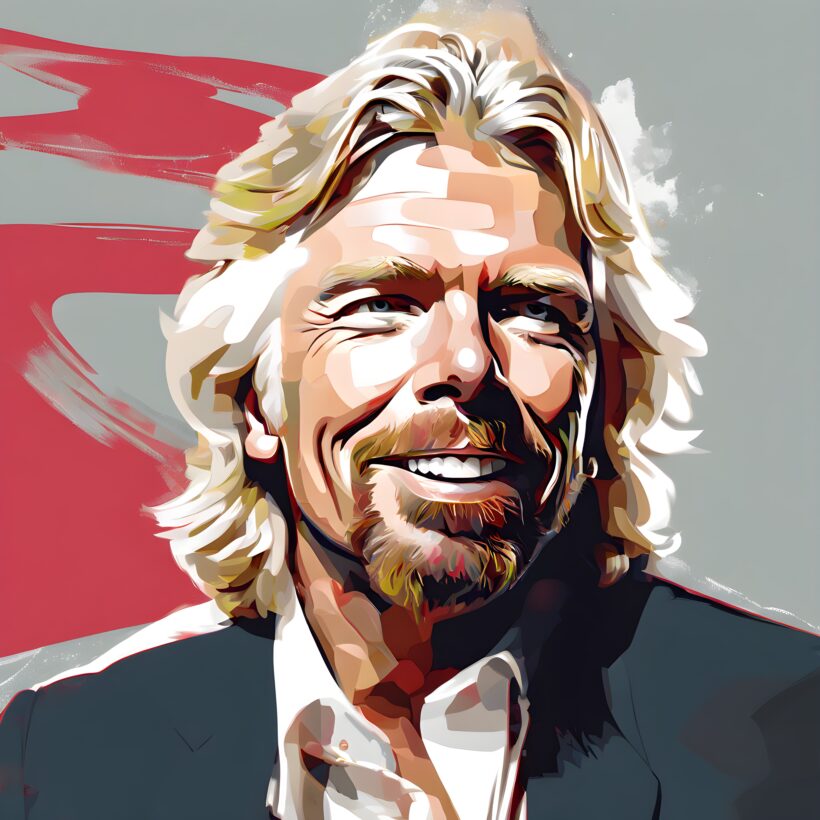

Richard Branson is a British entrepreneur, adventurer, and philanthropist best known as the founder of the Virgin Group, one of the world’s most diversified conglomerates. From launching a student magazine at age 16 to sending paying customers to the edge of space, Branson has spent five decades proving that bold thinking can reshape entire industries. His estimated net worth stands at $2.7 billion as of 2025 — a figure built on calculated risk, creative disruption, and an unshakeable belief in the power of the Virgin brand.
Early Life & Background
Richard Charles Nicholas Branson was born on July 18, 1950, in Blackheath, London, England. The son of barrister Edward James Branson and former ballet dancer Eve Branson, Richard grew up in a household that valued determination and independence. From an early age, Branson struggled severely with dyslexia, finding traditional schooling deeply challenging. His headmaster famously predicted he would either end up in prison or become a millionaire. At age 16, Branson dropped out of Stowe School entirely and channeled his energy into his first venture: Student, a national magazine that interviewed celebrities and engaged with the social issues of the late 1960s. Despite his academic struggles, Branson demonstrated an extraordinary talent for salesmanship and an insatiable drive to build something new.
Career & Rise to Success
Branson’s entrepreneurial journey accelerated rapidly after his magazine. In 1970, he launched a mail-order record business operating out of a church crypt. Two years later, he opened Virgin Records in 1972, naming the company “Virgin” because he and his partners were new to business. The label’s eclectic and daring roster — which famously included signing the controversial Sex Pistols when no other label would touch them — helped establish Virgin as a disruptor willing to challenge conventions. Virgin Records grew to become one of the most successful independent labels in the world before Branson sold it to EMI in 1992 for approximately £500 million.
He used those proceeds to fund his next great ambition. In 1984, Branson founded Virgin Atlantic Airways after negotiating a deal with Boeing for a used 747. Built on a simple premise — deliver a better passenger experience than British Airways at a competitive price — Virgin Atlantic quickly won loyal customers. A landmark legal battle against British Airways over anti-competitive practices, which Virgin won, cemented Branson’s identity as a scrappy challenger willing to take on powerful incumbents. Over the following decades, Branson launched Virgin Mobile, Virgin Trains, Virgin Active health clubs, Virgin Media, and dozens more ventures, expanding the group across telecommunications, fitness, travel, and financial services.
Major Achievements
Branson’s achievements extend far beyond commercial success. He was knighted by Queen Elizabeth II in 1999 for services to entrepreneurship. He holds multiple world records for long-distance balloon travel, having completed the first transatlantic hot air balloon crossing and the first transpacific balloon crossing. In 2004, he founded Virgin Galactic, the world’s first commercial spaceline. In July 2021, Branson flew to the edge of space aboard VSS Unity — becoming one of the first billionaires to travel to space on a vehicle he helped develop. Virgin Galactic completed its first fully commercial spaceflight in August 2023, marking a genuine milestone in the commercialization of space tourism.
Income Sources & Business Ventures
Branson’s wealth flows from his ownership stake in the Virgin Group’s extensive portfolio. His most high-profile active businesses include Virgin Atlantic, which operates transatlantic and long-haul routes; Virgin Voyages, the luxury cruise line launched in 2021; Virgin Hotels, a boutique hospitality brand with properties across North America; and Virgin Active, a health club chain operating in the UK, South Africa, Italy, and Australia. Branson also receives licensing and royalty fees from dozens of ventures that operate under the Virgin brand globally. Virgin Galactic, which listed on the New York Stock Exchange via a SPAC merger, represented another significant asset, though it suspended commercial flights in 2024 as it transitions to next-generation spacecraft. Virgin Orbit, a satellite-launch subsidiary, unfortunately entered administration in 2023, representing a meaningful financial setback.
Assets & Lifestyle
Branson is perhaps most famous for owning Necker Island, a 74-acre private island in the British Virgin Islands he purchased in 1978 for £180,000 — reportedly after negotiating the seller down from £3 million. Today the island is valued at well over $100 million and operates as both Branson’s private home and an exclusive luxury resort available for full-island buyouts. He also owns the neighboring Moskito Island, which he has developed as a conservation-focused retreat. Branson maintains residences in London and the English countryside as well. His lifestyle has always reflected his brand: he is an avid kite surfer, tennis player, cyclist, and balloon pilot whose high-profile adventure attempts — crossing oceans and continents by balloon and powerboat — generated global media coverage and reinforced the Virgin brand’s spirit of daring.
Philanthropy & Giving Back
Branson is a committed philanthropist. He co-founded Virgin Unite, the nonprofit foundation of the Virgin Group, which works on climate change, criminal justice reform, and ocean conservation. Through Virgin Unite, Branson helped establish The Elders, an independent group of global leaders — including former UN Secretary-General Kofi Annan and former U.S. President Jimmy Carter — who advocate for peace, human rights, and global problem-solving. Branson also joined the Giving Pledge, the initiative founded by Bill Gates and Warren Buffett through which billionaires commit to donating the majority of their wealth to charitable causes. His Caribbean Conservation Trust actively works to protect the ecosystems surrounding Necker and Moskito Islands.
Richard Branson’s Net Worth in 2025
As of 2025, Richard Branson’s net worth is estimated at $2.7 billion, according to Forbes. His wealth is primarily held through his ownership stake in the privately held Virgin Group and its subsidiaries. The COVID-19 pandemic significantly impacted Virgin Atlantic, which required a restructuring deal in 2020 to avoid collapse, and the failure of Virgin Orbit in 2023 further reduced his fortune from a peak closer to $5 billion. Despite these setbacks, ongoing growth in Virgin Voyages, Virgin Hotels, and Virgin Active — combined with the long-term potential of Virgin Galactic’s next-generation Delta-class spacecraft — support a positive financial trajectory. Branson remains one of Britain’s most recognized billionaires and one of the world’s most influential entrepreneurs.
Conclusion
Richard Branson’s journey from a dyslexic school dropout with a student magazine to the founder of a global empire stretching from airline seats to outer space is a masterclass in brand-driven entrepreneurship and resilience. His net worth of approximately $2.7 billion reflects not just financial success but a lifetime of calculated risks that have reshaped how the world thinks about air travel, music, health, and the frontier of human exploration. Branson’s story teaches aspiring entrepreneurs that unconventional thinking, relentless energy, and a strong personal brand can open doors that no amount of academic credentials can unlock.
References


 Ross Stretch