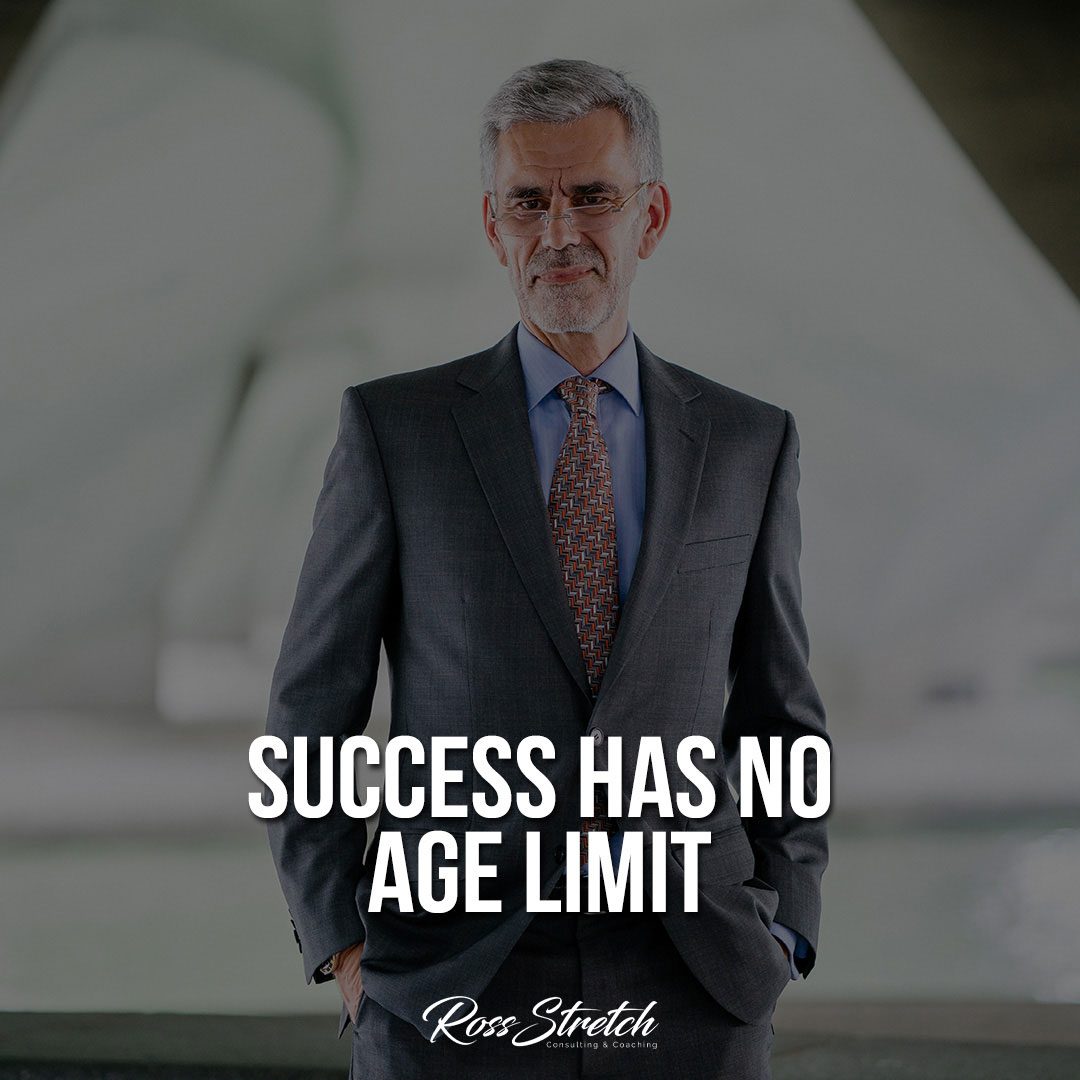
Most people accept, without much examination, a silent rulebook about when success is supposed to arrive. Launch a company in your 20s. Peak in your 30s. Consolidate in your 40s. Anything outside that window gets framed as either prodigal talent or a late-bloomer story. But real evidence doesn’t support the rulebook. Success has no expiration date — and the sooner you drop the timeline, the sooner you can focus on the work that actually creates it.
Where the Age Myth Comes From
The narrative linking youth to achievement is partly a media artifact. Tech startup culture elevated the 20-something founder as the archetype of entrepreneurial success, and that image stuck. But it represents a narrow slice of a much broader picture. The majority of successful business owners, investors, and creative professionals built their most significant work after their 30s, 40s, or later — with decades of accumulated knowledge, relationships, and pattern recognition informing every decision.
Research from the Kellogg School of Management found that the average age of founders of the fastest-growing startups was 45. Not 25. The data consistently shows that experience, judgment, and professional networks — things that take time to accumulate — are among the strongest predictors of entrepreneurial success. Youth brings energy and fresh perspective. Experience brings something different and often more durable.
None of this diminishes what young entrepreneurs accomplish. The point is simply that age, in either direction, does not determine your ceiling. Internalizing that truth is the first practical step toward pursuing goals without the artificial pressure of someone else’s timeline.
The Compounding Value of Experience
One of the clearest advantages that accumulates with age is the ability to recognize patterns faster. Someone who has navigated three economic cycles, managed difficult teams, and shipped products that both succeeded and failed brings a kind of judgment to decision-making that cannot be simulated. They have been tested under real conditions and know how they respond.
That pattern recognition is valuable in every domain. In investing, it means identifying the structural dynamics of a situation before the consensus does. In business, it means knowing which problems are solvable and which ones will sink the company regardless of effort. In personal relationships, it means understanding what you actually need in a partner or collaborator versus what you thought you needed at 25.
Experienced professionals also tend to have stronger networks built on genuine relationships rather than transactional connections. Those networks become one of the primary drivers of opportunity. The person who calls you first when a deal needs a partner, an advisor, or an operator — that call comes as a result of years of showing up, following through, and demonstrating competence. There is no shortcut to it, and there is no substitute for it.
Lifelong Learning as a Non-Negotiable
Experience only compounds as an advantage if it stays current. The professionals who plateau are usually the ones who stopped learning — who relied on what worked in the past without adapting to what works now. Entire industries shift within a decade. Tools, platforms, customer behaviors, and competitive dynamics evolve faster than they used to. Staying relevant requires intentional, ongoing investment in learning.
This does not mean chasing every new trend. It means maintaining a genuine curiosity about your field and adjacent areas, building habits that expose you to new ideas consistently, and remaining open to the possibility that a better approach exists than the one you currently use. A growth mindset — Carol Dweck’s term for the belief that abilities can be developed through effort — is not a concept reserved for young students. It applies with equal force to experienced professionals deciding whether to update their mental models.
- Dedicate regular time each week to reading or listening in your field and in adjacent disciplines
- Seek out people who think differently than you and create genuine opportunities for that thinking to challenge yours
- Take on projects with learning objectives alongside performance objectives
- Build relationships with people significantly younger and significantly older than yourself — both perspectives have value
Resilience as a Long-Game Skill
One of the most underappreciated edges that comes with time is resilience — the genuine kind, not the motivational-poster version. Someone who has failed at something significant and recovered, who has faced financial setbacks and rebuilt, who has been passed over for an opportunity and found a better one, operates with a different baseline confidence than someone who hasn’t been tested yet. They know they can handle difficulty because they have evidence.
This changes how risks are evaluated. Experienced people are often more willing to take calculated risks precisely because they are less afraid of the downside. They have survived it before. That comfort with uncertainty — not recklessness, but genuine tolerance for the unknown — enables bolder moves and faster recovery when things don’t go as planned.
Building this kind of resilience is not passive. It requires deliberately choosing to stay in the game after setbacks rather than retreating, and it requires framing failure as feedback rather than verdict. That reframe, practiced consistently, turns every difficult experience into an asset rather than a liability.
Taking the Risk Before You Feel Ready
Age produces a specific trap worth naming: the trap of waiting until conditions are perfect before taking action. Younger people sometimes act before they are ready because they don’t know what they don’t know. Experienced people sometimes fail to act precisely because they know too well what can go wrong. The result is preparation without movement — a form of sophisticated procrastination.
The antidote is recognizing that calculated risk-taking has no age limit either. The window to launch something, invest in something, pursue something, or change direction does not close on your 40th birthday. It closes when you decide it has. Opportunities do not check your date of birth. They respond to preparation, positioning, and the willingness to move when the moment arrives.
Conclusion
The professionals and entrepreneurs who achieve remarkable things across every decade of their lives share a common thread: they never accepted that their best work was behind them. They kept learning, kept building networks, kept taking risks, and kept showing up. Age gave them advantages they used — judgment, relationships, resilience — and they refused to let it become a limitation. Your timeline is yours to write. Start where you are, use what you have, and keep moving.
Resources

 Ross Stretch