When someone achieves a major milestone — launching a successful business, reaching financial independence, landing a high-profile career — what the world sees is the tip. The product launch. The exit. The headline. What they do not see is the iceberg beneath: years of persistence through setbacks, thousands of hours of invisible work, deliberate risk-taking, and the kind of discipline that rarely makes for exciting social media content. Understanding the full structure of success is not just motivational — it is strategic. When you know what actually goes into significant achievement, you can build a plan that accounts for the reality rather than the illusion.
What Success Actually Looks Like Beneath the Surface
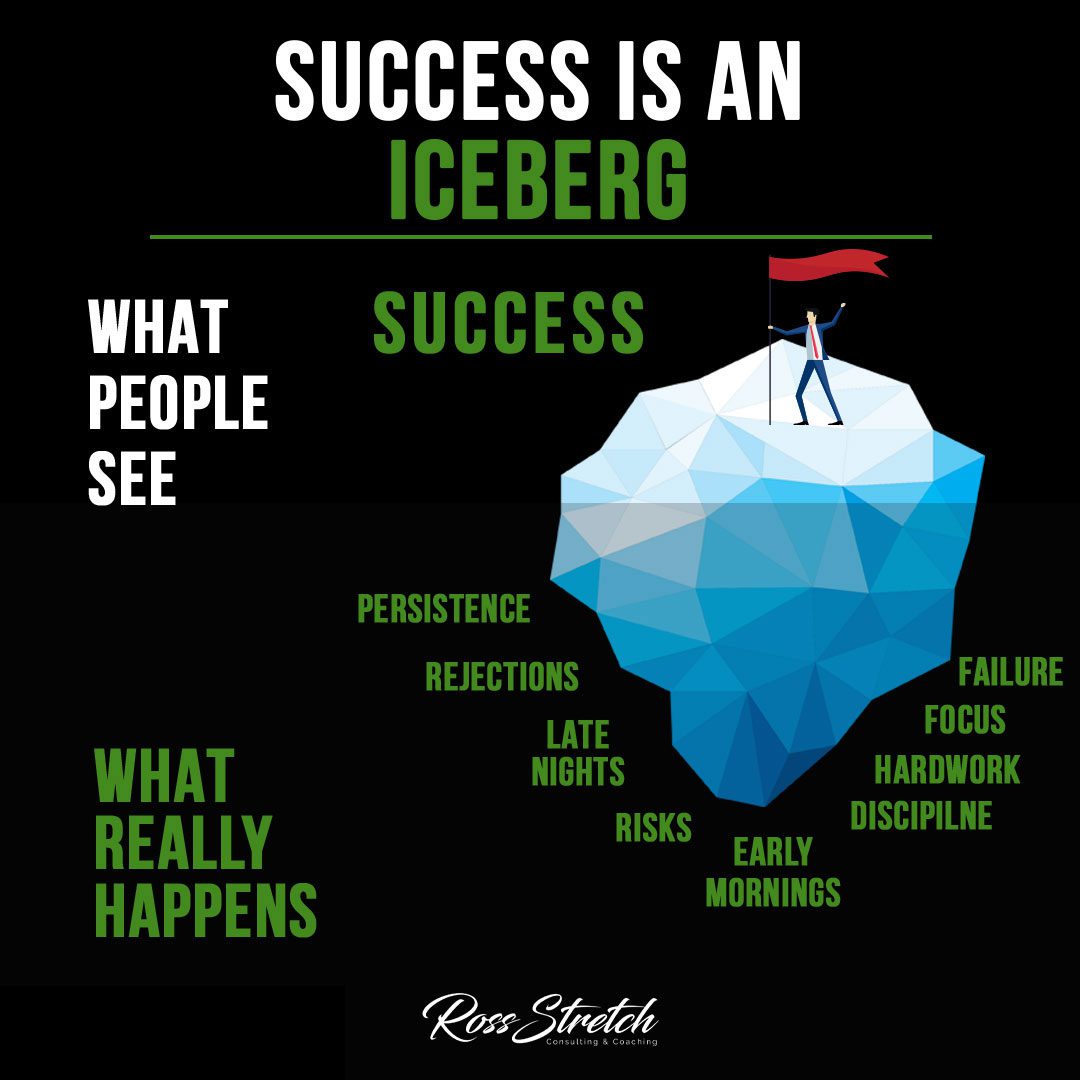
The iceberg metaphor is particularly apt for success because it captures both the visibility problem and the scale problem. Roughly 90% of an iceberg sits below the waterline — invisible to anyone watching from the surface. Success works the same way. The visible portion is the result: the product, the profit, the recognition. What lies beneath includes the years of failed attempts, the relationships built and tested, the habits developed through repetition, and the mindset shifts that had to happen before the outcome became possible.
This gap between perception and reality is not accidental. Social media and traditional media alike tend to compress timelines, spotlight moments of triumph, and skip the grinding middle. A startup’s “overnight success” story almost never mentions the four years of pivots, the investors who said no, or the months when the founder paid themselves nothing. A bestselling author’s debut novel is rarely their first — it is often their third or fourth attempt, following years of rejection.
Recognizing this gap matters because unrealistic expectations lead to premature quitting. When people compare their behind-the-scenes reality to someone else’s highlight reel, they assume they are falling behind. In most cases, they are exactly where they need to be — doing the invisible work that eventually produces visible results. The problem is not their position; it is their perception of it.
Persistence: The Compounding Effect of Continued Effort
Persistence is not the same as stubbornness. Stubborn people repeat the same failed approach indefinitely. Persistent people keep moving toward a goal while adjusting their tactics based on what they learn along the way. The distinction matters: effective persistence is iterative. It means trying, failing, analyzing the failure, adjusting the approach, and trying again — not endlessly repeating the same mistake and expecting different results.
What makes persistence so powerful over time is its compounding effect. Each attempt, even the failed ones, builds knowledge, strengthens skills, and expands your understanding of what works and what doesn’t. After ten failures, you know ten things that don’t work — which paradoxically puts you significantly closer to success than someone who has never tried. Every rejection from a client teaches you something about your pitch. Every business that doesn’t scale reveals something about your market or model you can apply to the next attempt.
Building persistence deliberately means creating systems that support continued effort even when motivation fades. Clear goals provide direction. Tracking progress — even small wins — provides momentum. And surrounding yourself with people who are also doing the hard invisible work normalizes the grind instead of making it feel like a personal failure unique to you.
Rejection and Failure as Information, Not Verdict
Rejection is one of the most common features of the iceberg that never gets mentioned in success stories. J.K. Rowling’s Harry Potter manuscript was rejected by twelve publishers before being accepted. Airbnb was turned down by seven investors before raising its first round of funding. Michael Jordan was cut from his high school varsity basketball team. In each case, the rejection was not the end of the story — it was data that informed the next move.
The ability to separate rejection from identity is one of the most important psychological skills a builder or entrepreneur can develop. When a client says no, they are not saying you are worthless — they are saying this offer did not meet their needs at this time. When an investor passes, they are not saying your business cannot succeed — they are saying it does not fit their portfolio right now. These rejections contain information. Mining them for insight, rather than internalizing them as personal verdicts, is what allows you to keep refining and moving forward.
Failure operates the same way. The most useful frame for failure in the context of building something significant is the scientific method: you had a hypothesis, you ran an experiment, the results were not what you predicted. What does that tell you? What would you change about the next experiment? This approach removes much of the emotional sting from failure and replaces it with curiosity — a far more useful state for problem-solving than shame or discouragement.
The Unseen Hours: Where Results Are Actually Made
The late nights and early mornings that appear in motivational quotes are genuinely real features of most success stories — not because suffering is virtuous, but because meaningful achievement typically requires more focused time and energy than a standard workday provides. Writers finish novels in the hours before their families wake up. Entrepreneurs build their first businesses while still holding down a job. Athletes reach the gym before the rest of the world is moving.
What matters is not the specific hours but the quality and consistency of the work done during them. Deep, focused work on high-value activities — the kind that actually moves the needle — is increasingly rare. Most of the workday is consumed by reactive tasks, meetings, and low-priority activities that feel productive but don’t compound. Carving out protected time for the work that matters most is often what separates those who eventually break through from those who remain perpetually busy without meaningful progress.
Protect your most productive hours deliberately. If you do your best creative and strategic work in the morning, do not fill that time with email and administrative tasks. If you are building something on the side of a full-time job, schedule your building hours the same way you schedule appointments — and treat them with the same level of commitment and non-negotiability.
Focus and Discipline: The Infrastructure of Achievement
Focus and discipline are not personality traits you either have or don’t — they are built through structure, habit, and repeated deliberate choice. Discipline is the cumulative result of building systems that make the right action easier than the wrong one. Automating savings removes the discipline required to save manually. Scheduling deep work blocks removes the discipline required to resist distractions in the moment. Pre-committing to goals publicly raises the cost of quitting.
Focus, in a world designed to fragment attention, is increasingly rare and increasingly valuable. The ability to work on one important thing for extended periods without distraction is a genuine competitive advantage. Building this capacity — through practices like time-blocking, eliminating notifications during work sessions, and structuring your environment to minimize friction — compounds over time just like financial investments do. The person who can focus deeply for three hours per day will outproduce the person who works scattered for eight.
Conclusion: Build the Iceberg, Not Just the Tip
Success worth having is rarely fast or visible in its construction. The goal is not to shortcut the iceberg — it is to build one deliberately. Every act of persistence, every lesson extracted from a rejection, every hour of focused work, and every disciplined choice adds mass to the structure beneath the surface. When enough of that invisible mass accumulates, the tip emerges. To the outside observer, it may look sudden. To you, it will look exactly like what it is: the natural result of consistently doing what others chose not to do.
Resources


 Ross Stretch