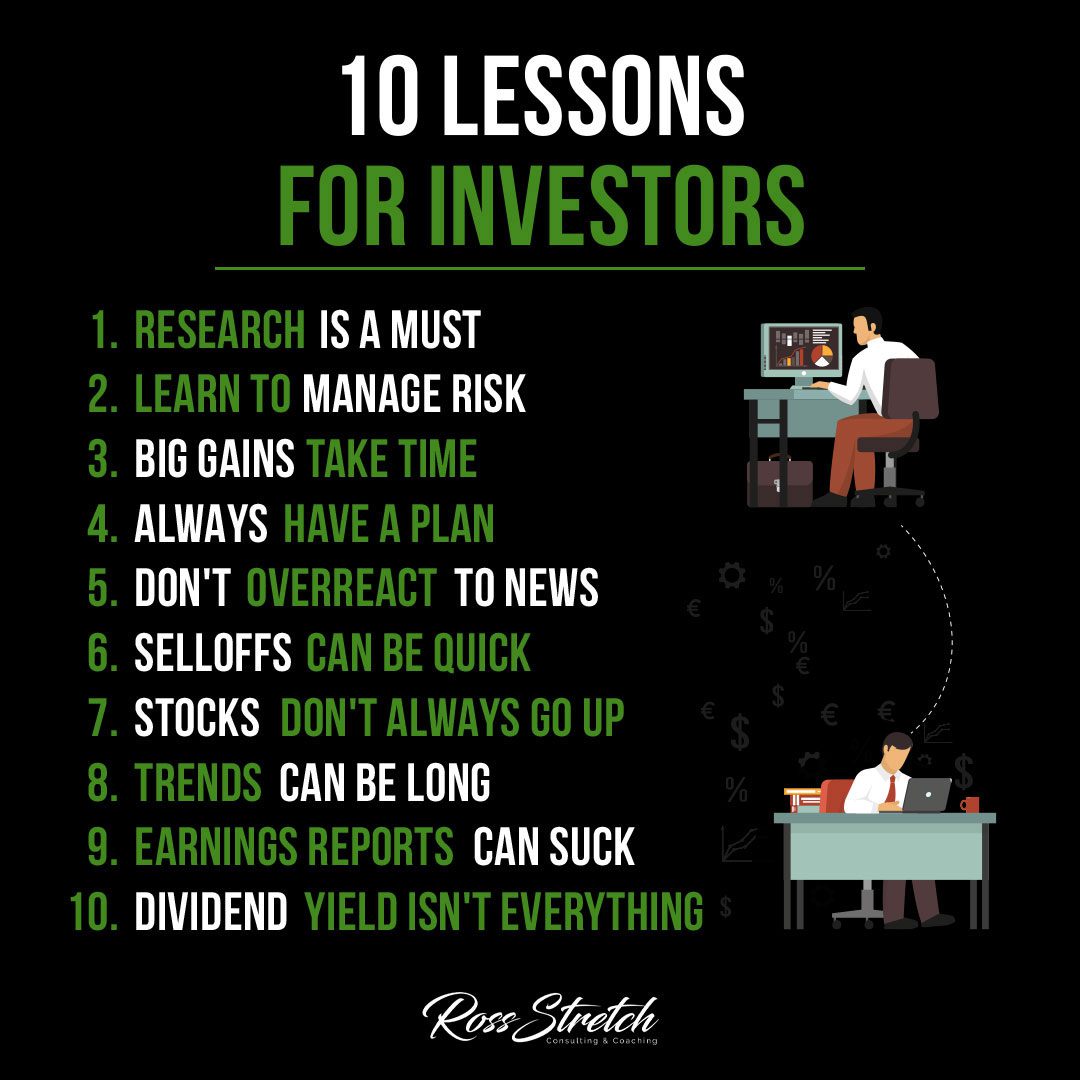
Investing is a journey that demands more than capital — it requires discipline, emotional control, and a clear-eyed understanding of how markets actually behave. The investors who build lasting wealth are not necessarily the smartest people in the room. They are the ones who study the fundamentals, respect risk, and stick to a plan even when panic sets in. Below are ten lessons distilled from the habits and principles of successful investors, each one a practical stepping stone on the road to financial growth.
1. Research: The Cornerstone of Investing
Prioritizing Research in Your Investment Routine
The importance of thorough research cannot be overstated. It is the due diligence that separates informed decisions from costly guesses. Before committing money to any asset, successful investors spend time studying the underlying business, the competitive landscape, and the broader economic environment. Shallow analysis leads to overconfidence; deep research builds conviction.
- Actionable Tip: Block one hour each week to read earnings reports, analyst commentary, and industry news for every company you hold or are considering.
- Why It Works: Consistent research keeps you anchored in facts rather than sentiment, making it far easier to hold firm when markets get noisy.
Pro Tip:
Build a watchlist of 10 to 15 companies and track them over months before buying. Familiarity with a business’s patterns, seasonality, and management style gives you an edge that most casual investors never develop.
2. Risk Management: The Art of Balancing
Strategies for Effective Risk Management
Every investment carries risk. The difference between investors who grow wealth and those who lose it is not the absence of risk but how deliberately they manage it. Diversification, position sizing, and stop-loss disciplines are not optional safety nets — they are the structural foundation of a durable portfolio. Ignoring risk management works fine in bull markets and fails spectacularly everywhere else.
- Actionable Tip: Never let a single position represent more than 5 to 10 percent of your total portfolio unless you have a compelling, research-backed reason.
- Why It Works: Concentration amplifies both gains and losses. Limiting position size ensures that no single bad call can derail years of compounding progress.
Pro Tip:
Use the risk-reward ratio as a filter before entering any trade. If you cannot clearly articulate a scenario where you earn at least two dollars for every one dollar you risk, reconsider the investment.
3. Patience in Pursuit of Gains
Cultivating Patience as an Investor
Markets reward the patient and punish the impulsive. Warren Buffett’s famous observation — that his favorite holding period is forever — is not just a quip. It reflects a genuine understanding that compounding requires time to work its mathematics. Investors who constantly rotate out of positions in search of faster returns often underperform a simple buy-and-hold strategy over a decade.
- Actionable Tip: Set a minimum holding period of twelve months before selling any position that is not violating a predetermined stop-loss level.
- Why It Works: Short-term thinking triggers excessive trading, increases tax liability, and keeps you exposed to transaction costs that quietly erode returns.
Pro Tip:
Automate contributions to your investment accounts monthly. Removing the decision from your hands eliminates the temptation to time the market, which studies consistently show most investors do poorly.
4. Planning: Your Investment Blueprint
Developing a Robust Investment Plan
An investment without a plan is speculation. A written investment plan defines your goals, your time horizon, your asset allocation, and the conditions under which you will buy, hold, or sell. It serves as a rational anchor during emotional market moments. The investors who perform best over long periods are almost always the ones with the clearest rules governing their decisions.
- Actionable Tip: Write a one-page investment policy statement that outlines your financial goals, target asset allocation, rebalancing triggers, and risk tolerance.
- Why It Works: When markets drop 20 percent and fear spikes, a written plan becomes the voice of reason that prevents you from making decisions you will regret when calm returns.
Pro Tip:
Review your investment plan annually — not in response to market moves, but on a fixed calendar date. This prevents reactive adjustments and keeps your strategy grounded in your actual life circumstances.
5. News: A Double-Edged Sword
Navigating Market News Without Reacting to It
Financial news is designed to capture attention, not to guide good investment decisions. Markets often move sharply on headlines that have little bearing on the long-term value of a business. Investors who read the news constantly and act on it frequently are not more informed — they are more exposed to the bias and noise that media narratives introduce.
- Actionable Tip: Limit your financial news consumption to one dedicated session per day. Make a rule that you will not execute a trade within 24 hours of reading a headline that triggered a strong emotional reaction.
- Why It Works: Slowing down between stimulus and response is the single most effective way to prevent emotionally-driven decisions that look obvious in hindsight.
Pro Tip:
Ask yourself whether any given piece of news actually changes the five-year earnings outlook for the company. If the answer is no, it almost certainly does not warrant a portfolio change.
6. Understanding Market Selloffs
Turning Selloffs Into Opportunities
Market selloffs are not failures of the system — they are a feature of it. Prices fall when fear overcomes rationality, and they recover when fundamentals reassert themselves. Historically, every significant market drawdown has eventually been followed by a recovery that reached new highs. The investors who benefit most from this cycle are those who use selloffs to accumulate quality assets at discounted prices rather than panicking and selling into weakness.
- Actionable Tip: Maintain a cash reserve of 5 to 15 percent of your portfolio specifically earmarked for deploying during sharp market declines.
- Why It Works: Having dry powder ready transforms a frightening market drop into a structured buying opportunity rather than a threat you can only react to emotionally.
Pro Tip:
Create a short list of high-quality companies you would love to own at lower prices. When a selloff hits, you have a ready-made shopping list instead of uncertainty about where to allocate.
7. The Reality of Stock Fluctuations
Making Peace With Volatility
Stocks do not move in straight lines. Individual positions will regularly drop 10, 20, or even 30 percent even within a broader bull market. New investors often interpret this as a signal that something is wrong. Experienced investors understand that volatility is the price of admission for participating in equity markets, and the investors who accept it calmly tend to capture the returns that others abandon in fear.
- Actionable Tip: Before buying any position, ask yourself whether you could tolerate a 30 percent temporary decline in its value without selling. If the answer is no, reduce the position size until the answer is yes.
- Why It Works: Sizing positions to your emotional tolerance prevents forced selling at exactly the wrong moment — the bottom of a temporary drawdown.
Pro Tip:
Study historical price charts of strong long-term performers like Amazon, Apple, or the S&P 500 index itself. Seeing how dramatic the interim drawdowns were — and how irrelevant they turned out to be — calibrates your expectations powerfully.
8. Trends: Long-Term Investment Friends
Identifying and Investing in Durable Trends
Secular trends — long-term structural shifts in how people live, work, and spend — can drive sustained investment outperformance for years or even decades. The rise of cloud computing, the aging of global populations, the electrification of transportation, and the expansion of digital payments are examples of trends that rewarded early, patient investors handsomely. The key is distinguishing genuine long-term shifts from speculative fads.
- Actionable Tip: Before investing in a trend, ask whether adoption of the underlying product or technology is still early (under 20 percent market penetration). Early-stage adoption offers the best combination of growth potential and reasonable valuation.
- Why It Works: Trends with years of runway ahead allow compounding to work in your favor, whereas investing in a trend at full maturity leaves little room for price appreciation.
Pro Tip:
Be cautious about investing in a trend after it has dominated financial headlines for six months or more. By that point, much of the easy money has already been made, and the risk-reward balance often tilts unfavorably.
9. Earnings Reports: Not Always Rosy
Interpreting Earnings Reports Like a Professional
Earnings season delivers a flood of data, and the market’s reaction to that data is often confusing. A company can beat earnings estimates and see its stock drop. Another can miss estimates and rally. The reason is that markets price in expectations, not just results. Learning to read beyond the headline numbers — understanding revenue trends, margin direction, free cash flow, and management guidance — separates informed analysis from surface-level reaction.
- Actionable Tip: When reading an earnings report, focus on three things: whether gross margins are expanding or contracting, whether management raised or lowered forward guidance, and what the free cash flow trend looks like over the past four quarters.
- Why It Works: These three metrics reveal the actual trajectory of the business far more reliably than a single quarter’s headline earnings-per-share figure.
Pro Tip:
Listen to earnings call recordings, not just the press release. Management’s tone, the questions analysts ask, and how directly executives answer those questions often reveal far more than any number on the page.
10. Dividend Yield: Not the Sole Factor
Evaluating Dividend Stocks With a Complete Lens
A high dividend yield can signal either an attractive income opportunity or a company in distress. When a stock’s price falls sharply because the business is deteriorating, the yield rises mechanically — creating what investors call a value trap. The most reliable dividend payers are companies with consistent earnings growth, manageable payout ratios, and strong free cash flow — not simply the ones with the highest current yield in a screen.
- Actionable Tip: Screen for dividend stocks with payout ratios below 60 percent, at least five consecutive years of dividend growth, and free cash flow coverage of the dividend by at least 1.5 times.
- Why It Works: These filters weed out companies paying dividends they cannot sustain, focusing your attention on businesses that are generating genuine surplus cash — not borrowing to fund shareholder distributions.
Pro Tip:
Consider the total return — price appreciation plus dividends reinvested — rather than income alone. Some of the best long-term wealth builders have been moderate-yield companies with exceptional dividend growth, not the highest-yield names in any given sector.
Conclusion
Building a successful investment portfolio is less about finding the perfect stock and more about consistently applying sound principles. Research grounds your decisions in reality. Risk management preserves your capital when you are wrong. Patience allows compounding to work its quiet magic. And a written plan keeps your strategy intact when markets do what they always eventually do — surprise everyone. These ten lessons are not shortcuts. They are the cumulative wisdom of investors who learned, often the hard way, what it actually takes to grow wealth over the long term. Apply them consistently and your results will follow.
Resources


 Ross Stretch