The people you spend the most time with shape your thinking, your habits, your ambitions, and ultimately your outcomes — often far more than you realize. This is not abstract philosophy; it is a pattern backed by decades of social science research. Your inner circle functions like a local environment: it sets the temperature, the norms, and the ceiling on what feels possible. Surrounding yourself with people who are honest, driven, and genuinely supportive is not a preference or a luxury. It is one of the most important strategic decisions you can make for your long-term personal and professional growth.
The Real Cost of Chronic Negativity
Negativity is contagious in ways that are difficult to appreciate until you have intentionally changed your social environment. Chronic pessimists — people who habitually focus on what is wrong, what will not work, and what could go badly — do not just share an outlook; they subtly recalibrate yours. Spending significant time with people who consistently interpret the world through a lens of scarcity, resentment, or futility makes it harder to maintain your own clarity and ambition. This is not a character flaw on your part; it is basic social neuroscience.
Research on emotional contagion — the tendency to unconsciously adopt the emotional states of those around us — is robust. Studies have found that emotional states spread through social networks, sometimes across multiple degrees of separation. The friend who is chronically unhappy does not just affect your mood during your time together; the effect lingers and colors how you approach the rest of your day and, over time, how you interpret your own circumstances.
Recognizing this dynamic is not the same as becoming cold or abandoning people who are genuinely struggling. Supporting someone through a hard time is one of the most meaningful things you can do. The distinction is between people going through difficulty and people who have made negativity their permanent operating mode. The former deserve your compassion; the latter deserve considered limits on how much access they have to your mental environment.
How to Recognize Toxic Patterns Before They Take Root
Problematic relationship dynamics rarely announce themselves. They develop gradually, often disguised as friendship, loyalty, or familiarity. Learning to recognize certain patterns early gives you the ability to make deliberate choices rather than drifting into dynamics that slowly erode your energy and outlook.
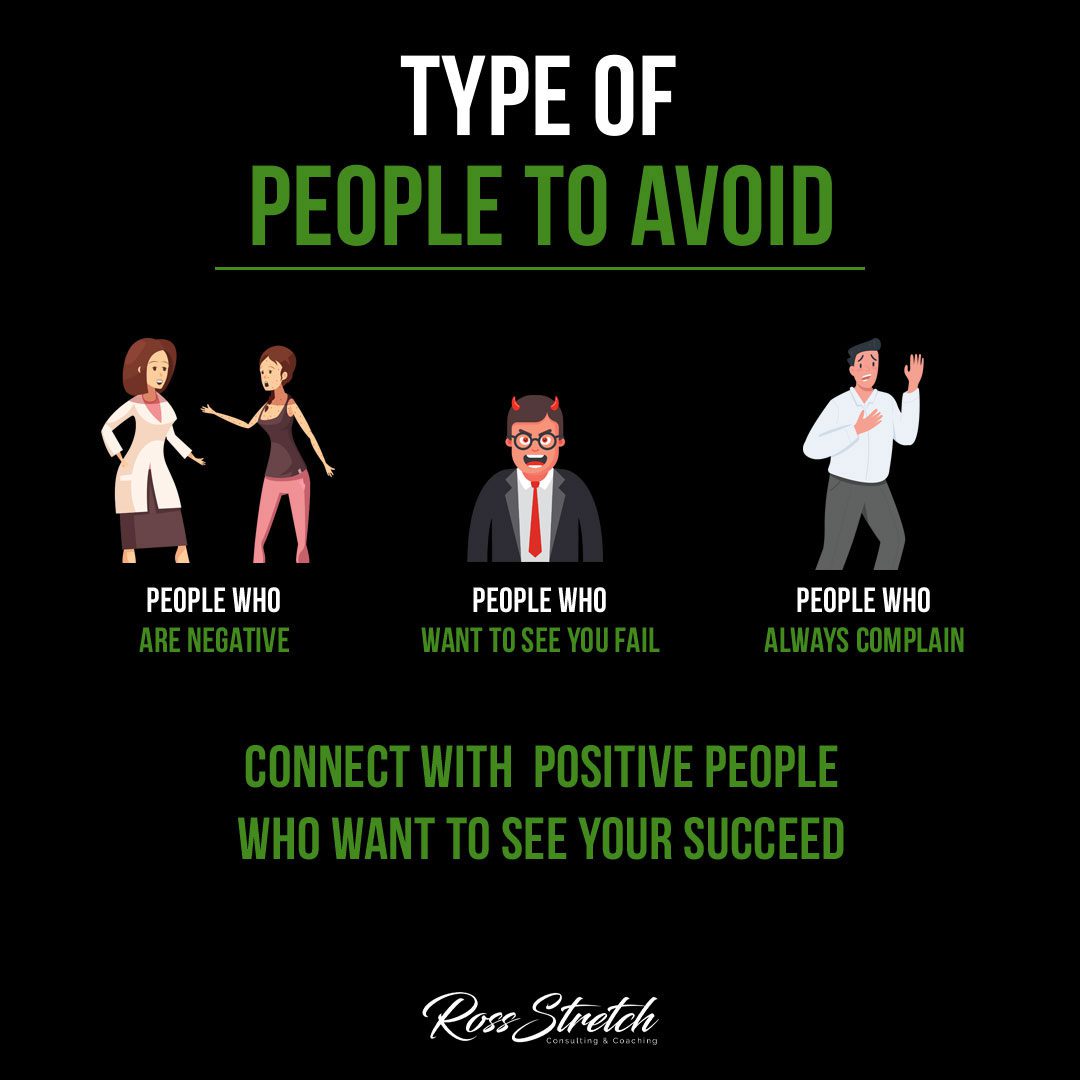
The perpetual pessimist is easy to identify in retrospect but easy to rationalize in real time. These are people who consistently find the downside of every situation, discourage initiative with reflexive skepticism, and often seem vaguely threatened by others’ optimism or momentum. Their negativity is not always malicious — it frequently stems from deep-seated fear or past disappointment — but the effect on people around them is the same regardless of the source.
The naysayer who takes quiet satisfaction in others’ failures operates as a more active version of the same dynamic. This type of person may disguise their reactions as concern or pragmatism, but the underlying pattern is a need to see others limited to the same level they have accepted for themselves. They push back hardest on the ideas and ambitions that represent the gap between where you are and where you want to go — precisely because that gap is an uncomfortable mirror. Chronic complainers occupy their own category: rarely hostile, but dominating every interaction with grievance. Prolonged exposure to this pattern erodes your capacity for engagement and optimism without your awareness of it happening.
Setting Limits Without Drama
Distancing yourself from negative influences does not require confrontation or dramatic relationship endings. In most cases, the more effective approach is simply reducing the frequency and depth of contact with people who consistently drain your energy, while increasing the same with people who do not. This can be done gradually and without making it a statement — a quiet, consistent reorientation rather than a declaration.
In professional contexts, where you may not have full control over who you interact with, the strategy shifts toward managing the exposure. Keeping conversations with chronically negative colleagues task-focused rather than personal, limiting the scope and depth of exchanges, and being deliberate about not internalizing their framing of events are all practical tools. You can be professionally functional and even pleasant with people whose worldview you have chosen not to adopt.
Setting limits is ultimately an act of self-respect and an investment in the quality of your thinking. People who allow their mental environment to be routinely colonized by others’ negativity are not being loyal or open-minded — they are being passive in a place that deserves active stewardship. Your attention and emotional energy are finite. Where you direct them matters.
The Compounding Return of Positive Relationships
The flip side of the negativity discussion is the enormous upside that genuinely constructive relationships provide. People who are honest, ambitious, generous with their knowledge, and committed to their own growth tend to create those same qualities in the people around them. This is not about surrounding yourself with cheerleaders who validate everything you do — it is about finding people who tell you the truth, hold you to higher standards, and celebrate your progress without feeling diminished by it.
The professional implications are substantial. Relationships with people who genuinely want to see you succeed are among the most reliable predictors of career advancement. Mentors, collaborators, and well-connected peers expand your access to opportunities and information in ways that no amount of individual talent can replicate on its own. The quality of your network is a form of leverage, and like financial leverage, it compounds over time into advantages that become increasingly difficult for others to close the gap on.
Personally, the evidence is even clearer. The Harvard Study of Adult Development — one of the longest-running studies of human flourishing — found that the quality of close relationships was the most consistent predictor of life satisfaction and physical health in later years, outperforming wealth, fame, and professional achievement by a considerable margin. Investing in good relationships is not soft advice; it may be the most empirically grounded thing you can do for your future self.
Actively Building the Network You Want
Positive relationships do not typically arrive fully formed. They require cultivation — reaching out to people you admire, showing up consistently to the communities and contexts where they gather, and being the kind of person others want to be in relationship with. That last point matters more than most people acknowledge. If you want to attract driven, positive, generous people into your life, the most reliable strategy is to develop those qualities in yourself first and let them show up consistently in how you treat people.
This means being someone who adds genuine value, follows through on commitments, responds to people honestly rather than just diplomatically, and celebrates others’ successes without the need to qualify or diminish them. Relationships built on mutual growth and respect tend to attract more relationships like them over time. The network expands, its quality improves, and the signal of who you are becomes clearer to the people most worth knowing.
Conclusion
The company you keep is not a peripheral detail of your life — it is one of its most foundational variables. Negative relationships do not just make individual interactions unpleasant; they shape how you think, what you expect, and what you attempt. Positive relationships do the same, in the opposite direction. The work of curating your social environment — reducing exposure to chronic negativity and actively building connections with people who challenge and support you — is among the most high-return investments available to anyone serious about the quality of their life and the scale of their ambitions.
Resources

 Ross Stretch