Introduction:
In a world filled with information overload, capturing and retaining people’s attention has become increasingly challenging. Whether you’re presenting an idea, promoting a product, or delivering a message, it’s crucial to understand how people process and remember information. Research has shown that visual communication plays a significant role in memory retention and engagement. In this article, we will explore the power of visual communication and why people remember what they see and hear.
In a world driven by constant information consumption, it is essential to understand the power of visual communication in capturing and retaining people’s attention.
Ross Stretch
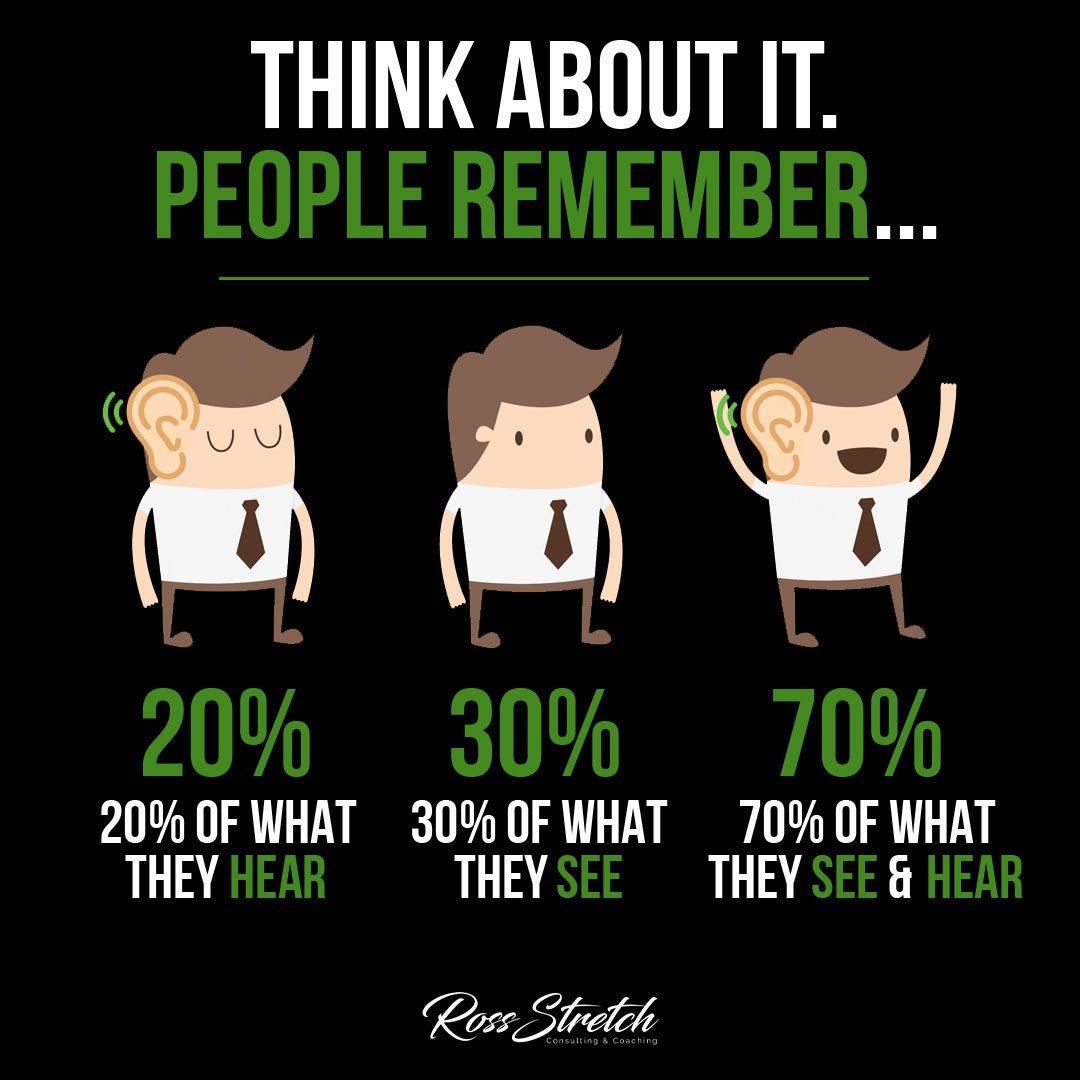
20% of What They Hear: The Power of Auditory Stimuli
- Auditory memory: Studies have revealed that people typically retain about 20% of what they hear.
- Verbal communication: Speech, music, and sound effects can evoke emotional responses and enhance message comprehension.
30% of What They See: The Influence of Visual Stimuli
- Visual memory: Research suggests that people retain approximately 30% of what they see.
- Graphic design: Visual elements such as colors, shapes, and typography can evoke specific emotions and enhance visual appeal.
70% of What They See and Hear: The Synergy of Visual and Auditory Stimuli
- Multimedia communication: When auditory and visual elements are combined, people tend to retain up to 70% of the information presented.
- Cognitive processing: The brain processes information more effectively when it receives multiple sensory inputs simultaneously.
The Science Behind Visual Communication and Memory Retention
- Dual-coding theory: This theory suggests that memory is enhanced when information is processed through both visual and verbal channels.
- Neurological impact: Visual stimuli activate different areas of the brain, creating stronger neural connections and improving memory recall.
Harnessing the Power of Visual Communication
- Storytelling with visuals: Incorporate visual storytelling techniques to create engaging narratives that resonate with your audience.
- Infographics and data visualization: Present complex information in a visually appealing and easy-to-understand format.
- Use of imagery and videos: Incorporate high-quality images and videos that support your message and evoke an emotional response.
- Visual aids in presentations: Utilize visual aids such as slides or props to enhance comprehension and retention during presentations.
Conclusion:
In a world driven by constant information consumption, it is essential to understand the power of visual communication in capturing and retaining people’s attention. By combining auditory and visual stimuli, you can create more memorable and impactful messages. Whether you’re a marketer, presenter, or content creator, harnessing the power of visual communication will significantly improve your ability to engage, inform, and influence your audience.
Remember, people remember what they see and hear, so make every effort to create compelling visual content that leaves a lasting impression.
Resources:
- The Role of Visual Communication in Enhancing Memory Retention: [Link to research study]
- Dual-coding Theory and Its Application in Communication: [Link to scholarly article]
- The Impact of Visual Stimuli on Neurological Processes: [Link to scientific research]
- The Science of Storytelling: How Visuals Enhance Narrative Engagement: [Link to article]
- The Power of Infographics in Communication: [Link to infographic resource]
- Using Visual Aids for Effective Presentations: [Link to presentation tips]


 Ross Stretch