Your brain is not working against you — it is simply doing its job. Millions of years of evolution have wired the human brain to scan for danger, dwell on failures, and remember threats. This is the negativity bias, and understanding it is the first step toward overcoming it. The good news is that thanks to neuroplasticity — the brain’s ability to rewire itself — you can deliberately train your mind to focus on the positive. Building a positive mindset is not wishful thinking; it is a skill backed by neuroscience, and it gets stronger with practice.
Understanding the Negativity Bias
Our ancestors survived by paying close attention to threats. A rustle in the bushes could mean a predator; ignoring it could mean death. Those who were hyper-vigilant about danger lived to pass on their genes. The result is that modern humans carry brains wired to assign greater weight to negative experiences than positive ones. Researcher Rick Hanson describes it well: the brain is like Velcro for negative experiences and Teflon for positive ones.
This bias shows up in daily life in subtle ways. A single criticism can overshadow ten compliments. One bad meeting can ruin an otherwise productive day. Recognizing this tendency — naming it when it happens — is the foundation of any positivity training program. You are not broken; you are wired for a world that no longer poses the same threats. The task is to update the software.
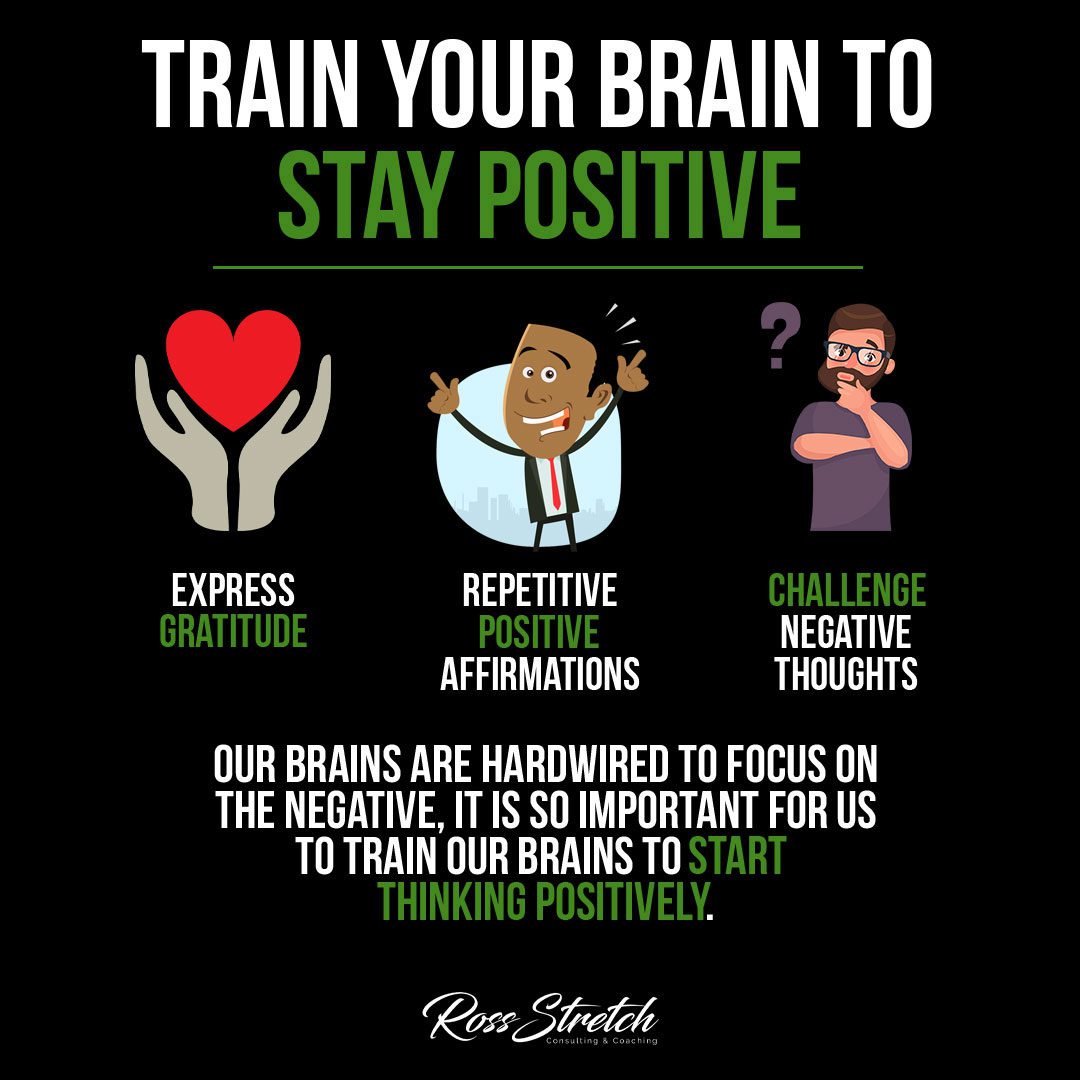
Express Gratitude Daily
Gratitude is one of the most well-researched tools for shifting the brain’s default orientation. A landmark study by Emmons and McCullough found that participants who wrote down three things they were grateful for each week reported significantly higher levels of well-being and optimism compared to control groups. The practice works because it forces the brain to actively search for and encode positive information — directly countering the negativity bias.
The key is consistency and specificity. Gratitude journaling is most effective when done daily rather than occasionally. Keep a notebook by your bed and write three specific things you appreciate before sleep. Not vague statements like “I’m grateful for my family,” but concrete details: “I’m grateful my daughter laughed at dinner tonight.” Specificity anchors the experience in memory, making it more emotionally resonant and neurologically impactful.
- Write three specific gratitudes each morning or evening
- Express gratitude directly to others when it arises — it deepens social bonds and reinforces the habit
- Try a short gratitude meditation, slowly savoring each thing you appreciate before starting your day
Use Positive Affirmations Strategically
Positive affirmations get a bad reputation because they are often used incorrectly. Simply repeating “I am successful” when you feel like a failure produces cognitive dissonance, not confidence. The most effective affirmations are grounded in possibility and process rather than absolute declarations. Statements like “I am becoming someone who handles challenges well” or “I am learning to think more clearly under pressure” are credible enough for the brain to accept and build on.
Research on self-affirmation shows that it activates the brain’s reward circuits when it aligns with a person’s core values. The goal is to prime your mind for a new identity — not to trick it with empty slogans. Pair your affirmations with mental imagery: visualize the version of yourself who embodies the trait you are cultivating. Rehearsal in the mind creates real neural pathways that support the behavior in real life.
- Write affirmations in the first person and present tense, framed as ongoing growth rather than completed states
- Recite them during moments of calm — morning routines, after exercise, or before sleep
- Combine with visualization for maximum neurological effect: see yourself embodying the trait as you speak it
Challenge and Reframe Negative Thoughts
Negative thoughts are not facts. They are interpretations, and interpretations can be examined and changed. Cognitive Behavioral Therapy (CBT), one of the most evidence-based psychological frameworks available, is built on this premise. When a negative thought arises, the practice is to identify it, question its accuracy, and replace it with a more balanced perspective. This is called cognitive reframing, and it is a learnable skill that improves with repetition.
For example, if you make an error at work and your mind says “I’m terrible at this,” the reframe might be: “I made a mistake. What can I learn from it, and how do I do better next time?” This is not toxic positivity — pretending problems don’t exist. It is accurate thinking that acknowledges difficulty without catastrophizing. Over time, the habit of catching and questioning automatic negative thoughts becomes second nature.
- Keep a thought journal to identify recurring negative patterns and the situations that trigger them
- Ask “Is this thought 100% true? What evidence contradicts it?”
- Replace catastrophic language with language focused on learning and growth
- Practice cognitive reframing immediately when negativity arises — the longer a thought sits unchallenged, the more entrenched it becomes
Surround Yourself with Positive Influences
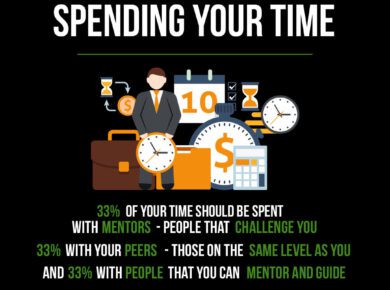
Your environment shapes your mindset more than most people realize. Research on social contagion shows that emotions — including pessimism and optimism — spread through social networks. If you spend the majority of your time with people who complain, catastrophize, and see obstacles everywhere, their mental habits will begin to color your own. The reverse is equally true: spending time with energetic, ambitious, and solution-focused people raises your own baseline positivity.
This applies to media consumption as well. Constant exposure to negative news cycles, social media comparison, and doomscrolling puts the brain on chronic threat alert. That does not mean avoiding reality — it means curating your information environment deliberately. Choose sources that inform without overwhelming. Engage with content that challenges and inspires rather than content that triggers and exhausts.
- Audit your five closest relationships — are they building you up or dragging you down?
- Limit social media to specific, defined time windows each day
- Seek out communities, podcasts, and books that model the mindset you want to develop
Build Positivity as a Long-Term Practice
Training your brain to stay positive is not a weekend project. It is an ongoing commitment that compounds over time. The brain changes slowly through repetition — a process called long-term potentiation, the strengthening of neural connections through repeated use. Every time you choose gratitude over resentment, growth over victimhood, or curiosity over anxiety, you are making that neural pathway a little stronger and the negative pathway a little weaker.
Set realistic expectations. You will have difficult days. You will catch yourself spiraling. The difference between someone who has trained their brain and someone who has not is not the absence of negative thoughts — it is the speed with which they return to equilibrium. Over months and years of consistent practice, that equilibrium shifts. Positivity stops being something you chase and starts being something you inhabit.
Conclusion
A positive mindset is not a personality trait you either have or do not have. It is the product of deliberate habits practiced consistently over time. By understanding the negativity bias, leveraging gratitude, using well-framed affirmations, reframing unhelpful thoughts, and curating your environment, you can rewire your brain for resilience and optimism. Start with one practice today and build from there. The compound interest of consistent mental training is one of the most valuable investments you can make.
Resources

 Ross Stretch