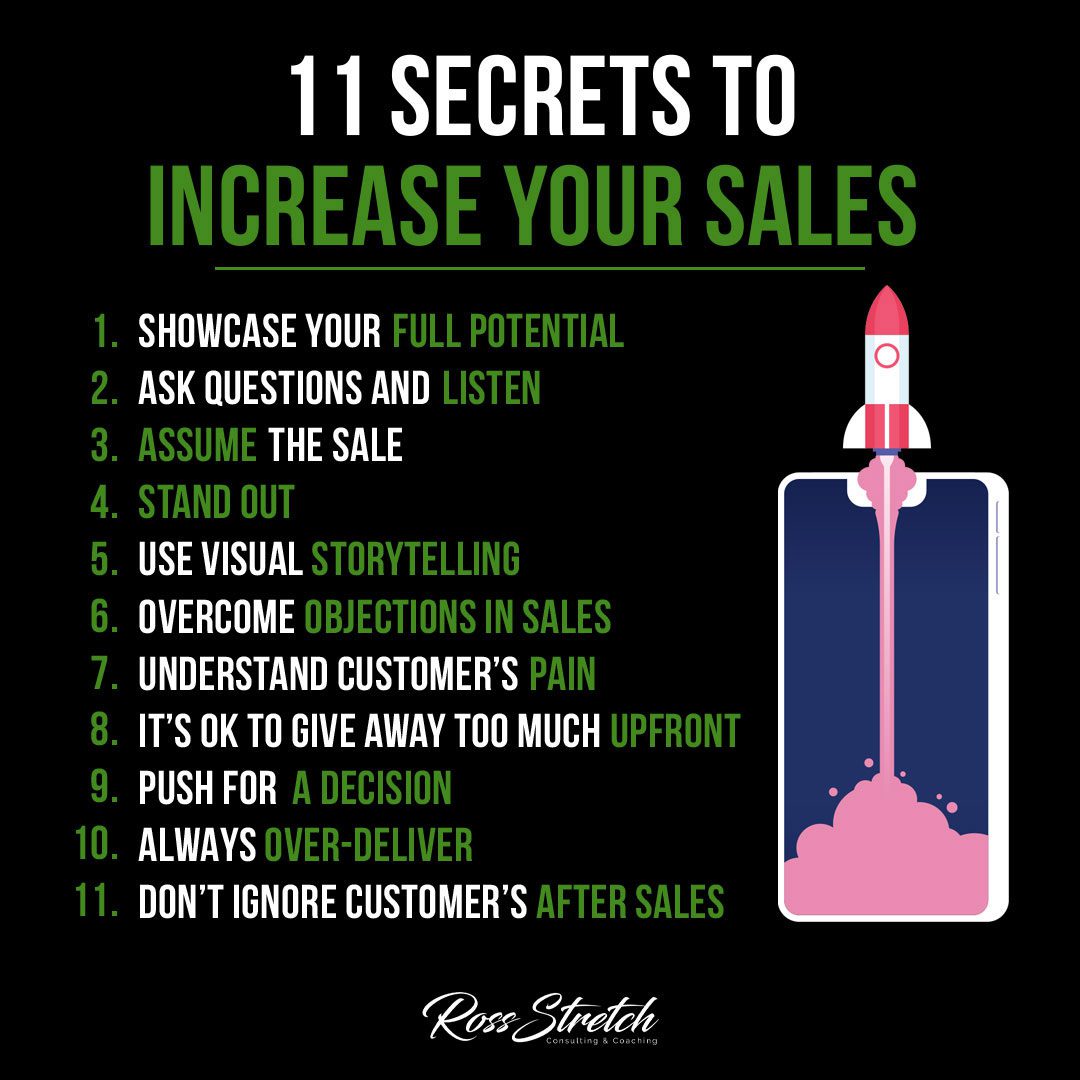
The gap between salespeople who struggle and those who consistently crush their targets isn’t product knowledge or charisma — it’s strategy. The best sales professionals aren’t better talkers; they’re better listeners, better systems thinkers, and better at creating genuine value for their prospects. Whether you’re running a business, managing a team, or selling your own services, these 11 proven secrets will sharpen your approach, close more deals, and build the kind of customer relationships that generate recurring revenue for years.
1. Showcase Your Full Potential
First Impressions Are Made Before You Open Your Mouth
Prospects decide whether they want to work with you long before you make your pitch. Your online presence, your reputation, and your case studies all send signals that either open doors or close them. Make sure everything a prospect encounters before your first conversation is already doing the selling for you.
- Actionable Tip: Audit your LinkedIn profile, website, and proposal templates this week. Update your bio to lead with results you’ve delivered — not your title or credentials. Add two new client testimonials with specific, quantified outcomes.
- Why It Works: Social proof is one of Robert Cialdini’s six principles of influence. When prospects see evidence that others like them have succeeded with you, they self-select into the sale rather than needing to be pushed.
Pro Tip:
Create a one-page “proof document” — a curated collection of your best testimonials, results, and relevant case studies. Send it before discovery calls. Prospects who review it arrive already pre-sold on your credibility, making the conversation about fit rather than trust-building from scratch.
2. Ask Questions and Listen Actively
The Best Salespeople Talk Less Than Their Prospects
Amateur salespeople spend most of a sales conversation pitching. Professionals spend most of it listening. The questions you ask reveal your expertise, surface the prospect’s real needs, and create the emotional investment that turns a “maybe” into a “yes.” You cannot solve a problem you don’t fully understand.
- Actionable Tip: Prepare five open-ended diagnostic questions before every sales call — questions that uncover goals, challenges, timelines, and what the prospect has already tried. Aim for a 30/70 ratio: you talk 30% of the time, the prospect talks 70%.
- Why It Works: When people feel genuinely heard and understood, they trust the listener more. A prospect who has fully articulated their problem is far more receptive to a solution — because they feel it was designed for them, not sold to them.
Pro Tip:
After the prospect answers a question, pause for three full seconds before responding. Most salespeople jump in immediately, cutting off the prospect’s deeper thoughts. The best insights — and the real buying motivations — often come in the second and third sentences after a deliberate pause.
3. Assume the Sale
Confidence Is Contagious — So Is Doubt
How you carry yourself during a sales conversation signals to the prospect whether they should trust you. If you’re uncertain or overly deferential, the prospect mirrors that uncertainty back at you. Assuming the sale means operating from a baseline belief that what you’re offering genuinely helps — and that the conversation is about logistics, not permission.
- Actionable Tip: Reframe your language. Replace “Would you be interested in…” with “When we get started, here’s what we’ll do first.” Replace “If you decide to move forward…” with “Once you move forward…” Test this language on your next three calls.
- Why It Works: Assumptive language removes the mental checkpoint of “should I buy?” and replaces it with “how does this work?” This subtle shift reduces friction and moves the conversation toward commitment rather than deliberation.
Pro Tip:
Assumptive selling works best when you genuinely believe you can deliver. Before every call, take 60 seconds to remind yourself of three specific ways your offering has improved a client’s situation. You’ll walk in selling from conviction, not desperation — and prospects feel that difference immediately.
4. Stand Out from the Crowd
If You Sound Like Everyone Else, You’ll Be Treated Like a Commodity
In competitive markets, the default is commoditization. Prospects compare you on price because they don’t see a compelling reason to choose you specifically. Standing out isn’t about flashy marketing — it’s about having a clear, specific, defensible position that your ideal clients immediately recognize as relevant to their exact situation.
- Actionable Tip: Define your “only statement” — what you do that your top three competitors can’t honestly claim. Write it in one sentence without jargon, then test it with five prospects. If they respond with “tell me more,” it’s working.
- Why It Works: The human brain is wired to notice contrast. Generic messaging blends into noise; specific, unexpected positioning breaks through. The more precisely you describe a prospect’s exact problem, the more they assume you have the precise solution.
Pro Tip:
Don’t try to stand out across every dimension — pick one. Whether it’s speed, specialization, guarantee structure, or methodology, own one meaningful differentiator completely. Being the best at one thing is always more memorable than being “pretty good” at everything.
5. Use Visual Storytelling
People Buy Stories, Then Justify with Logic
Data tells, but stories sell. When you show a prospect what their life looks like after working with you — through vivid case studies, before-and-after scenarios, or clear visual demonstrations — you engage the emotional brain that actually drives purchasing decisions. Logic ratifies the purchase; emotion initiates it.
- Actionable Tip: Build a “hero story” for each of your top three client segments. Structure it as: here’s where the client was → here’s the specific challenge → here’s what we did → here’s the measurable outcome. Keep each story under 90 seconds when spoken aloud.
- Why It Works: Stanford research has shown that stories are up to 22 times more memorable than facts alone. When you give a prospect a story they can mentally inhabit, you’re not just informing them — you’re giving them a preview of their own future.
Pro Tip:
Use short video for your most powerful case studies. A 60-second client testimonial video outperforms a 500-word written testimonial every time. Real faces, real voices, and real emotion create social proof that text simply cannot replicate — and video assets work for you around the clock.
6. Overcome Objections Proactively
The Best Time to Handle an Objection Is Before It’s Raised
Every prospect has objections. The difference between skilled and average salespeople is that skilled ones address objections before the prospect voices them, which prevents the conversation from becoming adversarial. Proactive objection handling demonstrates that you understand the prospect’s world and have thought carefully about their concerns.
- Actionable Tip: List your five most common objections — price, timing, authority, trust, need. For each, craft a two-sentence response that validates the concern and reframes it. Practice until the responses feel natural, not scripted.
- Why It Works: When a prospect raises an objection, they’re testing whether you’ll crumble or stand your ground. A confident, empathetic reframe signals competence and builds trust. Objections aren’t rejections — they’re requests for more information.
Pro Tip:
When a prospect objects, never immediately counter. Start with “That’s a fair concern” or “A lot of our best clients felt the same way before we started.” Then pivot with “What I’ve found is…” This feel-felt-found structure is one of the most field-tested objection frameworks in sales because it builds empathy before delivering logic.
7. Understand Your Customers’ Pain Points
Sell the Relief, Not the Product
Nobody buys a product — they buy the solution to a problem they have right now. The deeper you understand your customers’ specific pain points, the more precisely you can position your offering as the obvious solution. Surface-level problem awareness is table stakes; understanding the emotional cost of those problems is what separates the best from the rest.
- Actionable Tip: Interview three of your best current clients this month. Ask: “What was the specific trigger that made you decide to do something about this problem?” and “What would have happened if you’d done nothing?” Their answers will transform how you talk to prospects.
- Why It Works: People are far more motivated to avoid pain than to gain pleasure — this is loss aversion, one of the most reliable principles in behavioral economics. When you understand and articulate what inaction costs a prospect, you create urgency without manipulation.
Pro Tip:
Go three levels deep on every pain point. When a prospect mentions a surface problem, ask “What does that mean for you day-to-day?” Then ask “And what does that impact downstream?” Most salespeople stop at level one. Level three reveals the emotional core of the problem — and the emotional core is what drives decisions.
8. Give Value Upfront
Generosity Is the Most Underrated Sales Strategy
Building trust at scale requires giving before asking. When you provide genuine value before a prospect commits — through a free audit, useful content, a candid consultation, or a no-strings recommendation — you create obligation, demonstrate competence, and separate yourself from every competitor who goes straight for the close.
- Actionable Tip: Create one free resource that solves a specific problem your ideal client faces regularly — a checklist, a short video walkthrough, a diagnostic template. Deliver it with zero strings attached and observe how it changes the opening dynamic of every sales conversation.
- Why It Works: Cialdini’s principle of reciprocity means that when someone receives genuine value, they feel a psychological pull to give something back. That “something” is often attention, consideration, and eventually — business.
Pro Tip:
Be strategic about what you give away for free. The best free value demonstrates your methodology and raises questions only your paid offering can answer. It should make prospects think: “If this is free, imagine what I get when I work with them properly.” Generosity that showcases your expertise is marketing; generosity that doesn’t is charity.
9. Push for a Decision
Indecision Is the Enemy of Sales — and Your Prospect’s Progress
Prospects often know what they want. They’re waiting for you to give them a reason to decide now. Leaving conversations without a clear next step is one of the most common and costly mistakes in sales. Decisiveness on your part communicates value, creates urgency, and respects the prospect’s time.
- Actionable Tip: End every sales conversation with a specific, time-bound ask. Not “Let me know when you’re ready” — but “I have two spots opening in the next two weeks. Which works better for you to get started: Option A or Option B?” Offer a choice, not an open-ended question.
- Why It Works: Presenting two concrete options — the “alternative close” — removes the yes/no decision and replaces it with a which-one decision. When people are given structured choices, they decide more quickly and feel more satisfied with their decision.
Pro Tip:
Create a legitimate urgency trigger — a real price increase, a cohort start date, limited capacity — and communicate it clearly. Manufactured urgency is detectable and destroys trust. Real urgency, communicated with respect, helps prospects prioritize a decision they already want to make.
10. Always Over-Deliver
The Sale Is the Beginning, Not the End
Your best marketing is a client who can’t stop talking about what you did for them. Over-delivering on expectations is the most cost-effective growth strategy in business — it generates referrals, repeat purchases, and testimonials without any additional acquisition cost. Excellence is your most durable competitive moat.
- Actionable Tip: Identify one “unexpected extra” you can add to every client engagement — a follow-up resource, a check-in call, a referral to someone in your network. It doesn’t have to be expensive; it has to be thoughtful. Unexpected value creates delight; delight creates advocates.
- Why It Works: The psychology of customer delight shows that exceeding expectations produces loyalty at a rate disproportionate to the extra effort required. A client who expected a 7 and got a 9 is far more loyal than one who expected a 9 and got exactly a 9.
Pro Tip:
Set expectations slightly below what you know you can deliver. Under-promise, then over-deliver consistently. This isn’t sandbagging — it’s building in room to surprise. Clients who are consistently delighted refer more, return more, and complain less. Make it a system, not a happy accident.
11. Nurture Post-Sale Relationships
Revenue Follows Relationships — Always
The moment after a sale closes is when most salespeople mentally move on. The best ones know this is when the real relationship begins. Post-sale follow-up, ongoing communication, and genuine interest in client outcomes transform one-time buyers into long-term revenue streams and vocal referral sources.
- Actionable Tip: Build a 90-day post-sale touchpoint sequence: a check-in at day 7, a progress review at day 30, a results conversation at day 90. Make each touchpoint about them — their results, their next challenge, their feedback. Never let a client feel forgotten after payment clears.
- Why It Works: According to Bain & Company research, increasing customer retention by just 5% increases profits between 25% and 95%. Your most valuable sales leads are your current clients — and they’re already sold on you.
Pro Tip:
Send handwritten thank-you notes to new clients in the week after they sign. In a world of automated emails and digital noise, a physical note stands out dramatically. It costs less than a cup of coffee and creates a lasting impression — because nobody forgets the vendor who took the time.
The Revenue You Want Is Closer Than You Think
Sales isn’t about manipulation or pressure — it’s about creating genuine value, building real relationships, and helping people make decisions that are already in their best interest. Apply even five of these eleven secrets consistently, and you’ll see measurable results within 90 days. Apply all eleven, and you’ll build a sales operation that compounds over time.
Resources

 Ross Stretch