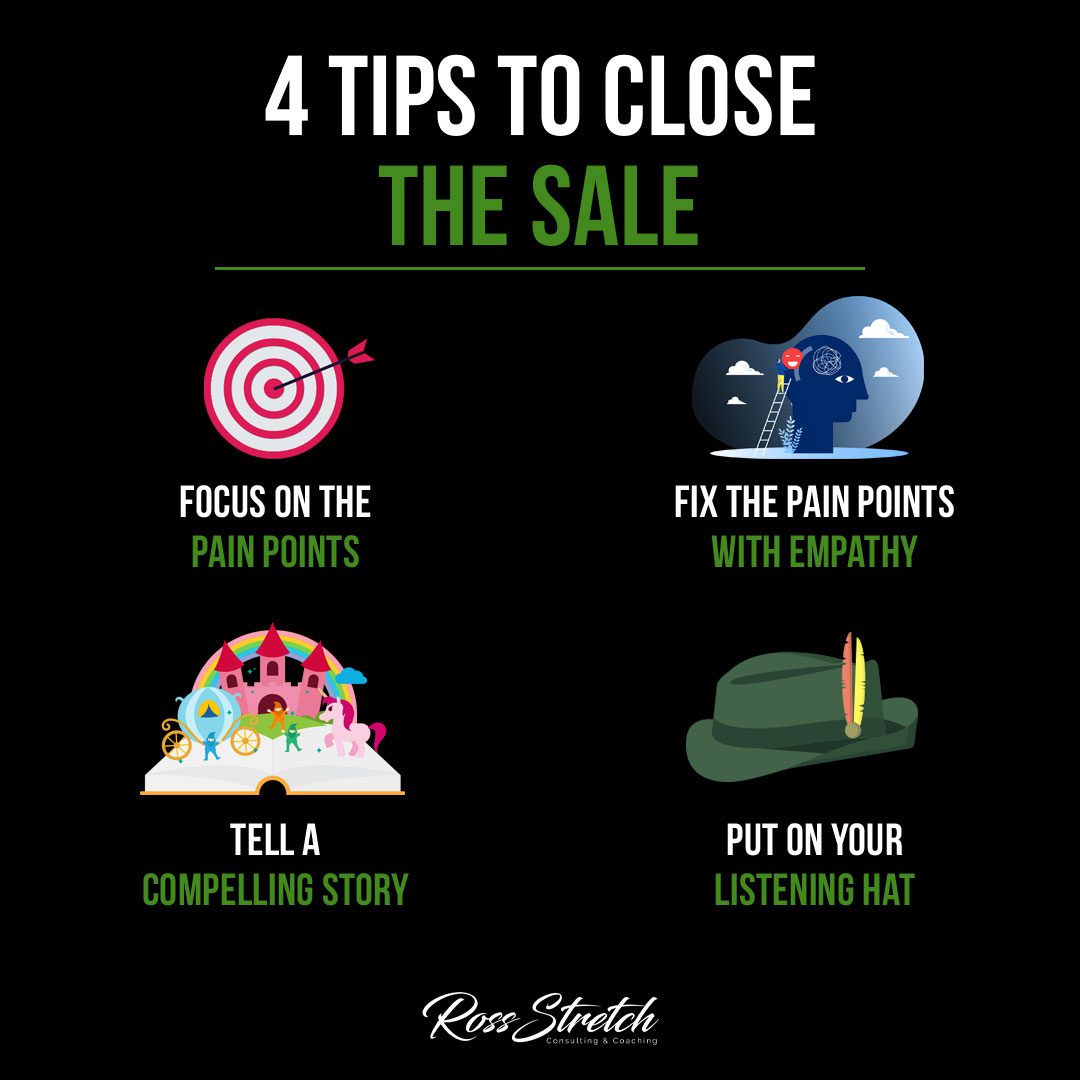
Closing a sale is both a science and an art. The most effective salespeople don’t rely on pressure tactics or scripted pitches — they understand their customers deeply, communicate with genuine empathy, and know exactly when and how to move a conversation toward commitment. These four techniques have proven consistently effective across industries, from high-ticket B2B deals to retail and service-based businesses.
1. Focus on the Pain Points
Lead With the Problem, Not the Product
Every buying decision is ultimately driven by a problem the prospect wants to solve or an outcome they want to achieve. Before you pitch anything, your job is to fully understand what’s frustrating them, costing them time or money, or holding back their progress. Pain points are your entry point into a genuine sales conversation — and they’re far more motivating than any feature list you could recite.
To surface pain points effectively, you need to ask open-ended questions and resist the urge to fill silence with product information. Let the prospect describe their world. The more detail they share, the better positioned you are to present a solution that actually fits — rather than a generic pitch that could apply to anyone.
- Actionable Tip: Open every discovery conversation with questions like “What’s your biggest frustration in this area right now?” or “What would need to change for this to feel like a real win for you?”
- Why It Works: Prospects who feel heard and understood are far more likely to trust your recommendation. You shift the conversation from selling to solving — which is a fundamentally different dynamic.
Pro Tip:
Document the specific pain points your best existing customers shared before they decided to buy. Use that exact language when speaking with similar prospects — mirroring their own words back creates instant recognition and credibility that no polished pitch can replicate.
2. Address Pain Points with Empathy
Connect Before You Correct
Once you understand someone’s pain points, the instinct is to immediately jump to your solution. Resist that urge. Prospects need to feel genuinely understood before they’re open to any answer you offer. Empathy — authentic acknowledgment of their situation — builds the trust that makes closing possible. Without it, even the best solution can feel like a sales tactic rather than a genuine recommendation.
Showing empathy doesn’t mean being overly emotional or performative. It means taking a moment to acknowledge the difficulty of their situation before pivoting to solutions. This brief pause signals that you’re a person trying to help — not a salesperson trying to hit a number.
- Actionable Tip: After a prospect shares a challenge, reflect it back before responding: “That sounds genuinely difficult — and it’s a pattern I hear often from people in your position.” Validate before you prescribe.
- Why It Works: Sales resistance drops significantly when people feel understood rather than sold to. Empathy shifts the dynamic from adversarial to collaborative, and collaborative conversations close far more naturally.
Pro Tip:
Train yourself to pause for two full seconds after a prospect finishes speaking before you respond. That brief silence signals that you’re processing what they said — not just waiting for your turn to talk. It’s a small habit that communicates enormous respect and builds real rapport over the course of a conversation.
3. Tell a Compelling Story
Make Your Value Memorable, Not Just Logical
Data and features inform; stories persuade. When you can show a prospect how someone in a similar situation used your product or service to achieve a meaningful outcome, you give them a mental model for their own success. A well-told customer story is worth a dozen bullet points of competitive differentiators — because it makes the abstract feel real and achievable.
Storytelling also helps prospects visualize themselves in the outcome — which is a critical step in moving from interest to commitment. When someone can picture the before and after, the decision to move forward feels less like a risk and more like an obvious next step.
- Actionable Tip: Build a library of two or three specific case studies from existing customers whose situations mirror common prospects. Deploy them at the right moment: “We worked with a company facing almost exactly this challenge — here’s what happened.”
- Why It Works: Stories activate the parts of the brain associated with experience and emotion, not just logical evaluation. They make your offer feel tangible and reduce the perceived risk of making a decision.
Pro Tip:
Structure your stories with a simple arc: who the customer was, what problem they faced, what changed when they worked with you, and where they are now. Specificity is everything — “a 34% reduction in onboarding time over 60 days” lands far harder than “significant efficiency improvements.” Numbers give your stories credibility and make them repeatable.
4. Listen More Than You Talk
Active Listening Is Your Sharpest Closing Tool
The stereotype of the fast-talking salesperson is not just outdated — it’s counterproductive. The most effective closers are skilled listeners who extract invaluable information from every conversation. Active listening reveals objections before they become blockers, uncovers buying motivations you hadn’t anticipated, and gives you precisely the information you need to close with accuracy and confidence.
Most salespeople listen with the intent to respond. The best salespeople listen with the intent to understand. That distinction changes everything about how a conversation unfolds — and how it ends.
- Actionable Tip: Aim for a 70/30 split — let the prospect speak roughly 70% of the time. Take notes during the call and reference what they said earlier when presenting your solution: “You mentioned timeline is critical — let me show you exactly how we address that.”
- Why It Works: Prospects signal exactly what they need to hear in order to say yes. If you’re talking, you’re missing those signals. Listening is how you build a custom close in real time based on actual information rather than assumptions.
Pro Tip:
When an objection comes up, resist the urge to rebut it immediately. Instead, ask a clarifying question: “Can you help me understand that concern a bit more?” You’ll often find the objection has a specific root cause — one you can address directly once you fully understand it. Premature rebuttals feel like arguing; clarifying questions feel like problem-solving. The second approach wins.
Conclusion
Closing sales consistently isn’t about manipulation or high-pressure tactics — it’s about alignment. When you genuinely understand someone’s pain, respond with real empathy, make your value tangible through story, and listen carefully to what they’re telling you, the close becomes a natural next step rather than a forced destination. Apply these four techniques to every sales conversation and your close rate will improve — not because you’re more aggressive, but because you’re genuinely more effective.
Resources

 Ross Stretch