Measuring personal growth is difficult when you’re living it day by day. Without clear milestones, it’s easy to assume you’re standing still — or worse, moving backward. Most people look for dramatic, external signals of success, but genuine progress tends to show up quietly: in how you think, how you respond to difficulty, and who you choose to spend time with. This guide walks you through four concrete signs that you’re doing better than you think, and how to actively recognize each one.
Why This Matters
Most people measure success by external markers — salary, relationship status, social media presence, or physical appearance. But these metrics miss the deeper indicators of genuine progress: the internal changes that compound over time and shape your long-term resilience and capability. When you can’t see your own growth, you risk abandoning worthwhile efforts too early, or falling into comparison traps that distort your reality.
The ability to accurately assess your progress is a skill in itself. It keeps you motivated during slow periods, helps you appreciate how far you’ve come, and gives you the perspective to set meaningful next steps. Without this skill, even real achievement can feel hollow. Learning to recognize progress in its quieter forms is what separates people who stay consistent from those who give up just before the breakthrough.
How to Know You’re Making Progress
Step 1: Compare Yourself to Who You Were, Not Who Others Are
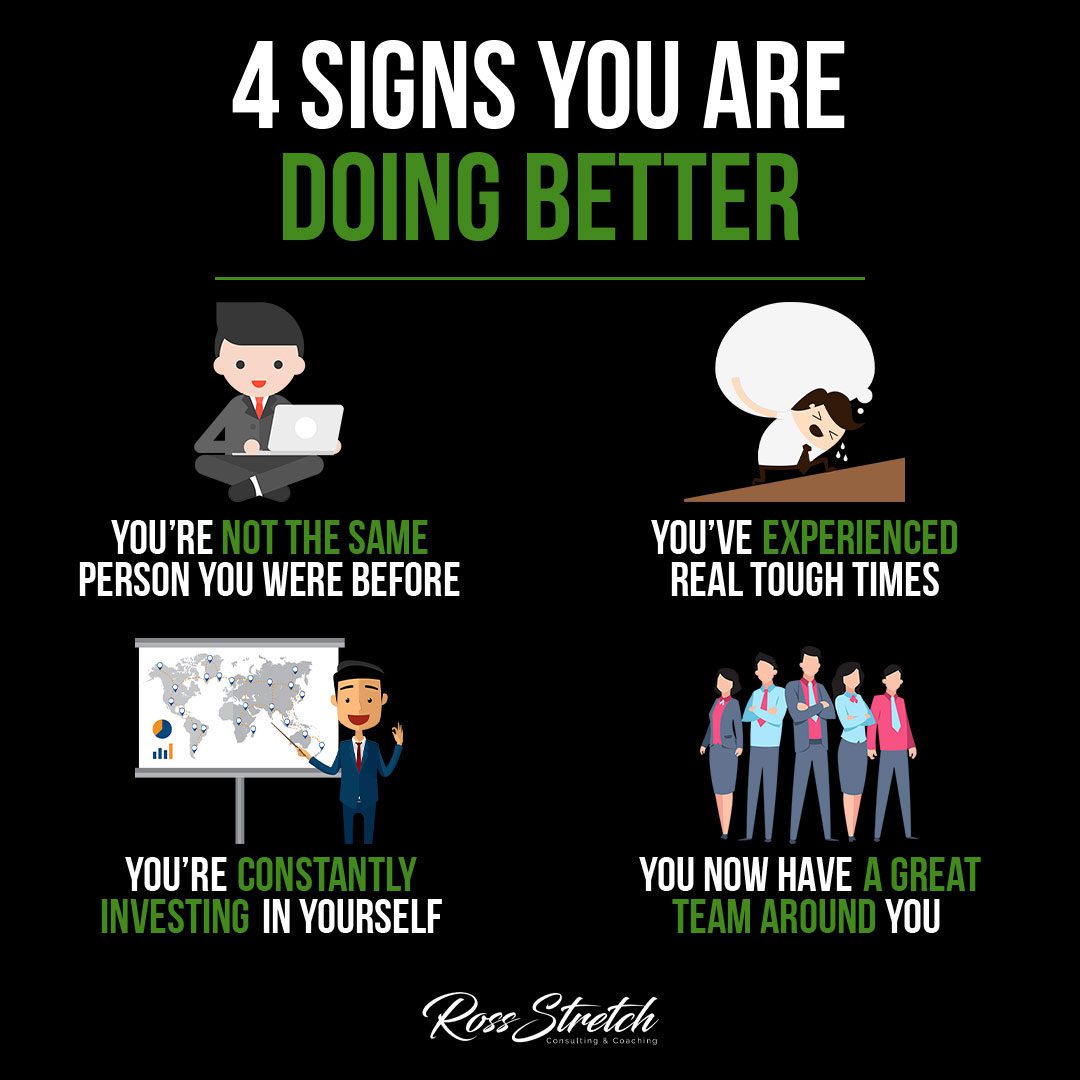
The most reliable indicator of growth is a meaningful difference between who you are now and who you were a year ago — or five years ago. This isn’t about reaching a finish line. It’s about noticing shifts in your thinking, your values, your emotional responses, and the choices you make under pressure. If your priorities have evolved, if you hold yourself to a higher standard, or if you see situations more clearly than you once did, that’s evidence of real change.
- Pull up an old journal entry, email, or social media post from a year or more ago and read it with fresh eyes
- Ask yourself: would I make the same decisions today? Would I react the same way?
- Focus only on comparison with your past self — not peers, not social media, not societal timelines
- Avoid dismissing shifts in mindset as “not real progress” — they’re often the most important kind
Step 2: Examine How You’ve Responded to Adversity
It might seem counterintuitive, but the fact that you’ve been through hard times and kept going is a strong sign of progress. Resilience isn’t built in comfortable moments — it’s forged through difficulty. If you’ve navigated loss, failure, conflict, or setbacks and emerged with even a slightly better understanding of yourself, that’s growth. The question isn’t whether you struggled; it’s whether the struggle changed you in a useful direction.
- Reflect on a specific challenge from the past year and ask: what did I actually learn from it?
- Notice if your recovery time from setbacks has shortened — bouncing back faster is a measurable sign of resilience
- Look for moments where you chose a thoughtful response over an immediate emotional reaction
- Avoid romanticizing struggle for its own sake — the point is what you extracted from it, not how much you endured
Step 3: Audit Your Self-Investment Habits
Consistently investing in your own development — through books, courses, coaching, or deliberate practice — is one of the clearest signs that you’re on a growth trajectory. People who are genuinely doing better don’t wait until they feel ready; they make learning and skill-building a regular part of their routine. Even small investments, made consistently, compound significantly over time and create capabilities that weren’t there before.
- List the ways you’ve actively invested in your growth in the past 90 days — courses, coaching, books, new skills
- Set up a repeatable habit: 20 minutes of deliberate learning per day in an area that matters to your goals
- Track what you’re learning — a simple notebook or note-taking app makes the investment visible and tangible
- Avoid confusing passive consumption (endless podcasts on shuffle, aimless scrolling) with active, intentional self-development
Step 4: Evaluate the Quality of Your Support Network
No one builds a meaningful life entirely alone. If the people around you — friends, colleagues, mentors, family — are increasingly people who challenge you, support your goals, and tell you hard truths when necessary, that’s a sign your judgment has improved. As you grow, your standards for relationships naturally rise. If your circle has evolved alongside you, or if you’ve actively worked to build stronger connections, that’s a tangible indicator of real progress.
- Look at your five closest relationships and ask: do these people genuinely push me toward my best self?
- Identify at least one person who serves as a mentor or honest accountability partner
- Take stock of whether you’ve added or deepened any supportive relationships in the past year
- Avoid staying in relationships purely out of habit — quality of support matters far more than length of history
Common Mistakes to Avoid
- Measuring your progress against others who are at completely different life stages or starting points
- Expecting growth to feel dramatic or obvious — most meaningful change is gradual and only clear in retrospect
- Dismissing small, incremental shifts as insignificant when they’re actually the foundation of lasting change
- Waiting for external validation before you allow yourself to acknowledge your own progress
- Only counting success when you reach a final destination, instead of recognizing forward movement at every stage
Conclusion
Progress rarely announces itself. It lives in the gap between who you were and who you’re becoming — in how you respond to difficulty, in the habits you’re building, and in the relationships you’ve cultivated. By regularly checking these four signs, you develop a more accurate and honest view of where you actually stand. Don’t wait for a milestone to recognize your growth. Take 15 minutes this week to write down how you’ve changed in the past year. You may be further along than you think.
Resources
- Continuous Improvement: How to Get 1% Better Every Day — James Clear
- How to Measure Your Own Progress — Greater Good Science Center, UC Berkeley
- Signs of Personal Growth and How to Recognize Them — Verywell Mind
- Personal Growth — Psychology Today

 Ross Stretch