The gap between where you are and where you want to be is rarely about talent — it’s about knowledge. The most successful entrepreneurs, executives, and investors are relentless learners who treat self-education as a competitive advantage. These four practical, proven strategies will help you expand your knowledge and improve your life without quitting your job or going back to school.
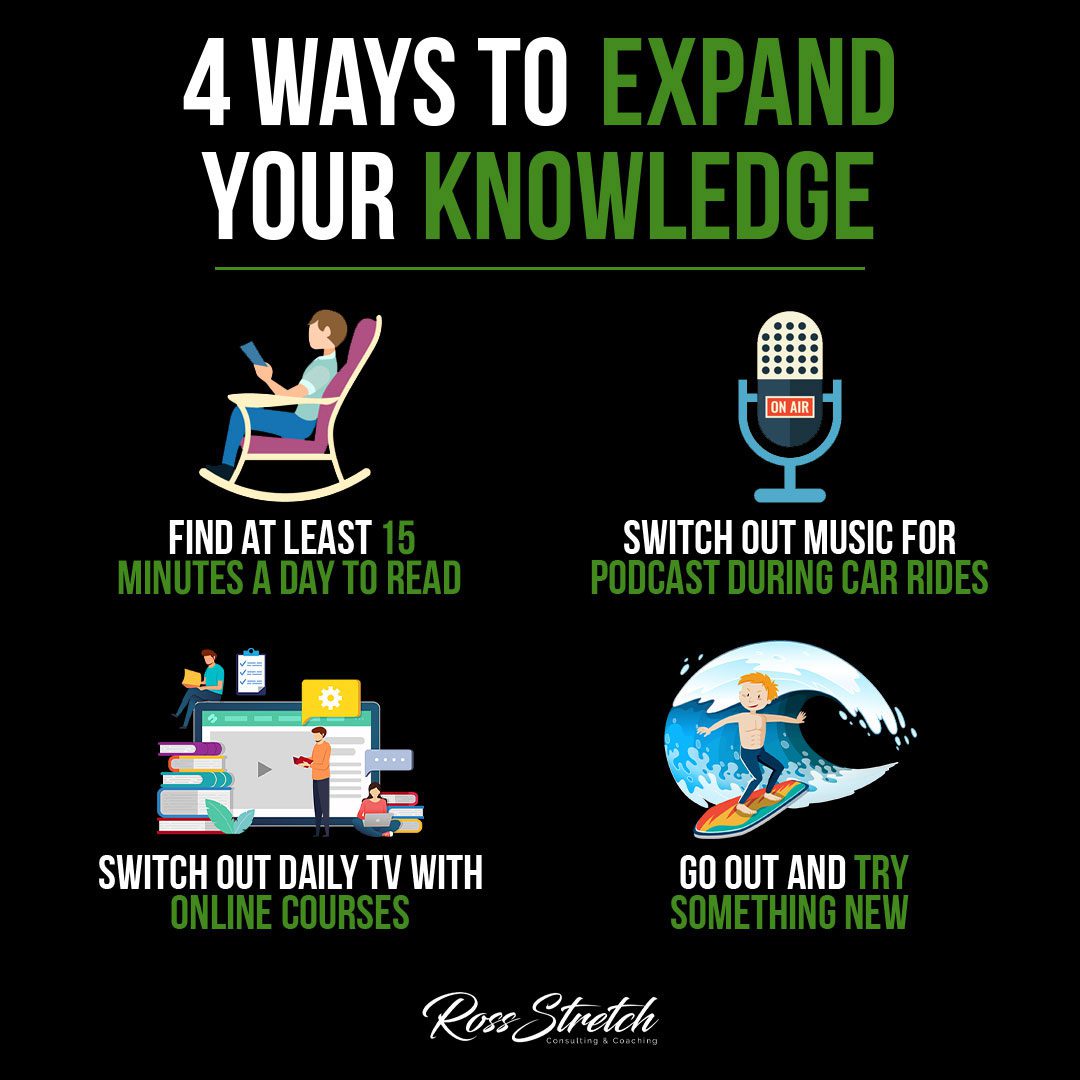
1. Find at Least 15 Minutes a Day to Read
The Habit That Separates High Performers from Everyone Else
Research on high-achieving executives consistently shows that voracious reading is one of the habits they share most. You don’t need to match an executive reading pace, but building even 15 minutes of daily reading into your routine compounds into dozens of books per year — and with them, thousands of new ideas, frameworks, and perspectives that change how you think and operate in the world.
- Actionable Tip: Place a book on your nightstand tonight. Commit to reading just two pages before sleep. Start embarrassingly small — the habit, not the volume, is what matters first. Two pages almost always turns into fifteen minutes once you’ve started.
- Why It Works: Micro-habits are far easier to sustain than ambitious commitments. By lowering the bar to almost nothing, you eliminate the resistance that causes most people to abandon reading habits within their first week.
Pro Tip:
Use Goodreads or a simple notebook to track books you’ve finished. Tracking creates a powerful feedback loop of accomplishment — seeing a growing list of completed books is one of the most reliable motivators to keep the habit going year after year.
2. Switch Out Music for Podcasts in Your Car
Turn Dead Time into Learning Time
The average commuter spends over 250 hours per year in their car. At 1.5x playback speed, that’s enough time to consume the equivalent of more than 20 full-length books annually — without changing anything else in your schedule. Podcasts make dead commute time one of the highest-ROI learning opportunities available to any working professional, and there are thousands of world-class shows available for free.
- Actionable Tip: This week, subscribe to three podcasts aligned with your professional goals or personal interests. Move your podcast app to your car’s dock or phone’s home screen and push the music app off the front page. Make learning the default, not the effort.
- Why It Works: Environmental design beats motivation. When podcasts are the path of least resistance in your car, you’ll default to learning automatically — without needing willpower or reminders to make it happen every day.
Pro Tip:
Use Overcast (iOS) or Podcast Addict (Android) for advanced features like smart speed — which removes silence between words — and voice boost, allowing you to listen comfortably at 1.5x to 2x speed and absorb significantly more content per commute without losing comprehension.
3. Replace TV Time with Online Courses
Invest the Hours You Already Have
The average adult watches four hours of television per day. Replacing even one of those hours with a structured online course could produce a new, marketable professional skill within weeks. Platforms like Coursera, Udemy, and LinkedIn Learning put world-class instruction within reach for less than the cost of a single streaming subscription — and unlike passive entertainment, the skills you build compound directly into your earning potential.
- Actionable Tip: Choose one skill directly relevant to your career advancement or a business goal, enroll in a specific course this week, and block 45 minutes three nights per week on your calendar to complete it. Treat it like a meeting you cannot cancel.
- Why It Works: Skill acquisition has a direct financial return. Learning financial modeling, copywriting, data analysis, or digital marketing can translate into a raise, a promotion, or a new income stream. Passive entertainment cannot do any of that.
Pro Tip:
Audit your current streaming subscriptions. If you’re paying for multiple services, drop one and redirect that $15–$20 per month toward Coursera Plus or Udemy — both offer full catalogs of professional and creative courses for roughly the same price as a single entertainment subscription that builds nothing.
4. Go Out and Try Something Completely New
The Experience You Haven’t Had Yet Is the Knowledge You’re Missing
Books and podcasts build knowledge. Direct experience builds wisdom. Trying something entirely unfamiliar — a new country, a new sport, a new creative discipline — forces your brain to form new neural pathways. It builds adaptability, creativity, and the ability to connect ideas across domains in ways that people who never leave their comfort zones simply cannot replicate.
- Actionable Tip: Choose one new experience to pursue this month — a local class, a weekend trip somewhere you’ve never been, or a volunteer opportunity in an industry outside your own. Put it on the calendar right now, before you finish reading this article.
- Why It Works: Novelty triggers neuroplasticity. New experiences stimulate the hippocampus — the region of the brain responsible for memory, learning, and spatial navigation — making you sharper across all areas of life, not just the new domain you’re exploring.
Pro Tip:
Keep a one-sentence journal entry for each new experience you try. After a year, you’ll have a tangible record of your growth that reveals patterns in what genuinely expands you — and what was simply distraction dressed up as novelty. The best learners study their own learning.
Knowledge Is the Investment That Never Depreciates
You don’t need more time — you need to use the time you already have with more intention. Fifteen minutes of reading, a podcast-filled commute, one structured course instead of a rerun, and one genuinely new experience per month. Stack all four and you become a materially different, more capable person inside of a year. The knowledge you gain compounds into better decisions, better opportunities, and a version of your life you actually designed.
Resources

 Ross Stretch