Most people who eventually start a business did not decide in a single moment — they recognized a pattern of signs that had been building for months or years. The restlessness, the constant ideas, the feeling of operating below your potential. Entrepreneurship is not the right path for everyone, but for those drawn to it, ignoring the pull rarely leads to lasting satisfaction in a traditional career. These five signs are among the clearest indicators that you may be ready to make the leap — and understanding them can give you the clarity and confidence to move forward on your own terms.
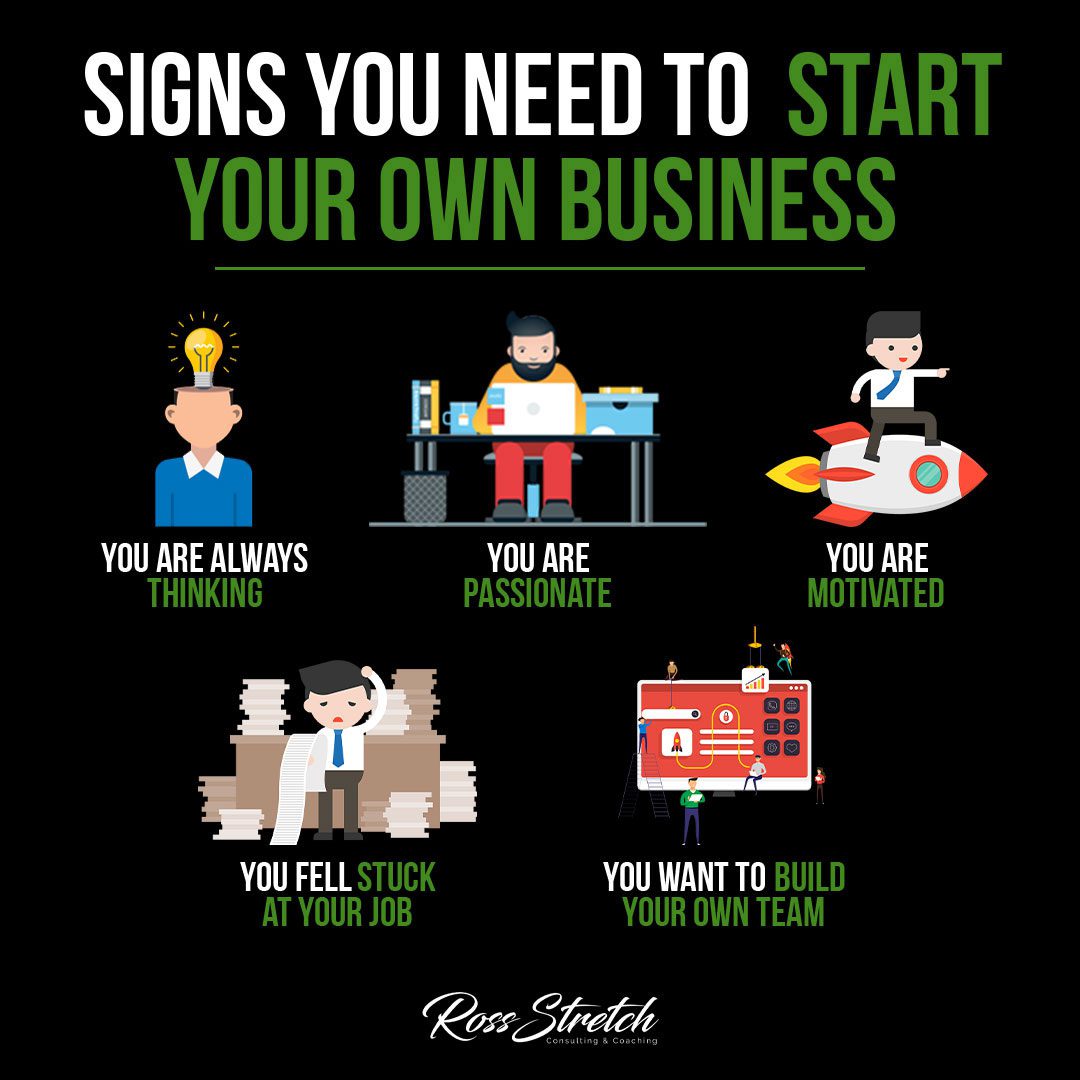
1. Your Mind Is Always Working on New Ideas
The Persistent Entrepreneurial Mindset
If you find yourself constantly noticing problems that need solving, mentally designing better systems, or sketching business concepts in the margins of your notebooks, that is not idle daydreaming — it is a signal. Entrepreneurs are fundamentally pattern-recognition engines. They look at the world and instinctively ask how things could be better rather than accepting the status quo. When this kind of thinking happens without effort, and especially when it persists during your off-hours, weekends, and evenings, it suggests that your mind is already oriented toward building rather than executing someone else’s vision.
- Actionable Tip: Keep an idea log — a simple notes app or a small notebook — and capture every business idea, no matter how rough or early-stage it seems. Review it monthly to identify patterns in the problems you are drawn to solving.
- Why It Works: Externalizing your ideas frees up mental bandwidth and allows you to evaluate them objectively rather than letting them cycle endlessly in your head. Patterns in your idea log often reveal the market you are naturally suited to enter.
Pro Tip:
Do not wait until you have the perfect idea. Most successful businesses evolved significantly from their original concept. The habit of ideating consistently is more valuable than any single idea, and it positions you to recognize a real opportunity when it arrives.
2. You Have Deep Passion for a Specific Problem or Industry
Fueling Your Entrepreneurial Drive with Genuine Interest
Passion is often misunderstood in entrepreneurship. It does not mean you need to love every aspect of running a business — accounting, legal paperwork, and difficult conversations are part of every venture regardless of how exciting the core work is. What passion actually provides is the fuel to push through the difficult stretches that every entrepreneur inevitably faces. When you care deeply about the problem you are solving or the people you are serving, you persist through rejection, setbacks, and uncertainty in ways that someone motivated purely by money rarely can. Founders driven by a clear sense of purpose consistently outlast those motivated primarily by financial gain.
- Actionable Tip: Ask yourself honestly whether you would still pursue this business idea if the financial return were modest for the first three years. If the answer is yes, that is a meaningful signal about the depth of your commitment.
- Why It Works: The early stages of almost every business involve more sacrifice than reward. Genuine passion is what sustains the effort during that phase, while external motivation alone tends to erode when results are slow to come.
Pro Tip:
Look for the intersection of what you are passionate about, what you are already good at, and what the market will pay for. Any one of those alone is not enough — but the overlap of all three is where durable, profitable businesses are built and where your competitive advantage is strongest.
3. You Are Internally Motivated and Comfortable Taking Initiative
Intrinsic Drive and Ambition as Entrepreneurial Fuel
Running a business means there is no manager setting your priorities, no performance review to hold you accountable, and no structure to fall back on when direction is unclear. Self-motivation — the ability to consistently take action without external pressure — is not just helpful in entrepreneurship, it is essential. If you already find yourself naturally setting ambitious personal goals, holding yourself to a high standard, and taking initiative without being asked, these are strong indicators that you have the internal drive entrepreneurship demands.
- Actionable Tip: Before starting a business, test your self-discipline with a structured side project — a freelance engagement, an online course you build and sell, or a small service offering. Treat it like a real business with real deadlines and deliverables, even if the financial stakes are low.
- Why It Works: Side projects reveal your actual work habits under low-accountability conditions, which closely mirror the early stages of entrepreneurship. Succeeding consistently in that environment is a reliable indicator that you are ready for the full commitment.
Pro Tip:
Track your energy levels throughout your current workday. Entrepreneurs who build businesses around activities that energize rather than drain them sustain higher performance and avoid burnout. Your natural inclinations about what kind of work you gravitate toward are data worth paying attention to.
4. You Feel Constrained and Unfulfilled in Your Current Role
Seeking Autonomy, Ownership, and Meaningful Work
Feeling stuck in a job is not the same as having a bad job. You can have a perfectly good salary, supportive colleagues, and a competent manager and still feel an underlying sense that something is missing. For many people drawn to entrepreneurship, what is missing is ownership — the sense that your effort is building something that belongs to you and reflects your own vision rather than someone else’s. If you consistently find yourself thinking that you could run things better, or that you wish you had the freedom to try a different approach, that frustration is worth examining rather than suppressing.
- Actionable Tip: Write down specifically what you feel constrained by in your current role. Are you limited by someone else’s decision-making, the scope of your role, or the type of work you are asked to do? Clarity about what you are running toward — not just running from — is essential before making the leap.
- Why It Works: Many people leave jobs impulsively and discover that the problems they had were internal, not structural. Doing the reflection work first ensures that entrepreneurship is the right answer, not just an escape route from a frustrating situation.
Pro Tip:
Consider starting your business as a side project while still employed. This approach lets you test market demand, build early revenue, and gain confidence before you are dependent on the business for income. Most successful entrepreneurs did not quit their day job first — they built until the business made the decision obvious.
5. You Want to Lead, Build a Team, and Create Something Bigger Than Yourself
The Leadership Instinct as an Entrepreneurial Signal
Some people are inherently energized by the idea of building a team, developing talent, and creating an environment where people can do their best work. If you find yourself thinking about the culture you would create, the people you would hire, or how you would lead differently than your current employer, that instinct matters. Great businesses are not built by solo operators — they are built by leaders who can attract, inspire, and retain talented people around a shared mission. If building something together with a team sounds more exciting to you than protecting your individual contribution, that is an important signal worth taking seriously.
- Actionable Tip: Practice leadership now, even in a non-business context. Volunteer to lead a project at work, mentor someone junior in your field, or organize a community initiative. Leadership skills that translate directly to entrepreneurship can be developed long before you have a business to lead.
- Why It Works: The ability to lead, delegate, and build trust is the constraint that limits most growing businesses. Developing these capabilities now shortens the most difficult phase of scaling a company later and helps you attract the right people from the start.
Pro Tip:
Seek out and study founders who have built the kind of organization you envision. Read their interviews, listen to their podcasts, and pay attention to the leadership principles they emphasize. Modeling successful entrepreneurial leadership is one of the fastest ways to compress your learning curve and avoid the common pitfalls that derail new business owners.
What to Do With These Signs
Recognizing these signs is not a mandate to quit your job tomorrow. It is an invitation to take the idea seriously and start building. Most successful entrepreneurs validated their concept, built early revenue, and developed their skills before making the full transition. The sign that you are ready is not that you are certain — it is that the pull toward building something of your own has become stronger than the comfort of staying put. If several of these signs resonate, the question is not whether to start, but how to start smart.
Resources


 Ross Stretch