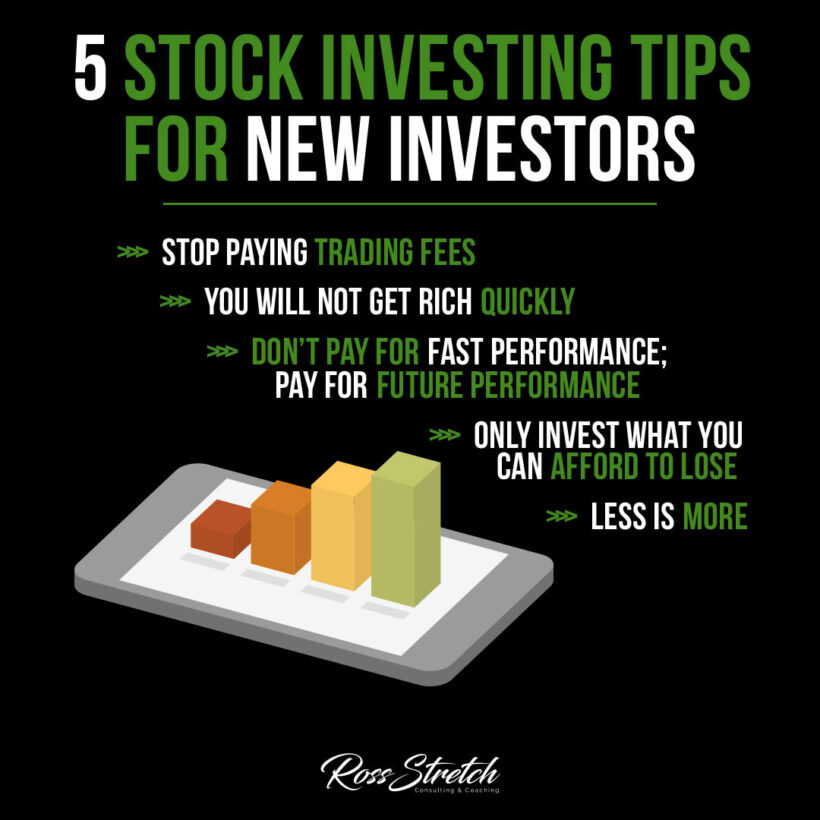

Getting started in the stock market is one of the smartest financial decisions you can make — but the learning curve is real, and expensive mistakes are easy to make when you don’t know what to watch for. The good news is that the fundamentals of smart investing aren’t complicated. Building a disciplined investing strategy early, avoiding common traps, and thinking in terms of long-term wealth building rather than quick wins will put you ahead of most investors before you even buy your first share. Here are five essential stock investing tips to help new investors get started on the right foot.
1. Stop Paying Trading Fees
Every Dollar in Fees Is a Dollar That Doesn’t Compound
Trading fees may seem small, but they add up significantly — especially when you’re starting with a modest portfolio. A $5 commission on a $100 trade is already a 5% loss before the market even moves. Over years of regular investing, fee drag can cost you tens of thousands of dollars in compounded returns. The good news is that commission-free trading has become the industry standard. Platforms like Fidelity, Charles Schwab, and Robinhood offer zero-commission trades on stocks and ETFs, making it entirely unnecessary to pay for basic transactions. Before opening any brokerage account, verify their full fee schedule — including annual fees, account minimums, and options trading costs.
- Actionable Tip: Open your account with a commission-free brokerage. Compare Fidelity, Charles Schwab, and Robinhood based on your investing style, then read the full fee disclosure before funding your account.
- Why It Works: Eliminating fees is one of the highest-certainty ways to improve your investment returns. Unlike market performance, fee reduction is entirely within your control.
Pro Tip: Watch for Hidden Fees
Commission-free trading doesn’t mean cost-free investing. Look for expense ratios on mutual funds and ETFs — aim for under 0.20% — along with foreign transaction fees and inactivity fees. These indirect costs can quietly erode returns just as much as trading commissions did historically.
2. You Will Not Get Rich Quickly
Patience Is the Most Powerful Investment Strategy Available
The stock market is not a lottery ticket. The investors who build real wealth understand that time in the market is the primary driver of returns, not timing the market. Every year, thousands of new investors are lured by stories of stocks that doubled in a month or assets that skyrocketed overnight. What those stories leave out is the far larger number of people who chased those returns and lost money. The S&P 500 has historically returned approximately 10% per year on average over long periods. That sounds modest until you run the compound math: $10,000 invested at 10% annually for 30 years grows to over $174,000 — without adding a single additional dollar.
- Actionable Tip: Set a minimum five-year horizon for any stock or fund you purchase. If you might need the money within five years, it should not be in equities — keep it in a high-yield savings account or short-term bond.
- Why It Works: Longer time horizons allow you to ride out market volatility without being forced to sell at a loss. Time is the variable that turns modest returns into significant wealth.
Pro Tip: Automate Your Investments
Set up automatic monthly contributions to your investment account. This removes emotion from the process, ensures you invest consistently regardless of market conditions, and takes advantage of dollar-cost averaging — buying more shares when prices are low and fewer when prices are high.
3. Don’t Pay for Past Performance — Pay for Future Potential
Recent Winners Are Not Guaranteed Future Winners
One of the most common mistakes new investors make is buying stocks that have recently surged, assuming the momentum will continue. This is called chasing performance, and it’s one of the fastest ways to buy high and sell low. A stock that doubled in the past six months may be significantly overvalued relative to its actual earnings and growth prospects. Instead of buying based on recent price performance, evaluate companies on their fundamentals: revenue growth, profit margins, competitive advantages, debt levels, and the strength of their industry position. Forward-looking analysis — understanding where a company is headed — is more valuable than studying where it has been.
- Actionable Tip: Before buying any stock, read the company’s most recent earnings report and look at its price-to-earnings ratio relative to industry peers. A stock priced at 50x earnings in an industry where peers trade at 20x is likely overvalued.
- Why It Works: Buying undervalued companies with strong future prospects is the core of value investing — the strategy behind some of history’s most successful long-term investors.
Pro Tip: Use Index Funds as Your Baseline
If individual stock analysis feels overwhelming as a beginner, start with low-cost index funds that track the S&P 500 or total market. You’ll capture the market’s long-term returns without needing to evaluate individual companies. Many experienced investors keep the majority of their portfolio in index funds even after years in the market.
4. Only Invest What You Can Afford to Lose
Financial Security Comes Before Investment Returns
Investing in the stock market always carries risk. Markets can drop 20%, 30%, or even 40% during economic downturns — and they have, multiple times in modern history. If you invest money you need for rent, groceries, or emergency expenses, a market downturn doesn’t just hurt your portfolio — it threatens your financial stability. Before putting a single dollar into stocks, make sure you have an emergency fund covering three to six months of living expenses in a liquid, accessible account. Only invest money that is genuinely long-term savings — funds you won’t need to touch for at least five years regardless of what the market does.
- Actionable Tip: Build your emergency fund first — three to six months of expenses in a high-yield savings account. Only begin investing in stocks after that foundation is in place.
- Why It Works: An emergency fund is your financial shock absorber. Without it, an unexpected expense can force you to sell investments at the worst possible time — during a market downturn when prices are lowest.
Pro Tip: Never Invest Borrowed Money
Margin investing — using borrowed money from your brokerage to buy stocks — amplifies both gains and losses. For new investors, the risk is rarely worth it. A significant market drop on a margin position can wipe out your entire capital and leave you with a debt to repay. Start with money you own outright and build from there.
5. Less Is More
A Focused Portfolio Beats an Overcomplicated One
New investors often feel pressure to diversify across dozens of stocks to spread the risk. But there’s a point at which diversification stops reducing risk and starts adding complexity without benefit. When you hold 40 individual stocks, you can’t meaningfully follow the news, earnings reports, and developments of each company. You end up with a pseudo-index fund that requires considerable time to manage but doesn’t capture the efficiency of a real one. A smarter approach for beginners is a focused portfolio: three to seven well-researched positions that you understand deeply, or a core holding of one or two broad index funds that handle diversification automatically.
- Actionable Tip: Start with no more than five individual stock positions, or simply invest in one broad market index fund while you build your investing knowledge. Add positions only as your research capacity grows.
- Why It Works: Concentration in your best-understood investments allows you to monitor developments, make informed decisions, and avoid the return dilution that comes from owning mediocre positions just to have more stocks.
Pro Tip: Know Why You Own Everything You Own
Before buying any stock or fund, write down in one or two sentences why you’re buying it, what would need to be true for you to sell it, and what your target holding period is. This exercise keeps your portfolio intentional and prevents emotional decisions during market volatility.
Conclusion
Stock investing rewards patience, discipline, and clear thinking — not speed, speculation, or complexity. By eliminating unnecessary costs, investing for the long term, evaluating future potential over past performance, protecting your financial foundation, and keeping your portfolio manageable, you’ll build habits that serve you for decades. The best time to start investing was yesterday. The second best time is today.
Resources
- Investopedia — How to Start Investing with a Small Amount of Money
- NerdWallet — Best Online Brokers for Stock Trading
- The Motley Fool — How to Invest in Stocks: A Beginner’s Guide
- Vanguard — Investment Education and Resources


 Ross Stretch