
Acquiring a new customer costs five to seven times more than retaining an existing one — yet most businesses pour their resources into chasing new leads. The smarter long-term play is building customer loyalty: converting buyers into repeat customers and repeat customers into brand advocates who market for you. These five strategies give you a concrete, actionable framework for creating lasting customer relationships that compound into sustainable, defensible revenue growth.
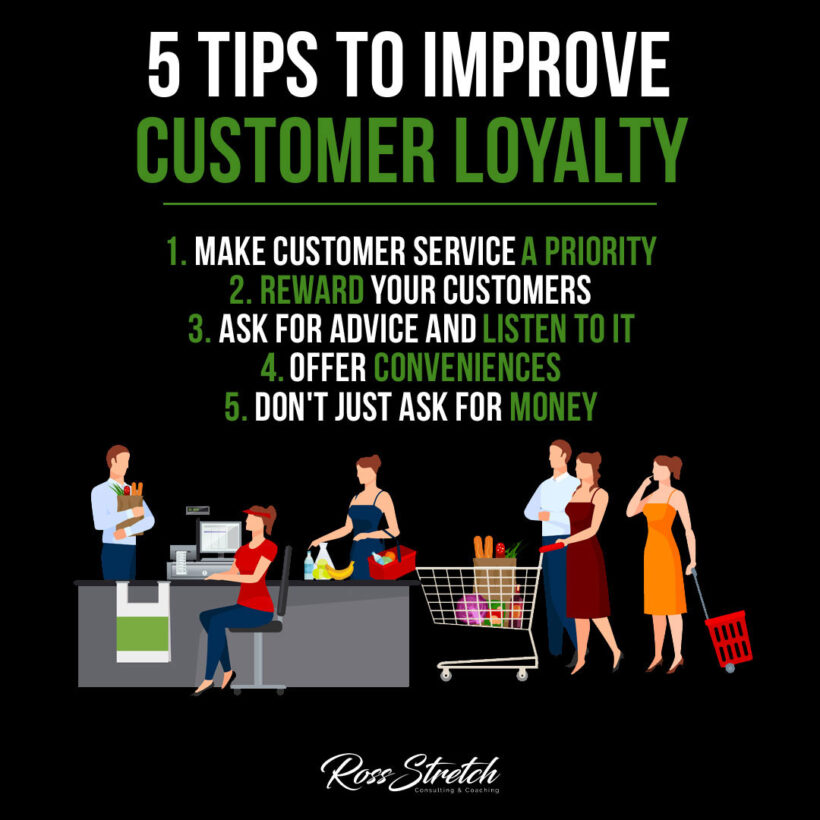
1. Deliver Service That Makes Customers Feel Like VIPs
Turn Every Interaction into a Loyalty-Building Moment
Customer service is the frontline of loyalty — and the highest-leverage place to invest your attention. A single exceptional interaction can convert a skeptic into a lifelong advocate, while a single poor experience can erase years of goodwill. Studies consistently show that 78% of customers have abandoned a purchase due to a bad service experience, making every touchpoint a meaningful opportunity to win or lose a customer for life.
- Actionable Tip: Establish clear response time standards — under two hours for email, under 30 minutes on social media — and track compliance weekly using a free tool like Freshdesk or HubSpot CRM.
- Why It Works: Speed and empathy signal to customers that they matter. When people feel heard and helped quickly, their emotional connection to your brand deepens — and emotional connection is the most durable predictor of long-term customer retention.
Pro Tip:
Empower frontline team members to resolve complaints without manager approval for refunds or replacements under a set dollar threshold — say, $50. Empowered employees fix problems faster, customers remember brands that resolve issues without friction, and the lifetime value of a retained customer far outweighs the cost of any single resolution.
2. Create a Loyalty Program With Rewards That Feel Real
Give Customers a Concrete Incentive to Choose You Again and Again
Loyalty programs are among the most proven customer retention tools available — but only when designed thoughtfully. A points system that takes 18 months to redeem a $5 reward is worse than no program at all; it signals that you’re not actually invested in recognizing loyalty. The key is structuring rewards so customers experience a meaningful win within their first few interactions.
- Actionable Tip: Launch a tiered program where new members earn a tangible reward — 10% off their next purchase, a free product add-on, or exclusive early access — within their first 30 days of joining.
- Why It Works: Early rewards trigger a behavioral habit loop. Once customers accumulate progress toward a goal, sunk-cost psychology engages: they are significantly more likely to continue purchasing in order to protect the status and benefits they’ve already earned.
Pro Tip:
Add a referral bonus to your loyalty structure. When loyal customers bring in new ones, you effectively double your return: you reward your best advocate while acquiring a pre-qualified, high-intent lead. Referral customers tend to have 16–25% higher lifetime value than those acquired through paid advertising — making this one of the most cost-efficient growth strategies available to small businesses.
3. Actively Collect Feedback — Then Close the Loop
Make Customers Feel Like Co-Creators, Not Just Consumers
Customers don’t expect perfection — they expect to be heard. Brands that collect feedback and demonstrably act on it build a depth of trust that no marketing campaign can manufacture. The critical mistake most businesses make is gathering feedback and never communicating what changed as a result, which signals that the input was never taken seriously in the first place.
- Actionable Tip: After every purchase or service interaction, send a concise three-question survey via email or SMS. When you implement a change based on customer responses, publish a “You said it — we did it” update in your newsletter or social media to connect the feedback directly to the visible outcome.
- Why It Works: Closing the feedback loop converts passive customers into invested stakeholders. People support what they help shape — and brands that invite customers into their improvement process create a sense of co-ownership that larger competitors cannot replicate.
Pro Tip:
Identify your top 10% of customers by purchase frequency and invite them into a private advisory group. Quarterly virtual check-ins with these power users generate high-quality product and service insights while making those customers feel genuinely recognized as the VIPs they are. People who advise a company rarely leave it.
4. Remove Friction from Every Stage of the Customer Journey
Convenience Is a Competitive Advantage You Can Engineer Today
Friction kills loyalty faster than almost any other factor. A complicated checkout process, a hard-to-reach support team, or a punishing return policy sends customers directly to competitors — and they rarely tell you why they left. In an era where convenience is the baseline expectation, any unnecessary difficulty in doing business with you is a loyalty liability you cannot afford to carry.
- Actionable Tip: Map your complete customer journey from first touchpoint to post-purchase follow-up. Identify the three biggest friction points — where customers drop off, complain, or require the most support — and commit to eliminating or simplifying each one within the next 30 days.
- Why It Works: Research from Gartner shows that Customer Effort Score (CES) — a measure of how easy it is to interact with your business — is a stronger predictor of long-term loyalty than customer satisfaction scores. The less effort a customer has to exert, the higher their retention rate.
Pro Tip:
Build proactive communication checkpoints into every stage of the customer journey. Order confirmations, shipping notifications, appointment reminders, and post-purchase check-ins reduce customer anxiety, cut inbound support volume, and consistently reinforce that your business is organized, reliable, and genuinely attentive — all signals that build loyalty before problems even arise.
5. Build a Community, Not Just a Customer Base
The Most Durable Loyalty Is Identity-Based
The most powerful form of customer loyalty is when your brand becomes part of someone’s identity. When customers see themselves as members of a community your brand has built — not just entries in a CRM — switching to a competitor feels like leaving a tribe. This is the loyalty model behind Peloton, Harley-Davidson, and Apple, and it is far more achievable for small and mid-sized businesses than most realize.
- Actionable Tip: Create a dedicated community space — a Facebook Group, Discord server, or members-only forum — where customers connect with each other, share results, and access content or offers unavailable to the general public.
- Why It Works: Community creates belonging and social proof simultaneously. Customers who actively participate in a brand’s community purchase more frequently, refer at higher rates, and churn at significantly lower rates than those who engage only transactionally.
Pro Tip:
Spotlight real customers in your content regularly — success stories, user-generated photos, milestone celebrations. Recognition is a powerful reward that costs almost nothing to provide and delivers outsized loyalty returns. When a customer is publicly celebrated by a brand they already love, that emotional connection deepens in ways that discounts and promotional emails simply cannot match.
Build Loyalty One Interaction at a Time
Customer loyalty is not built in a single campaign — it is earned through hundreds of small, consistent actions that communicate one message: your customers matter. Implement even two or three of these strategies with genuine commitment and you will see measurable improvements in retention, referrals, and revenue. The businesses that win long-term are not always those with the lowest prices or the biggest ad budgets — they are the ones that make every customer feel valued, every single time.
Resources
- HubSpot: The Ultimate Guide to Customer Loyalty — Comprehensive strategies for building loyalty at every stage of the customer lifecycle.
- Harvard Business Review: The Value of Keeping the Right Customers — Research-backed analysis of the financial impact of customer retention vs. acquisition.
- Forbes Advisor: How to Build a Customer Loyalty Program — Practical frameworks for designing and launching loyalty programs that deliver real results.
- Zendesk: What Is Customer Loyalty and How to Build It — Data-driven insights connecting service quality directly to customer retention rates.

 Ross Stretch