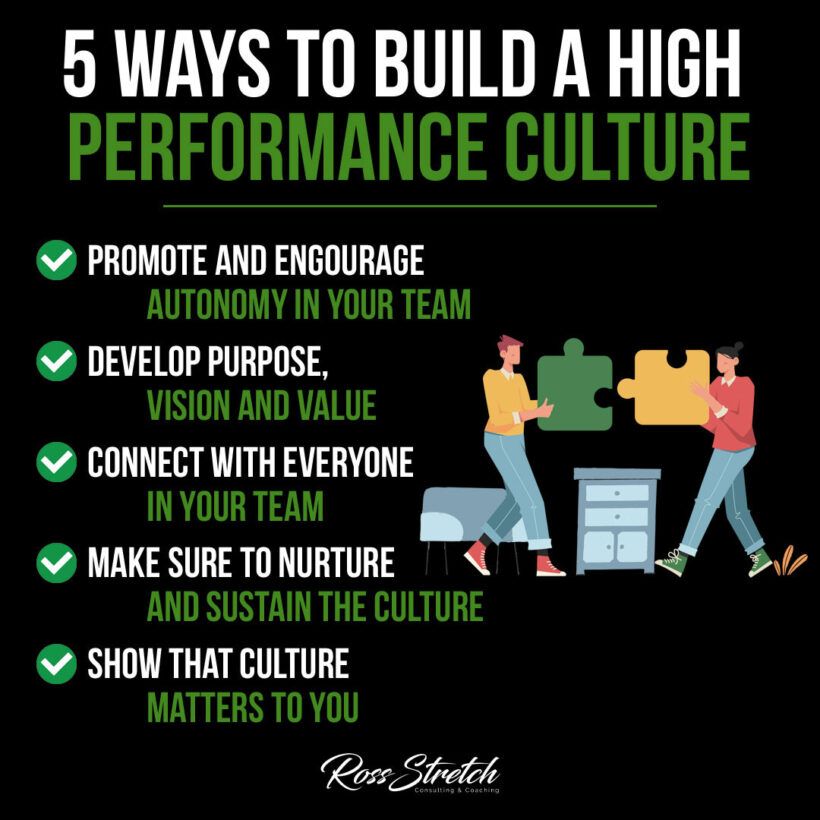

High-performance culture isn’t a perk package or a ping-pong table — it’s the invisible architecture that determines whether your team delivers extraordinary results or consistently falls short of its potential. As Peter Drucker famously observed, culture eats strategy for breakfast, and the research backs it up: organizations with strong cultures see significantly higher employee engagement, lower turnover, and measurably better business outcomes. Here are five concrete ways to build the kind of high-performance culture that attracts top talent, retains your best people, and drives results that compound over time.
1. Encourage Autonomy in Your Team
Trust Is the Foundation Every High-Performing Team Is Built On
Micromanagement is a culture killer — full stop. When people feel constantly watched, second-guessed, and over-directed, they stop thinking creatively and start playing it safe. Autonomy — giving your team members genuine ownership over how they accomplish their work — unlocks the discretionary effort that separates good teams from exceptional ones. That’s the extra energy people bring when they actually care about what they’re building and trust their own judgment to build it.
- Actionable Tip: Identify three tasks or projects you currently oversee closely. This week, delegate full ownership of one to a capable team member. Define the outcome clearly, set a clear deadline, and then step back completely. Schedule one check-in at the midpoint — not daily status updates. Repeat for the other two tasks over the following month and observe the shift in energy and output quality.
- Why It Works: Research from Gallup consistently shows that employees who feel empowered to make decisions are more engaged, more productive, and significantly more likely to stay with the organization. Autonomy activates intrinsic motivation — people work hard not because they’re required to, but because they want to see their own judgment succeed. That internal drive is far more sustainable than any external reward system you can build.
Pro Tip:
The key to delegating autonomy without losing accountability is defining outcomes, not processes. Tell your team member “we need 20 qualified leads by the end of the month” rather than “make 50 calls per day.” The outcome is yours to set; the method is entirely theirs to own. This distinction transforms delegation from a management task into a genuine act of trust that motivates far beyond what instruction ever could.
2. Define Purpose and Vision
Give Your Team a Reason That Goes Far Beyond the Paycheck
People don’t burn out because they work too hard. They burn out because they can’t see why their work matters. A clearly articulated purpose — one that connects daily tasks to a meaningful outcome — is the single most powerful long-term motivator available to any leader. Without it, even highly talented people coast, doing what’s required but never bringing what they’re truly capable of delivering.
- Actionable Tip: Schedule a 60-minute team session this month focused exclusively on purpose. Ask one foundational question: “What problem do we exist to solve, and for whom?” Don’t settle for generic corporate mission-statement language — push until you arrive at something specific and emotionally resonant. Document it, make it visible in your team’s shared workspace, and reference it deliberately in every team meeting going forward.
- Why It Works: McKinsey research found that employees who report living their purpose at work are four times more engaged and five times more likely to stay with the organization. Purpose converts effort into meaning — and meaning is what separates teams that push through difficult stretches from teams that fracture when things get hard. It’s the difference between people who work for you and people who genuinely work with you.
Pro Tip:
Connect individual roles to the larger purpose explicitly and personally. Every team member should be able to complete this sentence without hesitation: “What I do contributes to [X outcome] because [specific reason].” If they can’t, you haven’t connected them to the purpose deeply enough. Address it in your next one-on-one — it takes ten minutes and the motivational impact can compound for years.
3. Connect with Each Team Member
Leadership Is a Relationship First and a Job Title Second
The best cultures in the world are built on genuine human connection. When people feel seen as individuals — not just as contributors to a workflow or line items on a budget — they bring far more of themselves to work. This isn’t about becoming friends with your team; it’s about demonstrating that you understand them as people, care about their growth, and are genuinely invested in their success beyond their current role description.
- Actionable Tip: Schedule a 20-minute one-on-one with every team member this week. Arrive with three questions, not a task list: “What’s going well that I should know about?” “What’s getting in your way right now?” “What would make your work more meaningful or effective?” Write down their answers and follow up on at least one specific thing from each conversation before your next meeting with that person.
- Why It Works: Research in organizational psychology consistently shows that employees who feel their manager genuinely cares about them perform at measurably higher levels and demonstrate stronger commitment to the team’s goals. Connection creates psychological safety — the environment where people take calculated risks, share honest feedback, and bring creative ideas without fear of embarrassment or punishment. Psychological safety is the precondition for every high-performance behavior you actually want from your team.
Pro Tip:
Guard your one-on-ones fiercely against becoming status update meetings — those belong in team stand-ups. Reserve this time for the human layer of leadership: where is this person in their career? What’s draining their energy right now? What are they proud of that hasn’t been recognized publicly? The moment your one-on-ones feel like informal performance reviews, they stop being effective — and you lose the trust that makes the entire relationship work.
4. Celebrate Success and Give Feedback
Recognize Wins Fast, and Course-Correct Even Faster
Recognition is one of the most dramatically underused tools in a leader’s toolkit. Gallup research consistently finds that a significant portion of employees have not received meaningful recognition for good work in the past week — a staggering waste of a free, immediately available motivational resource. Consistent, specific recognition reinforces the behaviors that drive high performance, while timely feedback ensures small problems get addressed before they compound into serious, costly ones.
- Actionable Tip: Introduce a weekly “wins” practice in your team meeting — spend the first five minutes with each person calling out one achievement from the past week, however small. Separately, commit to delivering at least one piece of specific, behavioral feedback to a team member every single week. “Great job” is not feedback. “The way you de-escalated that client conversation by acknowledging their frustration before offering a solution was exactly the skill this team needs more of” — that is feedback that actually shapes future behavior.
- Why It Works: Specific positive recognition activates the brain’s reward system, neurologically reinforcing the behavior that earned it and making repetition more likely. Prompt, specific corrective feedback changes future behavior far more effectively than infrequent formal performance reviews. Together, they create a culture of continuous improvement where team members have clear visibility into what excellent performance looks like and genuine motivation to deliver it consistently.
Pro Tip:
Make peer recognition as structurally easy as manager recognition. Set up a simple, low-friction channel — a dedicated Slack thread, a physical whiteboard, a shared team document — where team members can publicly call out each other’s contributions. Peer-to-peer recognition is typically more frequent, more specific, and often more meaningful to the recipient than recognition that flows exclusively downward from management.
5. Show That Culture Matters to You
Culture Is Set by What Leaders Do in Hard Moments, Not What They Say in Meetings
Every leader claims to value culture. High-performance leaders demonstrate it — through their calendar, their behavior when things go wrong, and the standards they hold themselves to before holding anyone else accountable. Culture is contagious and it flows relentlessly from the top. Whatever you consistently model, your team will inevitably replicate — including the shortcuts you take when you’re under pressure and assume no one is watching.
- Actionable Tip: Audit your calendar from last week with complete honesty. How much of your leadership time was invested in activities that directly reinforce the culture you say you want — developing people, having difficult conversations before they fester, removing obstacles for your team, modeling the values you articulate in all-hands meetings? If the answer is “not enough,” start small: protect one two-hour block each week exclusively for culture-building activities and treat it as non-negotiable as any client commitment.
- Why It Works: Team members observe their leaders with forensic attention. They notice whether you take accountability when a project fails or deflect blame onto circumstances. They watch how you treat junior team members when you’re stressed and short on time. They register whether your stated values and your actual decisions consistently align. When leaders model the culture they want to build, it creates a self-reinforcing feedback loop — because people mirror the behavior of those they respect, and that mirroring gradually becomes the team’s new cultural baseline.
Pro Tip:
The most defining culture moments don’t happen during celebrations — they happen during crises. How you respond when a major project fails, when a key team member makes a costly mistake, or when a genuinely difficult decision must be made tells your team more about your real values than any mission statement ever will. Prepare for those moments intentionally by deciding in advance who you intend to be when things go wrong, so the answer is already clear when the pressure is highest.
Conclusion
High-performance culture is not a destination you arrive at — it’s a daily practice built from thousands of small, deliberate leadership choices made consistently over time. Grant your team genuine autonomy, anchor everyone to a compelling and specific purpose, invest in real human connection, build recognition and feedback into your operating rhythm, and model the culture you want to see before expecting it from anyone else. Execute these five practices with consistency, and you’ll build a team that doesn’t just perform — it compounds its own excellence.
Resources

 Ross Stretch