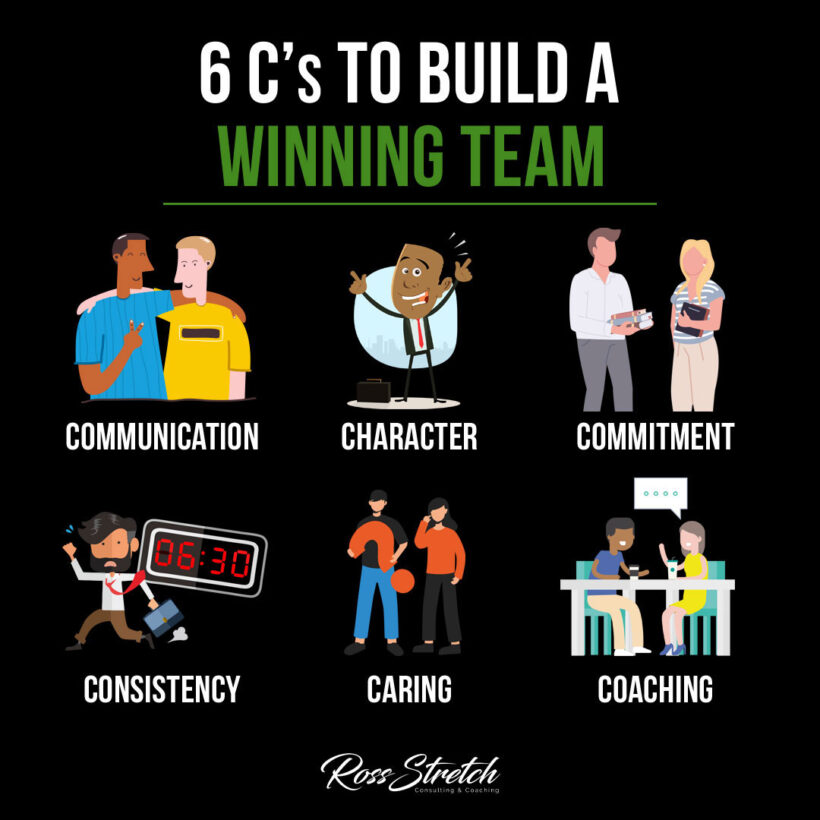

Building a team that consistently performs at a high level takes more than hiring talented individuals. The real work is creating an environment where people collaborate effectively, hold each other accountable, and show up fully invested in shared goals. The six C’s of team-building — Communication, Character, Commitment, Consistency, Caring, and Coaching — form a practical framework for any leader serious about developing a high-performance culture. Whether you’re managing a team of three or thirty, these principles apply directly to how you lead every day and the team dynamics you create.
1. Communication
Clarity Eliminates Confusion and Builds Trust
Poor communication is one of the leading causes of team dysfunction. When people don’t understand their roles, don’t know the goals, or feel shut out from important conversations, they disengage. Effective communication isn’t about talking more — it’s about creating consistent channels where information flows clearly in both directions. Team members need to feel safe sharing ideas, raising concerns, and giving feedback without fear of judgment. Leaders who communicate clearly and listen actively build teams where people feel respected and informed, which directly translates into better work and fewer costly misunderstandings.
- Actionable Tip: Establish a regular team meeting cadence — weekly check-ins for updates and a monthly deeper conversation about goals, challenges, and priorities.
- Why It Works: Structured communication removes ambiguity. When everyone knows what’s happening and why, they can focus their energy on execution rather than guessing.
Pro Tip: Over-Communicate During Change
During periods of uncertainty or transition, silence creates anxiety. When your team doesn’t have information, they fill the gap with assumptions — usually the worst-case version. Communicate more than you think is necessary during change. Even saying “we don’t know yet, but here’s what we do know” is far better than going quiet.
2. Character
Integrity Is the Foundation Everything Else Rests On
A team’s culture is shaped by the character of the people in it — and most significantly by the character of its leader. Character means honesty, integrity, and reliability. When team members treat each other with respect and follow through on their commitments, trust develops naturally. Without that trust, even the most skilled team will underperform because energy gets spent managing dynamics rather than achieving results. Character-driven teams hold themselves to a standard that goes beyond what’s being measured — they do the right thing even when no one is watching.
- Actionable Tip: Set explicit behavioral standards for your team and model them yourself. Address integrity issues directly and promptly — letting poor behavior slide signals that it’s acceptable.
- Why It Works: Clear standards create psychological safety. When everyone knows the rules and they’re applied consistently, people feel secure and can focus on the work.
Pro Tip: Hire for Character, Train for Skill
Technical skills can be taught. Integrity and reliability cannot be easily installed in someone who doesn’t already have them. When you’re building a team, weight character traits at least as heavily as credentials. A highly skilled person with poor character is a liability. A moderately skilled person with excellent character is an asset you can develop.
3. Commitment
Shared Purpose Is What Keeps Teams Together When Things Get Hard
Commitment means sticking with the team’s goals even when the path is difficult. It’s easy to be all-in when things are going well. The test of real commitment is what happens when results are slow, obstacles mount, and the original plan isn’t working. Committed team members don’t quit — they adapt, problem-solve, and support each other through setbacks. As a leader, you build commitment by ensuring your team understands not just what they’re working toward, but why it matters. People commit to meaning, not just tasks.
- Actionable Tip: Revisit your team’s vision and goals at least once a quarter. Make sure every team member can articulate how their specific role connects to the broader mission.
- Why It Works: When people understand the why behind their work, they’re intrinsically motivated to see it through. Purpose-driven teams are significantly more resilient under pressure.
Pro Tip: Celebrate Effort, Not Just Outcomes
If you only recognize results, people learn to avoid risk. If you also celebrate the commitment shown during difficult stretches — even when the outcome wasn’t perfect — you build a team that’s willing to push through challenges rather than retreat at the first sign of difficulty.
4. Consistency
Reliability Is What Turns Good Intentions Into Real Results
Consistency is where commitment meets execution. It means showing up at the same quality level every day, not just when it’s convenient or when you’re being evaluated. Consistent team members can be trusted to deliver — which builds the kind of internal credibility that gets people given more responsibility and turned to in a crisis. As a leader, your own consistency matters most. How you respond to mistakes, how you run meetings, how you give feedback — all of it sends a signal about what this team values and how it operates.
- Actionable Tip: Create recurring rituals that anchor your team’s week — a Monday priorities sync, a Friday wins-and-lessons reflection, or a monthly performance review. Routine creates rhythm.
- Why It Works: Predictable structure reduces decision fatigue and creates the stability in which great work gets done. Teams with consistent routines outperform chaotic ones even when individual talent is comparable.
Pro Tip: Apply Standards Equally
Nothing destroys consistency faster than applying rules selectively. If your best performer gets away with behavior you’d correct in anyone else, the whole team notices and the standard collapses. Consistent expectations applied equally are the bedrock of a fair, high-trust team culture.
5. Caring
People Perform Best When They Feel Genuinely Valued
Caring means looking out for each other as human beings, not just as role-fillers. When team members know that their leader and colleagues have their back — not just professionally but personally — they show up with a level of effort and loyalty that can’t be manufactured. Psychological research on workplace engagement consistently shows that feeling cared for is one of the strongest predictors of performance, retention, and discretionary effort. Teams where people genuinely support each other also navigate conflict more constructively, because they default to charitable interpretation rather than defensiveness.
- Actionable Tip: Create intentional space for team members to connect as people — a brief personal check-in at the start of meetings, a team lunch, or a simple one-on-one “how are you doing, really?” conversation.
- Why It Works: When people feel seen and valued as individuals, their engagement and loyalty increase significantly. Caring creates the emotional safety that enables honest communication and creative risk-taking.
Pro Tip: Notice the Small Stuff
Caring doesn’t require grand gestures. Remembering a team member’s family situation, following up after a difficult project, or noticing when someone’s energy seems off — these small acts of attention are what make people feel genuinely cared for, not just managed.
6. Coaching
The Best Leaders Develop People, Not Just Results
Coaching is what transforms a group of capable individuals into a team that continuously improves. A coaching mindset means seeing your role not just as achieving targets, but as developing the people who achieve those targets. This involves giving honest, constructive feedback regularly — not just at annual reviews — identifying each team member’s growth edges, and investing in their development even when there’s no immediate business need driving it. Leaders who coach build teams with deep institutional knowledge, growing capability, and strong loyalty, because people know their leader is invested in their success, not just their output.
- Actionable Tip: Have a brief monthly one-on-one with each team member focused specifically on their development — not project updates, but their skills, goals, and growth. Ask: “What do you want to get better at, and how can I help?”
- Why It Works: Regular development conversations signal that you care about where this person is going, not just what they’re delivering today. That investment builds loyalty and accelerates skill growth.
Pro Tip: Coach Through Questions, Not Answers
When a team member brings you a problem, resist the urge to immediately solve it for them. Instead, ask: “What have you tried? What do you think the options are? What would you do if you had to decide right now?” This approach builds their problem-solving capacity and confidence while still keeping you engaged as a guide.
Conclusion
Communication, Character, Commitment, Consistency, Caring, and Coaching aren’t abstract ideals — they’re daily leadership practices. Apply even two or three of these consistently and you’ll notice a measurable shift in your team’s performance, morale, and cohesion. Apply all six and you’ll build the kind of team that accomplishes things competitors can’t easily replicate, because the advantage lives in the culture, not the strategy document.
Resources
- Harvard Business Review — What Great Managers Do Daily
- Gallup — How Employee Engagement Drives Growth
- Forbes — Six Characteristics of High-Performing Teams
- MindTools — Building an Effective Team

 Ross Stretch