In today’s digital landscape, sustained focus has become one of the most valuable and most scarce cognitive resources a person can possess. Notifications, social media, and an always-on work culture have created an environment that is fundamentally hostile to deep concentration. Yet focus remains the critical ingredient in everything that matters — creative work, learning, building a business, advancing a career. These six strategies are grounded in neuroscience and practical experience, and each one can be implemented immediately without expensive tools or radical lifestyle overhauls.
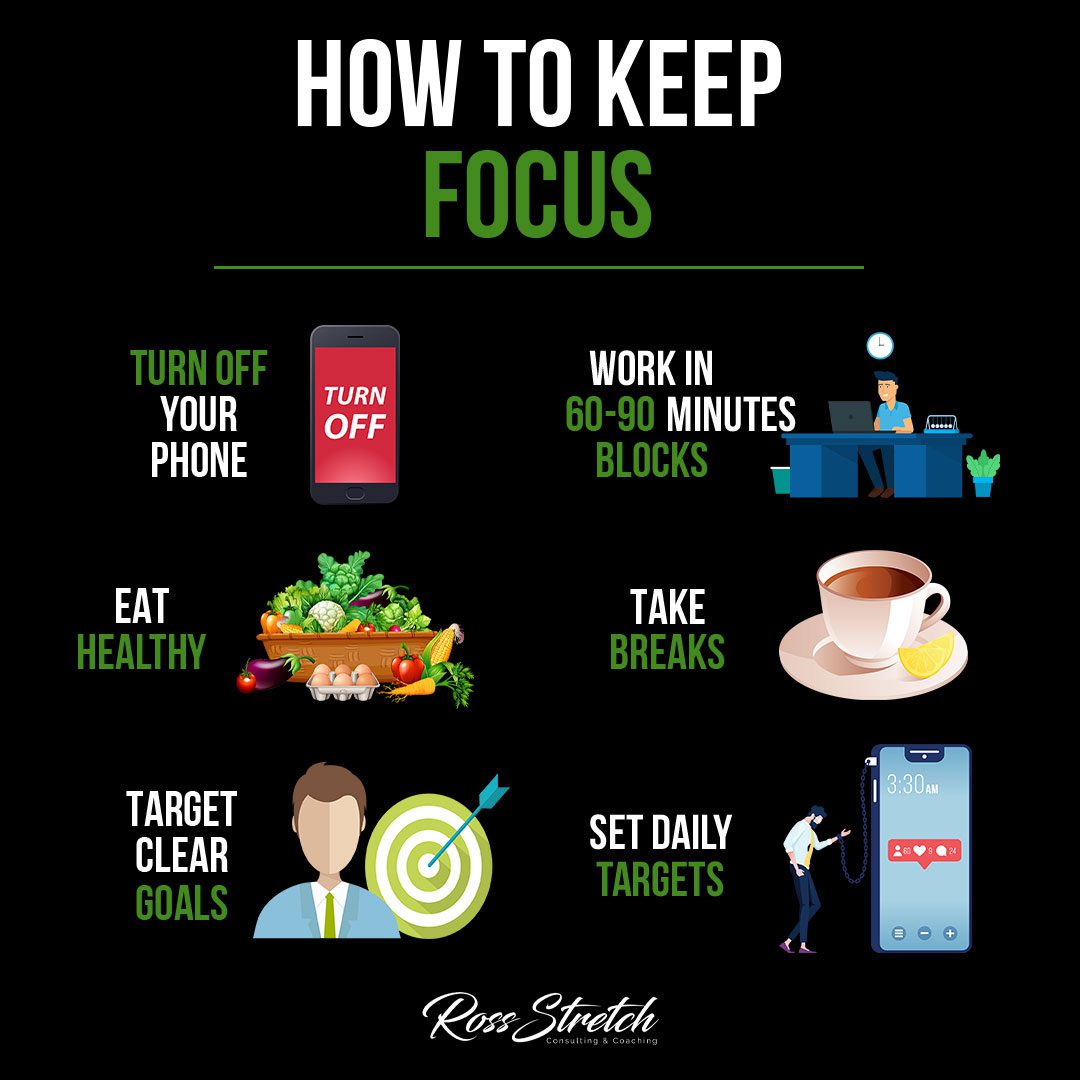
1. Disconnect to Reconnect: Power Off Your Phone
The Device in Your Pocket Is the Biggest Threat to Your Concentration
The average person checks their smartphone more than 90 times per day. Every check — even one that lasts five seconds — fractures attention and requires several minutes of recovery before deep focus is restored. Research from the University of California, Irvine found that it takes an average of 23 minutes to return to a task after an interruption. A handful of phone checks during a two-hour work session can effectively eliminate most of your productive time without you realizing it.
- Actionable Tip: Schedule two or three specific windows per day for checking your phone, and keep it out of sight — ideally in another room — during focused work sessions.
- Why It Works: The mere presence of a smartphone on your desk reduces available cognitive capacity even when it’s face-down and silent, according to research from the University of Texas. Out of sight genuinely means out of mind.
Pro Tip:
Use your phone’s built-in Screen Time or Digital Wellbeing features to set hard limits on app usage during your peak work hours. Apps like Freedom or Cold Turkey can block specific apps and websites on your desktop as well, removing the option entirely rather than relying on willpower in the moment.
2. Work in 60-90 Minute Focused Blocks
Align Your Schedule with Your Brain’s Natural Rhythms
The human body operates on ultradian rhythms — cycles of high and low alertness that repeat roughly every 90-120 minutes throughout the day. During the high phase of each cycle, focus and cognitive performance are at their peak. As the cycle winds down, the brain begins signaling fatigue, and pushing through it produces sharply diminishing returns. Working in structured 60-90 minute blocks, followed by a genuine break, aligns your effort with these natural cycles instead of fighting against them.
- Actionable Tip: Set a timer for 60 or 90 minutes, commit fully to a single task for that block, and when the timer goes off, stop and take a 10-15 minute break before beginning the next one.
- Why It Works: Forcing yourself to work past your natural focus window increases error rates, reduces creative thinking, and depletes the mental energy needed for good decisions and complex problem-solving later in the day.
Pro Tip:
For shorter or more varied tasks, the Pomodoro Technique — 25 minutes of work followed by a 5-minute break — can be an effective entry point if 90-minute blocks feel demanding at first. The structure itself matters more than the specific interval. Experiment to find the block length that matches your current capacity, and gradually extend it as your focus improves.
3. Fuel Your Brain with the Right Foods
Nutrition Has a Direct and Measurable Effect on Concentration
The brain accounts for roughly 20 percent of the body’s total energy consumption, and the quality of that energy matters. Diets high in refined sugar and processed carbohydrates produce sharp energy spikes followed by crashes that leave focus unreliable. Foods rich in omega-3 fatty acids, antioxidants, B vitamins, and complex carbohydrates provide the steady, sustained energy that extended concentration requires throughout a full workday.
- Actionable Tip: Add fatty fish (salmon, sardines), leafy greens, blueberries, walnuts, and eggs to your regular diet. Replace processed snacks with whole foods that release energy gradually rather than producing sharp spikes and crashes.
- Why It Works: Omega-3 fatty acids support the structural integrity of brain cells. Antioxidants reduce oxidative stress that impairs cognitive function. Complex carbohydrates maintain stable blood sugar, which is directly linked to sustained attentional capacity.
Pro Tip:
Avoid large meals immediately before your most important focus sessions. Digestion draws blood and energy toward the gut and away from the brain, producing the heaviness that makes sustained concentration difficult. A small, protein-rich snack is generally more effective than a heavy lunch if your most productive window falls in the early afternoon.
4. Take Strategic Breaks Before You Need Them
Recovery Is an Active Part of High Performance, Not a Reward for Finishing
Most people take breaks reactively — when they’ve pushed past the point of effective concentration and feel exhausted or scattered. By that point, the cognitive cost has already been paid. Strategic rest means scheduling breaks before fatigue sets in, keeping the brain operating near peak capacity throughout the workday. Brief periods of genuine rest allow the brain’s default mode network to consolidate learning and restore the attentional resources depleted during focused work.
- Actionable Tip: Take a 10-15 minute break at the end of each work block. Step away from your desk, go outside if possible, and avoid checking email or scrolling social media during the break — that is not cognitive rest.
- Why It Works: The brain’s default mode network, which activates during genuine rest, is involved in memory consolidation, creative insight, and problem-solving — all things that directly support better output in the following focus block.
Pro Tip:
A short nap of 10-20 minutes in the early afternoon has strong scientific support as a performance enhancer. NASA research found that a 26-minute nap improved pilot performance by 34 percent and alertness by 100 percent. If your schedule allows it, a brief nap between focus blocks delivers one of the highest returns of any single habit available.
5. Set Specific Goals Before Every Work Session
A Defined Target Sharpens Attention Before You Begin
One of the most common focus killers is sitting down to work without a clear sense of what you’re trying to accomplish. When you don’t know exactly what you’re working toward, the brain doesn’t know where to direct attention, and distractions become far more appealing. A clearly defined goal acts as a cognitive anchor, filtering out irrelevant information and directing mental resources toward the specific task at hand — a principle that applies as much to daily work sessions as it does to long-term goal pursuit.
- Actionable Tip: Before each work session, write down the single most important outcome you want to achieve. Make it specific enough that you’ll know without ambiguity whether you’ve accomplished it by the end of the session.
- Why It Works: Specific goals activate the reticular activating system — the brain’s attention filter — which then prioritizes information relevant to the goal and deprioritizes everything else. Vague intentions produce vague attention and unfocused effort.
Pro Tip:
Use the SMART framework (Specific, Measurable, Achievable, Relevant, Time-bound) to define both long-term objectives and daily session targets. For focus purposes, the most critical element is specificity. “Work on the report” produces diffuse effort. “Draft the executive summary section of the Q3 report” produces focused execution with a clear endpoint.
6. Break Your Day into Concrete Daily Milestones
Small Wins Build the Momentum That Sustains Concentration All Day
Large projects feel overwhelming, and overwhelming tasks trigger avoidance. When the brain perceives a task as too large to complete in a reasonable time, it tends to procrastinate or gravitate toward lower-stakes activities that provide quicker feedback. Breaking the workday into a series of smaller, achievable milestones solves this problem by making progress visible and immediately rewarding. Each completed milestone reinforces continued effort and makes the next task feel more approachable rather than daunting.
- Actionable Tip: Each morning, identify two to four specific milestones you want to reach during the day. These should be concrete deliverables rather than activities — “complete the first draft of section 2” rather than “work on section 2 for an hour.”
- Why It Works: Progress tracking engages the brain’s reward system, sustaining motivation and focus across a full workday. Visible progress also builds confidence, which directly reduces the anxiety that drives distraction and procrastination.
Pro Tip:
Keep a simple daily done list alongside your to-do list. Writing down what you’ve completed — not just what remains — provides a concrete record of progress that counteracts the common feeling of not having accomplished enough, particularly on days that felt fragmented or difficult. That list becomes evidence-based motivation rather than vague optimism.
Conclusion
Focus is a trainable skill, not a fixed trait. The people who maintain remarkable concentration in a distracted world haven’t been gifted with superior willpower — they’ve built habits and systems that reduce the friction of deep work and remove distraction triggers before they have a chance to disrupt attention. Start with one or two of these strategies, implement them seriously for two to four weeks, and measure the difference before adding more. The compounding effect of layering these habits over time produces results that would feel unrecognizable compared to where you started.
Resources


 Ross Stretch