
Turning dreams into reality is one of the most discussed — and least understood — topics in personal development. The gap between aspiration and execution isn’t usually a lack of motivation or talent. It’s a lack of the right systems, the right environment, and the right mental frameworks. These six tips aren’t motivational filler. Each one is grounded in research on goal achievement, behavioral psychology, and the habits of people who consistently turn vision into results.
1. Visualize Yourself Reaching Your Dream
Mental Rehearsal Primes Your Brain for Real Results
Visualization is not wishful thinking — it’s a performance tool used by Olympic athletes, elite surgeons, and top-performing executives. Research from the Cleveland Clinic found that people who mentally rehearsed physical movements showed nearly the same strength gains as those who physically practiced them. Your brain doesn’t perfectly distinguish between a vividly imagined experience and a real one, which means deliberate mental rehearsal literally primes neural pathways for execution.
- Actionable Tip: Spend five focused minutes each morning vividly imagining yourself completing one specific goal — not just achieving it, but the process: the actions you take, the obstacles you navigate, the exact moment you succeed.
- Why It Works: Process visualization (imagining the steps, not just the outcome) outperforms outcome visualization alone in research settings. Athletes who visualize their technique improve faster than those who only picture winning.
Pro Tip:
Pair visualization with a written description of your goal in the present tense — “I am delivering a confident presentation to 200 people” rather than “I want to.” This language pattern activates the brain’s reticular activating system, which filters your perception to notice relevant information and opportunities you would otherwise miss.
2. Get Organized
Break the Dream Down Until the Next Step Is Obvious
The reason most goals fail isn’t motivation — it’s ambiguity. “Launch a business” is not a plan; it’s a wish. Research on implementation intentions (the psychology of “if-then” planning) shows that people who specify exactly when, where, and how they will take action are two to three times more likely to follow through than those with vague goals. The more concrete your plan, the less willpower it requires to execute.
- Actionable Tip: Take your dream and work backward. What is the single next physical action that moves you toward it? Schedule that action on your calendar like a meeting you cannot cancel. Repeat every week.
- Why It Works: David Allen’s GTD (Getting Things Done) framework and a body of academic research agree: the brain cannot effectively “hold” open loops. Writing down the next concrete action frees cognitive bandwidth and reduces the anxiety that causes procrastination.
Pro Tip:
Use a weekly review ritual — 20 minutes every Sunday — to check progress against your goals, identify your three most important actions for the coming week, and remove anything from your list that no longer deserves your attention. This single habit separates consistent high performers from chronic starters who never finish.
3. Build a Support Network
Your Environment Determines Your Trajectory More Than Your Willpower
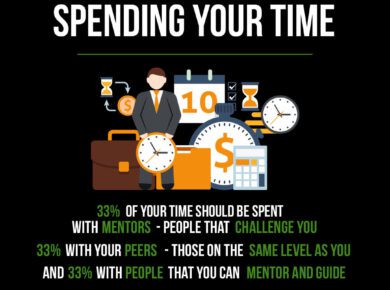
Jim Rohn’s often-quoted observation that “you are the average of the five people you spend the most time with” has genuine psychological backing. Nicholas Christakis and James Fowler’s landmark research at Harvard showed that behaviors, emotions, and even obesity spread through social networks like contagion. Who you spend time with doesn’t just influence your mood — it shapes your habits, your ambitions, and your sense of what’s possible.
- Actionable Tip: Deliberately seek out two types of people: those who are already doing what you want to do, and those who are a few years ahead of where you want to be. Both provide social proof that your goal is achievable and access to tacit knowledge you can’t find in books.
- Why It Works: Accountability partnerships increase goal completion rates by up to 65%, according to research from the Association for Talent Development. Simply telling someone your commitment raises that figure to 85% when paired with regular check-ins.
Pro Tip:
If your immediate social circle doesn’t include people working toward similar goals, find communities: masterminds, professional associations, online groups, or local meetups in your field. The right room changes everything. One conversation with the right person can compress years of trial-and-error into a single afternoon.
4. Ignore the “Haters”
Protect Your Signal-to-Noise Ratio
Not all negative feedback is equal. There is a critical difference between a mentor who challenges your assumptions because they want you to succeed, and a critic who discourages your ambitions because your pursuit of them makes them uncomfortable about their own choices. The former is valuable. The latter is noise — and treating it as signal is one of the most common ways ambitious people sabotage their own progress.
- Actionable Tip: Apply Brené Brown’s “Square Squad” filter: whose opinion actually matters to you? Write down no more than five names — people who are in the arena trying, who care about you, and who will tell you hard truths kindly. Their feedback counts. Everyone else is background noise.
- Why It Works: Research on social comparison shows that upward comparison (comparing yourself to people further ahead) is motivating, while downward commentary from critics activates threat responses that reduce creative thinking and risk tolerance — exactly the cognitive states you cannot afford when building something meaningful.
Pro Tip:
When criticism stings, ask: “Is this person in a position I want to be in?” If not, their opinion about whether you’ll succeed is data about their own limitations, not yours. File it accordingly and return to work.
5. Develop Self-Confidence
Confidence Is Built Through Evidence, Not Affirmations
Real self-confidence isn’t manufactured through positive self-talk. It’s the natural byproduct of accumulated evidence that you can handle challenges. Psychologist Albert Bandura’s concept of self-efficacy — your belief in your capacity to succeed at specific tasks — is the most reliable predictor of whether people attempt difficult goals and persist through obstacles. And self-efficacy is built through mastery experiences: small wins that compound into genuine belief in your capabilities.
- Actionable Tip: Keep a running “wins log” — a simple document or note where you record every meaningful thing you accomplish, no matter how small. Review it when you’re doubting yourself. The evidence is more powerful than any pep talk.
- Why It Works: Bandura’s research found that mastery experiences (successfully completing progressively harder challenges) produce more durable self-efficacy than social persuasion (being told you can do it) or emotional arousal (getting pumped up). The wins log is a record of your mastery experiences.
Pro Tip:
Deliberately take on stretch goals that are 10-15% beyond your current comfort zone. Not so far that failure is inevitable — but far enough that success requires real effort. Each success at this edge expands what you believe you’re capable of, and that belief is the engine of long-term achievement.
6. Transform Your Dream into Energy
Convert Inspiration into Daily Momentum
The emotional excitement of a new dream is a finite resource. If you rely on inspiration to drive action, you’ll work hard for two weeks and then stall when life gets in the way. The professionals who achieve their dreams are not more motivated than average — they’ve built systems that produce action regardless of how they feel on any given day. Motivation follows action far more reliably than action follows motivation.
- Actionable Tip: Establish a non-negotiable “minimum viable effort” for your goal — the smallest action you will take every single day, no matter what. Even on your worst days. For a writer, that might be 200 words. For a fitness goal, 10 minutes of movement. The streak itself becomes motivating.
- Why It Works: BJ Fogg’s research on behavior design at Stanford shows that tiny habits anchored to existing routines are far more durable than ambitious plans that require ideal conditions. Consistency beats intensity every time — a 30-minute daily effort for a year produces more than a 12-hour monthly effort ever will.
Pro Tip:
Connect your daily actions explicitly to your core values, not just your goals. Goals are destinations — they can feel distant and abstract. Values are present-tense motivators. If you value freedom, every hour of work on your business is an act of freedom-building right now. This reframe makes the work itself meaningful, not just the outcome it’s supposed to produce someday.
Conclusion
Turning dreams into reality isn’t a matter of luck, talent, or waiting for the perfect conditions. It’s a matter of applying the right systems consistently over time. Visualization primes your brain for action. Organization eliminates ambiguity. The right support network raises your floor. Filtering criticism protects your focus. Building evidence-based confidence makes bold moves feel achievable. And converting inspiration into daily habits ensures that progress happens even on the days when motivation doesn’t show up.
Every significant achievement — every business built, every career transformed, every skill mastered — started with someone deciding to take the first concrete step before they felt ready. Start with one of these six strategies today. Commit to it for 30 days before adding another. Small, consistent actions compound in ways that pure motivation never can.
Resources

 Ross Stretch