
A financial crisis does not schedule itself around your convenience. Job losses, medical emergencies, economic recessions, and unexpected major expenses arrive without warning — and the gap between people who recover in months versus those who spiral for years is almost always preparation made before the crisis hit. Building genuine financial resilience is not about fear; it is about control. These six concrete steps give ambitious professionals a practical framework to protect their financial health, reduce their vulnerability, and ensure that when life gets unpredictable, their financial foundation does not collapse with it. Start before you need to.
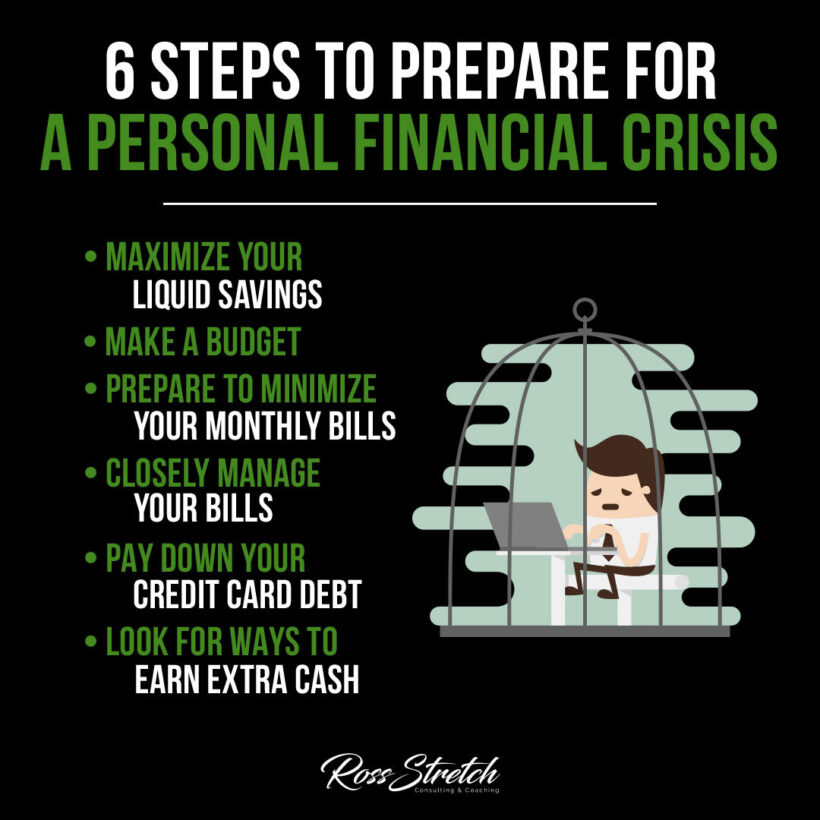
1. Maximize Your Liquid Savings
Your Emergency Fund Is Your Financial Immune System
Liquid savings are the first and most critical layer of financial crisis protection. Unlike investments, which can lose value exactly when you need to access them most, a cash emergency fund is available immediately and does not fluctuate with market conditions. Financial experts consistently recommend three to six months of living expenses for salaried employees and six to twelve months for self-employed professionals whose income is less predictable. If you do not have this buffer, building it is your highest-priority financial task right now.
- Actionable Tip: Open a dedicated high-yield savings account today — separate from your checking account so it is not mentally treated as spendable. Set up an automatic transfer of at least 10% of each paycheck to trigger on the day you are paid. If 10% is too aggressive, start with $50 per week. The habit matters more than the amount at the start.
- Why It Works: Automation removes the willpower required to save consistently. When savings transfer before you see the money in your spending account, you naturally adapt your lifestyle to what remains — a principle behavioral economists call “pay yourself first.” High-yield savings accounts at online banks currently paying 4–5% APY also mean your emergency fund is generating a return while it waits.
Pro Tip:
Keep your emergency fund at a different institution than your primary bank. The slight friction of transferring between banks is enough to prevent impulsive spending while still keeping the money accessible within one to two business days when you genuinely need it. Compare current top rates at Bankrate.com or NerdWallet before choosing where to open the account.
2. Build a Crisis-Ready Budget
Know Exactly What Your Minimum Monthly Survival Number Is
Most people budget for normal times — not for emergencies. A crisis-ready budget is different: it identifies the absolute minimum monthly spend required to keep your housing, utilities, food, and essential transportation secure. Knowing this number before a crisis hits means you can immediately calculate how long your emergency fund will last and which expenses can be eliminated without destabilizing your life. This clarity is what prevents panic from driving bad financial decisions under pressure.
- Actionable Tip: Open a spreadsheet right now and list every monthly expense in two columns — Essential (rent or mortgage, utilities, groceries, minimum debt payments, insurance) and Non-Essential (streaming services, dining out, gym memberships, subscriptions). Total each column. Your essential total is your crisis floor — this is the number your emergency fund must be able to cover each month.
- Why It Works: Clarity eliminates the cognitive paralysis that strikes during financial stress. When you already know your minimum monthly number, the decision-making burden during a crisis is dramatically reduced. Instead of scrambling to figure out what to cut, you are executing a plan you made in advance — and execution under stress is far easier than analysis under stress.
Pro Tip:
Review and update your crisis budget every six months. Fixed expenses shift — rent increases, insurance premiums change, debts get paid off and new ones are added. A budget built two years ago does not reflect your current financial reality. Set a recurring calendar reminder for January and July each year to run this 30-minute review before you need it.
3. Slash Your Monthly Fixed Costs Before You Have To
The Best Time to Cut Costs Is Before You Are Desperate
When a financial crisis hits, the first instinct is to cut costs — but negotiating from desperation is far less effective than negotiating from stability. The time to reduce your fixed monthly obligations is now, before any crisis arrives. Every dollar you eliminate from your monthly fixed costs today is a dollar that extends your financial runway and reduces your vulnerability to income disruption. Most households are paying for services they do not use and rates they never questioned.
- Actionable Tip: Spend 90 minutes this week auditing every recurring charge on your bank and credit card statements. Cancel anything unused. Then call your internet, insurance, and phone providers and ask directly for retention offers or competitor-match pricing. Most will negotiate if you ask. This exercise typically saves $100 to $300 per month for the average household with no lifestyle sacrifice required.
- Why It Works: Fixed costs are insidious because they require no conscious decision each month — they simply recur automatically. Most people have between three and eight subscriptions or services they have forgotten about or no longer value. Eliminating these is not a lifestyle cut; it is recovering money that has been silently draining from your account, often for months or years.
Pro Tip:
Use a bill management tool like Rocket Money or Trim to identify recurring charges and negotiate on your behalf. These tools surface subscriptions you have forgotten and, in some cases, will negotiate lower rates with service providers in exchange for a portion of the savings. Running this audit annually keeps bill creep in check even when your finances are healthy.
4. Pay Down High-Interest Debt Aggressively
Debt Is the Multiplier That Turns a Setback into a Spiral
High-interest debt — particularly credit cards carrying 20–29% APR — is the most dangerous financial vulnerability you can carry into a crisis. When income drops, minimum payments become crushing fixed obligations, and missed payments trigger fees, penalty rates, and credit score damage that limits your options exactly when you need them most. Eliminating or meaningfully reducing high-interest debt before a crisis hits is one of the highest-return financial moves available to you, guaranteed.
- Actionable Tip: List all your debts with their balances, minimum payments, and interest rates. Apply the debt avalanche method — put every extra dollar toward the highest-interest debt while making minimum payments on everything else. When that debt is paid off, roll its payment to the next highest-rate balance. If you have multiple cards, investigate balance transfer offers with 0% introductory APR to reduce the interest drain while you pay down the principal.
- Why It Works: Paying down a 24% APR credit card balance is the financial equivalent of earning a guaranteed 24% return — no investment matches that rate risk-free. More importantly, every dollar of high-interest debt eliminated reduces your monthly obligation, directly increasing your financial resilience and extending the runway your emergency fund provides during a crisis.
Pro Tip:
If you carry significant credit card balances, call your card issuers and request a hardship rate reduction before you are actually in hardship. Many issuers will reduce your rate by three to six percentage points for customers in good standing who ask proactively. This is a five-minute call that can save hundreds of dollars in interest annually — and most people never make it.
5. Manage Every Bill Like a Business
Missed Payments Are a Tax You Pay for Disorganization
Late fees, penalty interest rates, and the credit score damage from missed payments can add hundreds of dollars to your annual cost of living — and that damage compounds in a crisis, when lenders review your credit history before approving new lines of support. Treating your personal bill management with the same discipline a well-run small business applies to its accounts payable protects your financial options precisely when you need them most and keeps your credit score strong enough to work for you rather than against you.
- Actionable Tip: Set up automatic payments for every fixed essential bill — rent or mortgage, utilities, insurance, and minimum debt payments. For variable bills, set calendar alerts 10 days before the due date so you can review the amount and pay manually. This hybrid approach ensures you never miss a payment while still reviewing variable charges for accuracy.
- Why It Works: Decision fatigue is real. Every bill payment that requires a manual decision is an opportunity for delay. Automation eliminates late fees and the credit score damage that results from missed payments, while freeing your mental bandwidth for higher-stakes financial decisions. A strong credit score is also a crisis resilience tool — it determines both the availability and cost of emergency credit when you need it most.
Pro Tip:
If you anticipate financial difficulty, contact your creditors before you miss a payment — not after. Most lenders offer formal hardship programs with temporary payment reductions, deferred payments, or waived fees for customers who reach out proactively. Waiting until after a missed payment significantly reduces both your negotiating leverage and the programs available to you.
6. Develop Additional Income Streams
A Single Income Source Is a Single Point of Failure
The most financially vulnerable people are those whose entire income depends on one employer, one contract, or one business. Building even one or two modest supplementary income streams before a crisis arrives dramatically changes your financial resilience profile — and doing so now, while you have time and stability, is far less stressful than scrambling to earn under pressure. Additional income does not need to be large to be meaningful: a few hundred dollars per month can be the difference between depleting your emergency fund and preserving it intact.
- Actionable Tip: Identify one skill you already have that someone would pay for — writing, design, tutoring, bookkeeping, consulting in your professional field, or coaching. Create a profile on one platform this week: Upwork, Fiverr, or LinkedIn Services. Commit to two hours per week developing this stream. At $50 per hour for just four hours of monthly work, that is $200 per month or $2,400 per year in crisis buffer built from skills you already possess.
- Why It Works: Income diversification is the personal finance equivalent of portfolio diversification — it reduces the catastrophic impact of any single disruption. Even an income stream that feels small in normal times becomes psychologically and financially significant during a crisis. It also tends to grow with time, meaning the work you put in today may represent far more value within 12 to 24 months.
Pro Tip:
Consider income streams that generate semi-passive returns over time: a self-published guide or course in your area of expertise, a monetized newsletter, or a small rental income from an underused asset. These take longer to build but pay dividends in resilience for years without requiring your active time during a crisis when your energy is already stretched thin.
Conclusion
Financial resilience is not built in a crisis — it is built before one. The professionals who navigate financial disruptions with the least damage are almost universally those who treated preparation as a non-negotiable discipline during stable times. Start with the step most urgent to your current situation, build momentum, and layer the rest over the next six months. The peace of mind that comes from knowing you are genuinely prepared is itself a form of wealth — and the confidence it creates extends well beyond your bank account.
Resources


 Ross Stretch