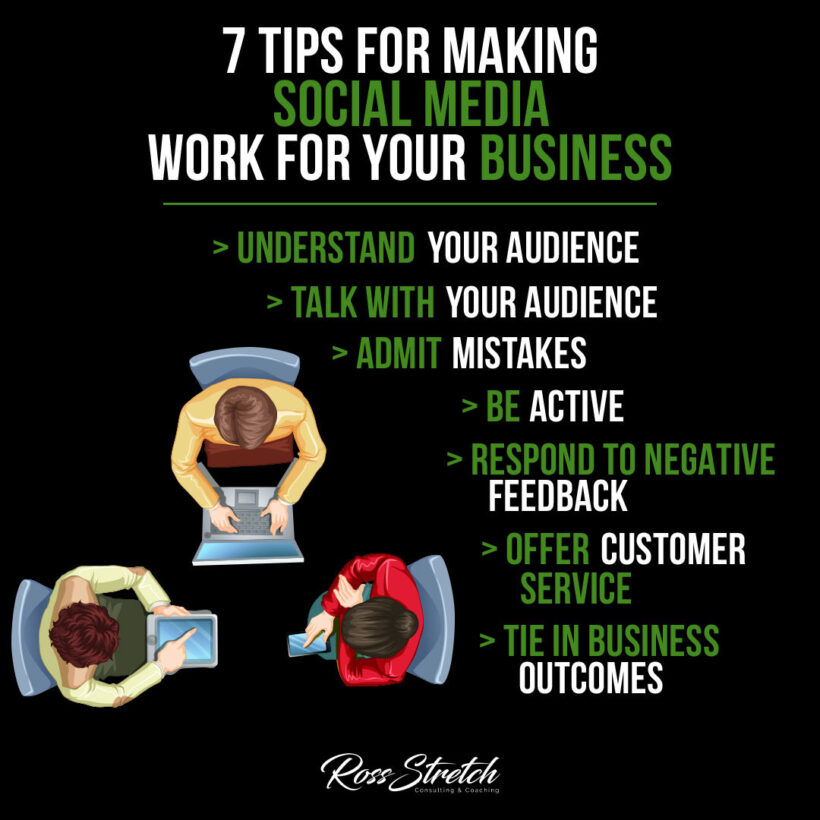

Social media is one of the most powerful tools available to modern businesses — and one of the most misused. Too many businesses post randomly, chase vanity metrics, and burn hours without seeing real returns. The difference between social media that grows your business and social media that drains your time comes down to strategy. These seven tips will help you build a social presence that actually works.
1. Define Your Goals Before You Post Anything
Strategy Before Content — Always
Posting without a clear goal is the number one social media mistake businesses make. Are you trying to build brand awareness, drive website traffic, generate leads, or retain existing customers? Each goal requires a different content strategy, different platforms, and different metrics. Without clarity on your goal, you’re just filling a feed.
- Actionable Tip: Write down your single primary social media goal for the next 90 days. Make it specific and measurable: ‘Generate 50 qualified leads per month from LinkedIn’ or ‘Grow Instagram following from 2,000 to 5,000 by [date].’ Every piece of content you create should directly support that goal.
- Why It Works: Goals create accountability and direction. When you know what success looks like, you can measure it, optimize for it, and course-correct quickly when something isn’t working. Without a goal, you’ll never know if social media is actually helping your business.
Pro Tip:
Align your social media goals with your broader business goals. If your company goal is to increase revenue by 20% this quarter, your social goal might be ‘drive 500 product page visits per week from Instagram.’ This connection makes it easy to justify the time and budget invested in social media to yourself and your team.
2. Know Your Audience Inside and Out
Speak Directly to the People You’re Trying to Reach
The most engaging social media content feels like it was written for one specific person. That happens when you deeply understand your audience — their demographics, challenges, aspirations, language, and the content they already consume and share. Surface-level knowledge produces generic content that gets ignored; deep audience insight produces content that resonates and converts.
- Actionable Tip: Create a simple audience profile with these fields: age range, job title or life stage, top 3 challenges, top 3 goals, where they spend time online, and the types of content they engage with. Then write every post addressing one of their challenges or goals in their own language.
- Why It Works: People engage with content that feels relevant to their life right now. When your posts speak to real pain points and real aspirations in language your audience uses, engagement rises, shares increase, and your organic reach grows without ad spend.
Expert Insight:
Mine your audience for insights by reading comments, DMs, and reviews — your customers tell you exactly what they care about in their own words. Also study what content your competitors’ audiences engage with most. This competitive intelligence helps you create content that fills gaps in the conversation your market is already having.
3. Choose the Right Platforms for Your Business
Be Where Your Customers Actually Are
You don’t need to be on every social media platform — you need to be on the right ones. Each platform attracts different demographics and supports different content types. Spreading your effort thin across six platforms produces mediocre results on all of them. Mastering one or two platforms where your ideal customers are active produces exponentially better results.
- Actionable Tip: Research which platforms your specific target customer uses most. B2B businesses and professional services almost always find their audience on LinkedIn. Visually driven consumer brands thrive on Instagram and TikTok. Local businesses often see the best ROI from Facebook. Pick two platforms maximum and commit to mastering them before expanding.
- Why It Works: Platform relevance matters more than platform size. 10,000 engaged followers on the platform where your customers actually make decisions is worth more than 100,000 followers on a platform they scroll for entertainment but never buy from.
Pro Tip:
Look at where your best existing customers spend time online — ask them directly in a quick survey or conversation. Also check where your top competitors are gaining traction and where they’re struggling. This intelligence helps you prioritize platforms with proven demand for your type of business.
4. Create Content That Provides Real Value
Educate, Inspire, or Entertain — Never Just Sell
The brands that dominate social media don’t primarily sell — they give. They educate their audience, share behind-the-scenes moments, solve real problems, and entertain. Sales-heavy content gets scrolled past; valuable content gets saved, shared, and remembered. The 80/20 rule applies to social: 80% value, 20% promotion.
- Actionable Tip: For your next ten posts, plan eight as purely valuable content (a how-to, a tip, an inspiring story, a useful resource) and only two as promotional. Track engagement on each type over 30 days and let the data guide your mix going forward.
- Why It Works: Value-first content builds trust, and trust drives purchasing decisions. When your audience consistently gets something useful from your posts, they follow you closely, engage readily, and when they’re ready to buy — they think of you first.
Expert Insight:
The most shareable content solves a specific problem in a memorable way or makes people feel something. Study your highest-performing past posts for clues about what your specific audience values most, then create more content in that vein. Also look at what content gets saved — saves often predict purchases better than likes do.
5. Post Consistently With a Content Calendar
Consistency Builds Trust and Algorithmic Reach
Posting sporadically is one of the fastest ways to lose momentum on social media. Algorithms reward consistency, and audiences develop habits around the accounts they follow regularly. A content calendar transforms your social media from reactive chaos into a strategic, manageable system — and consistent posters see significantly higher organic reach over time.
- Actionable Tip: Build a simple monthly content calendar in a spreadsheet or tool like Trello or Notion. Plan your content themes and post types one month in advance. Batch-create content in one or two sessions per week rather than trying to come up with something new every day. Use a scheduling tool like Buffer, Later, or Hootsuite to automate publishing.
- Why It Works: Consistency sends two powerful signals: to the algorithm (that your account is active and worth showing to more people) and to your audience (that you’re reliable and invested in providing value). Both signals compound over time into significantly higher reach and engagement.
Pro Tip:
Plan content around key dates, seasons, industry events, and product launches. This calendar-based approach ensures your content stays relevant, takes advantage of timely opportunities, and reduces the daily stress of figuring out what to post. Repurpose your best-performing content across platforms to maximize its reach without doubling your work.
6. Engage Authentically With Your Community
Social Media Is a Conversation, Not a Broadcast
Many businesses treat social media as a megaphone — they push content out but never engage with responses. This is a massive missed opportunity. Responding to comments, asking questions, acknowledging mentions, and initiating genuine conversations with your audience transforms followers into fans and fans into customers. Engagement also directly boosts your algorithmic reach.
- Actionable Tip: Commit to responding to every comment on your posts within 24 hours for the next 30 days. Also spend 15 minutes daily engaging meaningfully with other accounts in your niche — thoughtful comments, genuine replies, and shares. Track whether your engagement rate improves over this period.
- Why It Works: Algorithms interpret engagement as a signal of content quality and prioritize highly engaging content in more feeds. More practically, people buy from brands they feel connected to — and nothing builds connection faster than genuine, timely responses that show real humans are behind the account.
Expert Insight:
User-generated content (UGC) is one of the most powerful forms of social proof. Actively encourage customers to share photos or stories featuring your product or service, then repost the best with permission and gratitude. UGC builds community, generates authentic content at no cost, and acts as word-of-mouth marketing at scale.
7. Track Metrics That Actually Matter
Focus on Business Outcomes, Not Vanity Numbers
Follower count and likes are easy to track but often meaningless for business growth. The metrics that matter connect your social media activity to real business outcomes: website traffic from social, leads generated, sales attributed, email sign-ups, and customer lifetime value from social-sourced customers. Without tracking these, you’ll never know if your investment is paying off.
- Actionable Tip: Set up UTM tracking links for all social media traffic in Google Analytics so you can see exactly which platforms and posts drive traffic, leads, and sales. Review these numbers monthly and reallocate your time and content budget toward what’s actually generating business results.
- Why It Works: Data-driven social media strategy eliminates guesswork. When you know that LinkedIn drives 3x more qualified leads than Instagram for your business, you can confidently invest more there. Without this data, you’re making expensive decisions based on gut feeling.
Pro Tip:
Create a simple monthly dashboard tracking your 5–6 most important social metrics alongside your business KPIs. Share this with your team or review it solo every month. Over time, patterns will emerge — certain content types that reliably drive traffic, certain posting times that maximize reach — and these insights become your competitive advantage.
Conclusion
Social media works when it’s built on a foundation of clear goals, deep audience understanding, platform focus, genuine value creation, consistency, authentic engagement, and data-driven optimization. It doesn’t require massive ad budgets or a full-time team — it requires strategy and commitment. Apply these seven principles, and your social media will stop being a time drain and start being one of your most powerful growth engines.
Resources

 Ross Stretch