
The Airbnb economy has matured — and so have guest expectations. In the early days, a clean space and a fair price were enough to generate solid occupancy. Today, with millions of listings competing for attention in every market, hosts who treat their property as a passive side project are steadily losing ground to those who approach it as a managed hospitality business. The difference between an Airbnb that covers the mortgage and one that generates significant net profit comes down to deliberate strategy: how you present your space, price it dynamically, communicate with guests, and craft the experience from first click to checkout. These seven proven methods are how top-performing hosts consistently outperform their market — and how you can too.
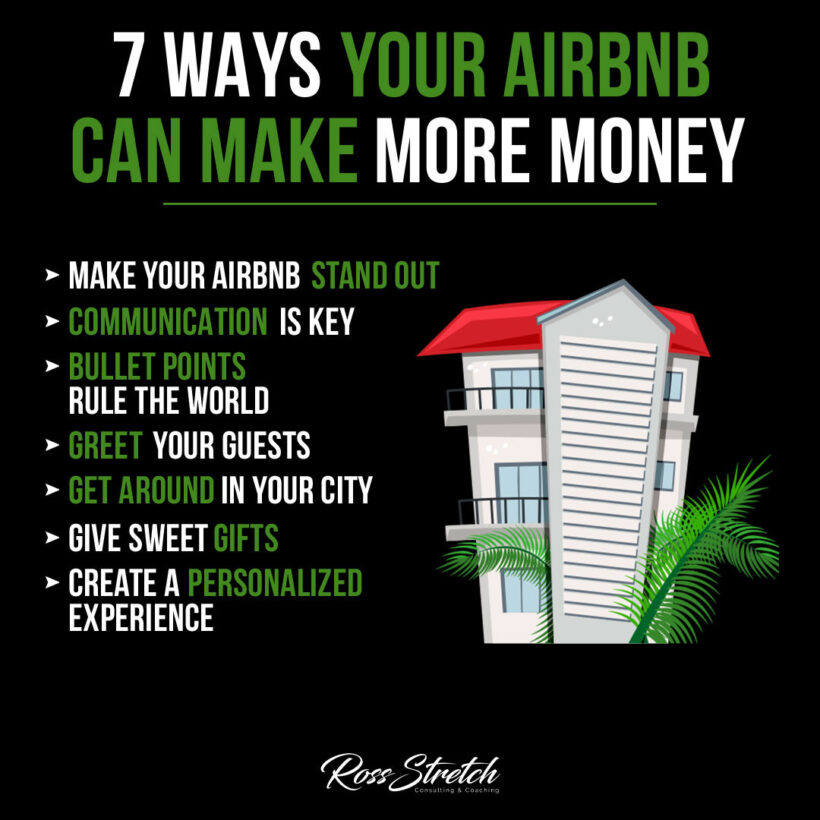
1. Make Your Listing Stand Out Visually
Guests Book With Their Eyes — Your Photos Are Your Sales Team
In a marketplace where guests make booking decisions in seconds of scrolling, your listing photos are the single highest-leverage element of your Airbnb business. Professional photography consistently increases booking rates by 20 to 40 percent compared to phone photos in the same market, and the first image in your gallery determines whether a potential guest clicks or keeps scrolling. Every dollar invested in presentation returns multiples through higher occupancy and the ability to charge premium nightly rates.
- Actionable Tip: Hire a professional real estate or interior photographer for a one-time shoot — budget $150 to $300 and expect to recover that cost within your first additional booking. Before the shoot, declutter aggressively, add fresh flowers or a fruit bowl to the kitchen, ensure every light is on, and stage each room with a clear focal point. Update your cover photo to the room that best represents your listing’s unique appeal and character.
- Why It Works: Professional photography removes hesitation at the most critical decision point in the booking process. Listings with bright, well-composed, high-resolution images generate more clicks, more inquiries, and higher conversion rates — which also benefits your Airbnb search ranking, since the algorithm actively rewards strong engagement metrics like click-through rate and saved listings.
Pro Tip:
Airbnb offers free professional photography in select markets — check your host dashboard to see if it is available in your area. Even where it is not, most cities have real estate photographers who deliver the quality you need for under $200. Refresh your photos every 12 to 18 months as you improve the space, since stale imagery is one of the most common reasons a previously strong listing plateaus in rankings and occupancy.
2. Master Communication to Convert Inquiries into Bookings
Speed and Warmth Are Competitive Advantages Most Hosts Ignore
Airbnb’s algorithm explicitly rewards hosts who respond quickly to inquiries — your response rate and response time directly affect your search ranking and Superhost eligibility. Beyond the algorithmic benefit, fast and genuinely warm communication converts hesitant guests into confirmed bookings and sets the tone for a five-star review before a guest ever arrives at your door. Most hosts treat pre-booking communication as administrative overhead. Top-performing hosts treat it as their most important sales conversation.
- Actionable Tip: Create a set of templated responses for the most common inquiry types — availability questions, suitability for children, early check-in requests, parking questions — and save them in Airbnb’s Saved Messages feature. When an inquiry arrives, select the closest template and personalize the first sentence with the guest’s name and one specific detail from their message. Aim to respond within one hour during your waking window.
- Why It Works: Speed of response is one of the top factors in consumer purchase conversion. Guests who receive prompt, personalized replies feel valued before they have even booked — which primes them for positive reviews and return visits. A fast response also prevents the guest from continuing to browse competing listings while waiting to hear back from you, which is a conversion opportunity lost every time.
Pro Tip:
If you manage multiple listings or co-host with a partner, use a unified inbox tool like Hospitable or Guesty to centralize all guest communication and avoid missed messages. A single unanswered inquiry during a peak weekend can cost you a four or five-night booking. Set mobile notifications so you are always aware the moment a message arrives.
3. Write a Listing Description That Sells the Experience
Your Description Is Your Pitch — Make Every Word Work
Most Airbnb descriptions read like a checklist: two bedrooms, one bath, fast WiFi, parking available. This is a missed opportunity. The guests who book at premium prices are not buying square footage — they are buying an experience, a feeling, and the confidence that your space will deliver exactly what they are looking for. A well-crafted description bridges the gap between a photo and a booking by helping the right guest visualize their stay in your specific space.
- Actionable Tip: Rewrite your listing description to open with a single compelling sentence about the experience your space offers, not its physical features. Follow with three to five bullet points highlighting the most distinctive amenities. Close with a short paragraph describing the ideal guest scenario — “Perfect for couples celebrating a weekend getaway” or “Ideal for remote workers who need reliable WiFi and a dedicated workspace.” Specific beats generic every time.
- Why It Works: Guests skim listing descriptions rapidly, which means your formatting matters as much as your content. Bullet points surface the most important details at a glance. An experience-first opening line creates emotional resonance immediately. And a clear “ideal guest” framing self-selects the guests most likely to leave five-star reviews — which is its own compounding advantage.
Pro Tip:
Study the top three listings in your market on Airbnb — specifically those with 100-plus reviews and a 4.9 or higher rating. Analyze their description structure, the amenities they highlight, and the language they use to describe the experience. Then outwrite them. This competitive analysis takes an hour and gives you a real benchmark for what is working in your specific market.
4. Create a Memorable Welcome Experience
The First Ten Minutes of a Guest’s Stay Determine Their Review
Research on customer experience consistently shows that first impressions are disproportionately sticky — guests form their overall judgment of a stay within the first hour of arrival and rarely revise it significantly upward afterward. This means the welcome experience — from the clarity of your check-in instructions to the condition of the space when they walk through the door — is your highest-leverage opportunity to generate the five-star review that compounds into long-term profitability.
- Actionable Tip: Create a one-page digital welcome guide using Canva or Notion that includes the WiFi password, appliance instructions, parking details, trash and recycling schedule, and house rules — all in one place. Send it 24 hours before check-in along with a warm personal message welcoming them by name and offering to answer any questions. If you can greet guests in person occasionally, do so — a 60-second welcome makes a lasting impression.
- Why It Works: Friction at check-in — unclear instructions, missing information, confusion about the space — is the leading cause of negative reviews that have nothing to do with the property itself. Eliminating that friction before it occurs removes the most common complaint category and allows guests to immediately relax into the experience you have designed for them.
Pro Tip:
Leave a printed one-page version of your welcome guide at the property as well. Not every guest will read the digital version before arriving, and having the key information visible immediately when they walk in eliminates a significant source of mid-stay messages that interrupt both the guest experience and your personal time.
5. Provide Insider Local Knowledge
Turn Your Local Expertise into a Reason Guests Choose You Over a Hotel
One of the most powerful advantages an Airbnb host has over a hotel is authentic local knowledge — and most hosts underutilize it completely. Guests who choose a short-term rental are often specifically seeking a more local, connected experience than a branded hotel chain can offer. When you provide genuinely useful insider recommendations, you differentiate your listing on a dimension that photographs and pricing cannot replicate, and you give guests a reason to remember their stay long after they leave.
- Actionable Tip: Build a curated local guide as part of your Airbnb listing’s guidebook feature. Include your five favorite restaurants with a one-sentence reason for each, the best coffee shop for remote work, the nearest grocery store, reliable transportation options, and two or three hidden gems most tourists miss. Update this guide seasonally to reflect current closures, new openings, and seasonal events in your area.
- Why It Works: Personalized local recommendations create a sense of connection and trust between guest and host that transactional service cannot match. Guests who use your recommendations and have a great experience associate that positive feeling with your property — which shows up in the warmth and specificity of their reviews, which in turn drives future bookings from similar guests.
Pro Tip:
Include local event calendars and seasonal highlights in your guide. If a major festival, farmers market, sports season, or outdoor attraction operates near your property at certain times of year, mention it. Guests often do not discover these opportunities until after they have left — and knowing about them in advance can extend a stay, increase the booking lead time, and justify a premium nightly rate during peak local events.
6. Delight Guests with Thoughtful Extras
Small Gestures Generate Outsized Reviews and Referrals
The difference between a four-star and five-star review is almost never the big things — the size of the space, the view, the location. It is almost always the unexpected small things that signal genuine care and attention. A thoughtful welcome gift, a personalized note, or an extra amenity tailored to the specific guest’s situation costs very little and generates the kind of enthusiastic reviews that read as authentic because they are responding to something real.
- Actionable Tip: Ask guests a single question when they book: “Is there anything about your stay I should know — a celebration, a dietary preference, or anything that would make your visit especially memorable?” Use their answer to add one personalized touch before arrival. A bottle of prosecco for an anniversary couple, a small activity kit for a family with young children, or a local specialty snack for a first-time visitor to your city. Budget $10 to $20 per booking and track the review impact.
- Why It Works: Personalized gestures activate the reciprocity principle — when guests receive something unexpected and genuinely thoughtful, they feel a strong pull to reciprocate with generous reviews and recommendations. The surprise element matters: a welcome gift that was not advertised in the listing delivers far more emotional impact than the same gift described in advance, because it exceeds the expectation set by the listing rather than merely meeting it.
Pro Tip:
Stock your space with a few consistently appreciated extras that require no personalization: high-quality coffee and a proper grinder, a selection of teas, basic cooking staples (salt, pepper, olive oil, a few spices), and a basket of individually wrapped local snacks. These low-cost touches consistently appear by name in five-star reviews and are cited as a primary reason guests return or recommend the listing to friends.
7. Use Dynamic Pricing to Maximize Revenue
Static Pricing Leaves Money on the Table Every Single Night
One of the most common and costly mistakes Airbnb hosts make is setting a flat nightly rate and leaving it unchanged for months. Demand for short-term rentals fluctuates dramatically based on day of week, local events, seasonality, and broader travel trends — and a static price means you are undercharging during peak demand and potentially overcharging during slow periods when a lower rate would drive the bookings that keep your occupancy and review volume strong. Dynamic pricing is not optional for serious hosts; it is the mechanism that separates an average return from an excellent one.
- Actionable Tip: Enable Airbnb’s Smart Pricing feature as a starting point, then layer on a dedicated dynamic pricing tool like PriceLabs or Wheelhouse, which provide more granular market data and customization than Airbnb’s native tool. Set a price floor you will never go below (based on your minimum acceptable nightly return after costs) and a ceiling that reflects peak demand periods in your market. Review your pricing strategy monthly using your occupancy data.
- Why It Works: Dynamic pricing tools analyze real-time market supply and demand, local event calendars, competitor pricing, and historical booking patterns to set rates that maximize your revenue per available night. Hosts who use dedicated pricing tools report average revenue increases of 10 to 40 percent over static or Airbnb-only pricing — often without increasing occupancy at all, simply by capturing the right price at the right time.
Pro Tip:
Track your revenue per available night (RevPAN) monthly rather than just your occupancy rate. A month with 70% occupancy at optimized pricing often outperforms a month at 90% occupancy at a flat low rate. PriceLabs and AirDNA both offer market analysis tools that let you benchmark your RevPAN against comparable listings in your market and identify specific nights where you are leaving significant revenue on the table.
Conclusion
A profitable Airbnb is not built on luck or location alone — it is built on the disciplined application of strategies that compound over time: compelling visual presentation, fast and warm communication, descriptions that sell experiences, memorable welcomes, genuine local knowledge, thoughtful personal touches, and pricing that responds to the market in real time. Implement one of these strategies this week. Add another the following week. Within 60 days, your listing will be operating at a meaningfully higher level — and your results will reflect it in occupancy, nightly rates, and the quality of guests your property attracts.
Resources

 Ross Stretch