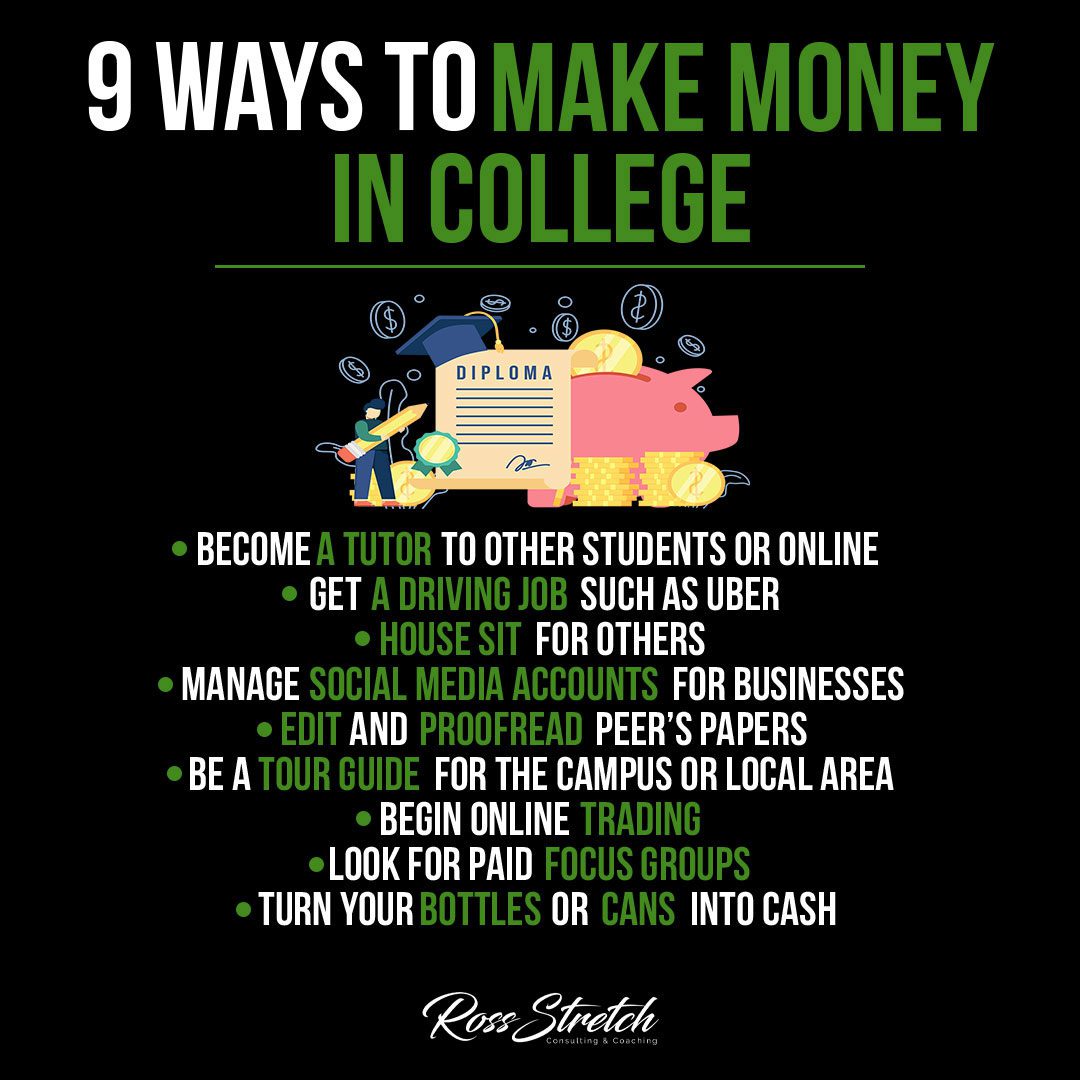
College is where most people learn to survive on ramen and student loans — but it doesn’t have to be that way. The same resourcefulness and flexible schedule that define student life create a unique window for building real income streams while earning your degree. These 9 proven ways to make money in college range from monetizing the skills you already have to building financial literacy that will serve you for the rest of your career.
1. Become a Tutor — Online or On Campus
Turn Your Academic Strengths Into a Profitable Side Business
If you’ve earned strong grades in any subject, you already have a sellable skill. Academic tutoring is one of the most accessible and well-paying side incomes available to college students, with rates ranging from $20-$80 per hour depending on subject complexity and platform. It simultaneously reinforces your own knowledge while building communication and teaching skills with real career value.
- Actionable Tip: Create a profile on platforms like Wyzant, Tutor.com, or Chegg Tutors, or post flyers on campus bulletin boards advertising your services in high-demand subjects such as math, science, economics, or writing. Start with two or three students to build your schedule and your reviews.
- Why It Works: Tutoring leverages knowledge you’ve already acquired, meaning your startup cost is zero and your hourly earning potential is limited only by demand and your reputation. Teaching material also deepens your own mastery — the “protege effect” is a well-documented cognitive phenomenon that benefits tutors as much as students.
Pro Tip:
Offer group tutoring sessions with two to four students at once, charging each student $15-$20 while you earn $40-$60 per hour total. Group sessions make your service more affordable for students while making your time dramatically more profitable — a win on both sides of the arrangement.
2. Drive for Uber or Lyft
Your Car Is a Revenue-Generating Asset Sitting in the Parking Lot
If you own a reliable vehicle, rideshare driving offers one of the most flexible part-time income streams available to students. You set your own hours, work between classes and exams, and earn an average of $15-$25 per hour after expenses. Cities with large universities have consistent demand, especially during nights, weekends, and campus events when other income sources dry up.
- Actionable Tip: Sign up for both Uber and Lyft to maximize trip availability, then drive strategically during high-demand periods — Friday and Saturday nights, game days, graduation weekends, and local concerts — when surge pricing can double or triple your base earnings per trip.
- Why It Works: Rideshare driving converts an asset you already own into consistent cash flow with zero schedule commitment beyond your own availability. The flexibility to work exactly when your academic calendar allows makes it uniquely suited to the unpredictable demands of student life.
Pro Tip:
Track every mile driven for tax purposes. Rideshare drivers can deduct the IRS standard mileage rate from their taxable income, which significantly reduces your tax liability at year-end and effectively raises your net hourly earnings — often by a meaningful amount over a full academic year.
3. House Sit for Others
Get Paid to Occupy Someone Else’s Space
House sitting is one of the most underrated ways to earn income in college — particularly because it can offer free accommodation while you’re paid to simply be present and responsible. Many homeowners need trustworthy individuals to watch their property, collect mail, and care for pets while they travel. The work is minimal; the benefit is substantial.
- Actionable Tip: Create a verified profile on platforms like TrustedHousesitters.com or HouseSitter.com, or ask neighbors, family friends, and professors whether they need house sitting services during their next vacation or business trip. References from known community members dramatically increase your booking rate.
- Why It Works: House sitting pays you for your presence, not your labor — which means you can simultaneously study, complete assignments, or run your other side businesses. It is one of the rare income streams where you’re literally being compensated to exist comfortably somewhere.
Pro Tip:
Bundle your offering with pet care, plant watering, mail collection, and trash management as a single package. The more value you deliver, the more you can charge per day — rates typically run $25-$100 depending on the scope of responsibilities and the local market.
4. Manage Social Media Accounts for Local Businesses
Your Digital Fluency Is Worth Real Money to Small Businesses
You already spend hours on social media — the question is whether that time earns you anything. Small businesses desperately need consistent, strategic social media presence but rarely have the time or knowledge to manage it effectively. As a digitally native college student, you can step into this gap and get paid for skills you already possess and use daily.
- Actionable Tip: Approach local restaurants, boutiques, or service businesses with a brief, confident proposal: offer one month of free management in exchange for a testimonial and case study, then transition to a paid monthly retainer. Start with two or three clients at $300-$700 per month for roughly 3-5 hours of weekly work per client.
- Why It Works: Social media management generates recurring monthly income — not one-time gigs. Once you demonstrate consistent results through improved engagement and follower growth, client retention is high and referrals are frequent, making this one of the most scalable student income streams available.
Pro Tip:
Specialize in one platform rather than claiming to manage everything. Instagram for visual lifestyle brands, LinkedIn for B2B service firms, or TikTok for consumer-facing companies — specialists consistently command higher rates than generalists, and a defined niche makes client acquisition dramatically easier from the start.
5. Edit and Proofread Peers’ Papers
Strong Writing Skills Are More Valuable Than You Think
Academic writing is a genuine struggle for a large percentage of college students, and many are willing to pay qualified editors for help that improves their grades. If English writing is a strength for you, editing and proofreading represent a low-overhead, high-demand service you can run from anywhere with a laptop and a strong command of language.
- Actionable Tip: Advertise your services on campus Facebook groups, Discord servers, and physical bulletin boards. Build a simple, clear rate structure — $3-$5 per page for proofreading, $5-$8 per page for substantive developmental editing — and create a one-page service menu that makes it easy for students to hire you quickly.
- Why It Works: Academic editing operates on a deadline-driven, urgent model — students almost always need work turned around fast, which means you can charge a legitimate premium for quick turnaround. Reliability and quality build word-of-mouth referrals that keep work flowing without any ongoing marketing effort on your part.
Pro Tip:
Expand beyond campus by creating a profile on Fiverr or Upwork. Online marketplaces expose you to a global client base of students, professionals, and non-native English speakers who need editing help — with experienced editors charging $30-$60 per hour for complex academic or professional documents.
6. Become a Campus or Local Tour Guide
Your Insider Knowledge Has Real Commercial Value
Nobody knows your campus and surrounding neighborhood better than a student who lives and breathes it every day. Parents, prospective students, and tourists actively seek authentic, local-led experiences that official institutional tours rarely deliver. Your knowledge, personality, and genuine enthusiasm for where you live are the product — and people pay for that.
- Actionable Tip: Contact your university’s admissions or visitor services office to apply for a paid campus tour guide position — many institutions offer these roles — or launch your own neighborhood tour and advertise it on platforms like Airbnb Experiences or Viator, where you keep the majority of each booking fee.
- Why It Works: Tour guiding builds public speaking confidence, professional charisma, and storytelling skills that translate directly into long-term career value — while paying you $12-$25 per hour for official university tours or allowing you to set your own premium pricing on independent experience platforms.
Pro Tip:
Theme your independent tour around a specific angle — local food culture, street art, historical architecture, or campus ghost stories — to differentiate your offering from generic alternatives and attract a more targeted audience willing to pay premium rates for a genuinely unique, specialized experience.
7. Begin Online Trading and Investing
Put Your Money to Work While You Have Time to Learn
College is arguably the best time to start learning about investing — you have the time to study markets properly, the energy to recover from early mistakes, and years of compounding ahead of you that older investors simply cannot access. While active trading isn’t a guaranteed income stream, building genuine financial literacy and starting with disciplined, small investments creates habits and knowledge worth far more than any short-term gains.
- Actionable Tip: Open a commission-free brokerage account with Fidelity, Schwab, or a comparable platform starting with as little as $50-$100. Begin with low-cost, diversified index funds or ETFs rather than individual stocks — understand the fundamentals before moving to more complex strategies, and never invest money you cannot afford to leave invested for at least three to five years.
- Why It Works: Starting early maximizes compounding returns. A 20-year-old who invests $200 per month at an 8% average annual return will accumulate more than double the retirement wealth of someone who starts at age 30 — even if the later starter contributes significantly more total dollars over the same period.
Pro Tip:
Treat investing education as a course before committing significant capital. Read The Little Book of Common Sense Investing by John Bogle and A Random Walk Down Wall Street by Burton Malkiel. Knowledge acquired before you deploy real money is the only durable edge available to individual investors competing with professionals.
8. Join Paid Focus Groups and Research Studies
Get Paid to Share Your Opinion on Products and Ideas
Market research companies routinely pay $50-$200 per session to gather consumer insights from real people — and college students represent a highly valuable, in-demand demographic for companies developing products aimed at younger audiences. Focus groups, product testing sessions, and online surveys require minimal time and zero specialized skills, making them one of the most accessible supplemental income sources available to any student.
- Actionable Tip: Register on platforms like Respondent.io, User Interviews, and your own university’s research participation portal — many institutions compensate students for participating in academic studies with cash or gift cards. Set up email alerts so you are notified immediately when qualifying opportunities arise and can respond before spots fill.
- Why It Works: Paid focus groups compensate you for cognitive work you’re already doing every day — forming opinions about products, services, and ideas. The effective hourly rate is exceptional: $50-$200 for 60-90 minutes of structured conversation translates to some of the highest non-skill-based compensation available to a student with an open afternoon.
Pro Tip:
Register across multiple platforms simultaneously to maximize the frequency of qualifying invitations. The more profiles you maintain with accurate demographic information, the more invitations you receive — and qualification rates improve over time as platforms learn precisely which studies match your profile and preferences.
9. Recycle Bottles and Cans for Cash
Turn Everyday Waste Into Consistent, Effortless Cash Flow
This might seem small, but the math is more compelling than most people assume. In states with bottle deposit programs, each can or bottle carries a 5-10 cent redemption value. Students living in dormitories or houses with regular gatherings accumulate significant recyclable volumes — and a systematic, organized approach to collection can add genuine supplemental income with zero skill requirement and minimal time investment.
- Actionable Tip: Check whether your state has a bottle deposit program (Michigan pays 10 cents per container — the highest in the US), set up designated collection bins in your shared living spaces and common areas, and establish a weekly redemption trip to your nearest deposit center to convert accumulation into cash.
- Why It Works: Recycling income requires no skill, no startup cost, and no schedule commitment beyond a single weekly errand. It works quietly in the background of your existing life, and when combined with coordinated collection from a dorm floor or house, the volume — and therefore income — scales significantly with almost no additional effort.
Pro Tip:
Expand your collection operation by approaching nearby student housing, campus event organizers, or athletics departments about collecting their recyclables after events. Volume is everything in this model — and tapping into high-consumption events can multiply your weekly redemption haul with minimal additional time invested.
Your Earning Potential Doesn’t Have to Wait for Graduation
College is where most people put financial ambition on hold until the “real world” begins — but that is a costly mistake that compounds over time. Every one of these nine income streams can be started today, with little to no upfront investment, and several have serious scaling potential that extends well beyond your student years. The skills you build, the financial habits you form, and the money you save or invest during college compound into advantages that separate financially independent adults from those perpetually restarting from zero.
Resources


 Ross Stretch